
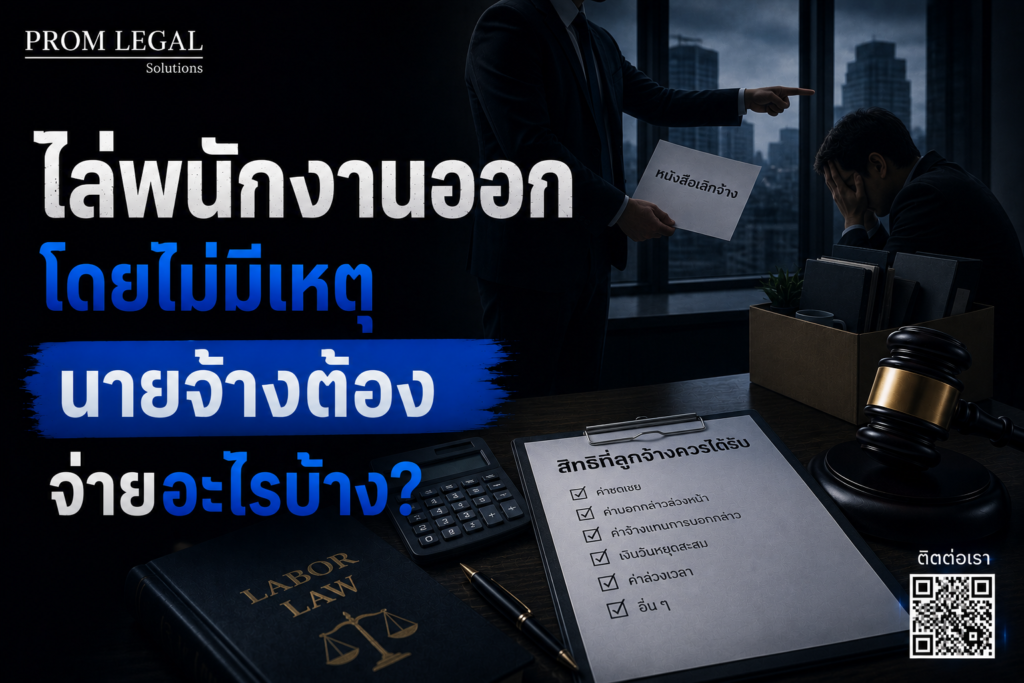
(English Below)
“พรุ่งนี้ไม่ต้องมาทำงานแล้วนะ” ประโยคสั้น ๆ ที่นายจ้างหลายคนพูดออกไปโดยไม่รู้ว่า ตามมาด้วยภาระทางกฎหมายมากกว่าที่คิด เพราะการเลิกจ้างลูกจ้างที่ไม่ได้ทำผิดร้ายแรง ไม่ใช่แค่บอกเลิกแล้วจบ แต่กฎหมายกำหนดเงินหลายก้อนที่นายจ้างต้องจ่าย
เปรียบง่าย ๆ ค่าชดเชยก็เหมือน “เงินตั้งตัว” ที่กฎหมายบังคับให้นายจ้างมอบให้ลูกจ้างที่ต้องออกจากงานโดยไม่ใช่ความผิดของเขา วันนี้ Prom Legal Solution ขอพาทุกท่านไปดูให้ครบว่า เลิกจ้างทั้งทีต้องจ่ายอะไรบ้าง เพื่อให้นายจ้างไม่พลาด และลูกจ้างรู้สิทธิของตัวเองค่ะ
เงินก้อนที่ 1: ค่าชดเชย (ตามอายุงาน)
นี่คือเงินหลักที่นายจ้างต้องจ่ายเมื่อเลิกจ้างลูกจ้างที่ไม่ได้ทำผิด ตาม พ.ร.บ.คุ้มครองแรงงาน พ.ศ. 2541 มาตรา 118 โดยคิดตามระยะเวลาทำงาน ดังนี้
| อายุงาน | ค่าชดเชย (อัตราค่าจ้างสุดท้าย) |
| ครบ 120 วัน แต่ไม่ครบ 1 ปี | 30 วัน |
| ครบ 1 ปี แต่ไม่ครบ 3 ปี | 90 วัน |
| ครบ 3 ปี แต่ไม่ครบ 6 ปี | 180 วัน |
| ครบ 6 ปี แต่ไม่ครบ 10 ปี | 240 วัน |
| ครบ 10 ปี แต่ไม่ครบ 20 ปี | 300 วัน |
| ครบ 20 ปีขึ้นไป | 400 วัน |
ข้อสังเกต: “การเลิกจ้าง” ตามมาตรานี้ หมายถึงการที่นายจ้างไม่ให้ลูกจ้างทำงานต่อและไม่จ่ายค่าจ้าง ไม่ว่าด้วยเหตุใด รวมถึงกรณีนายจ้างไม่สามารถดำเนินกิจการต่อได้ด้วย
เงินก้อนที่ 2: สินจ้างแทนการบอกกล่าวล่วงหน้า
ตาม มาตรา 17 หากเป็นสัญญาจ้างที่ไม่มีกำหนดเวลา นายจ้างต้องบอกเลิกจ้างล่วงหน้าเป็นหนังสือให้มีผลอย่างน้อยหนึ่งงวดการจ่ายค่าจ้าง หากนายจ้างให้ออกทันทีโดยไม่บอกล่วงหน้า ก็ต้องจ่าย สินจ้างแทนการบอกกล่าวล่วงหน้า เท่ากับค่าจ้างที่ลูกจ้างควรได้จนถึงวันที่การเลิกจ้างมีผล (มาตรา 17/1) และต้องจ่ายในวันที่ให้ออกจากงาน
เงินก้อนที่ 3: ค่าจ้างวันหยุดพักผ่อนประจำปีที่ยังไม่ได้ใช้
ตาม มาตรา 67 เมื่อนายจ้างเลิกจ้างโดยไม่ใช่กรณีลูกจ้างทำผิดร้ายแรง นายจ้างต้องจ่ายค่าจ้างสำหรับ วันหยุดพักผ่อนประจำปี ตามส่วนที่ลูกจ้างมีสิทธิในปีที่เลิกจ้าง รวมถึงวันหยุดพักผ่อนสะสมที่ยังไม่ได้ใช้ด้วย
ตัวอย่าง: นาย ก. ค่าจ้างวันละ 500 บาท มีสิทธิหยุดพักผ่อนประจำปี 6 วันต่อปี ถูกเลิกจ้างเมื่อทำงานได้ครึ่งปี โดยในปีนั้นใช้สิทธิลาพักผ่อนไปแล้ว 1 วัน และมีวันหยุดพักผ่อนสะสมจากปีก่อนที่ยังไม่ได้ใช้อีก 3 วัน คำนวณได้ดังนี้: สิทธิตามส่วนของปีที่เลิกจ้าง = 6 × ½ = 3 วัน หักวันที่ใช้ไปแล้ว 1 วัน คงเหลือ 2 วัน รวมกับวันสะสม 3 วัน เป็น 5 วัน นายจ้างต้องจ่าย 5 × 500 = 2,500 บาท (ตัวเลขสิทธิวันหยุด 6 วันเป็นขั้นต่ำตามกฎหมาย หากนายจ้างให้สิทธิมากกว่านี้ ให้คำนวณตามจริง)
เงินก้อนที่ 4: ค่าเสียหายจากการเลิกจ้างไม่เป็นธรรม
ก้อนนี้แยกต่างหากจากค่าชดเชย หากลูกจ้างเห็นว่าถูกเลิกจ้างโดย “ไม่มีเหตุอันสมควร” สามารถฟ้องต่อศาลแรงงานได้ ตาม พ.ร.บ.จัดตั้งศาลแรงงานฯ พ.ศ. 2522 มาตรา 49 ศาลอาจสั่งให้
- รับลูกจ้างกลับเข้าทำงานในอัตราค่าจ้างเดิม หรือ
- หากทำงานร่วมกันต่อไม่ได้ ให้นายจ้างจ่าย ค่าเสียหาย โดยศาลพิจารณาจากอายุของลูกจ้าง ระยะเวลาทำงาน ความเดือดร้อน มูลเหตุการเลิกจ้าง และค่าชดเชยที่ได้รับ
ข้อควรระวัง (เจ็บแต่จบ): “จ่ายค่าชดเชยครบ” ไม่ได้แปลว่าจะไม่ถูกฟ้องเลิกจ้างไม่เป็นธรรม เพราะเป็นคนละเรื่องกัน นายจ้างที่เลิกจ้างโดยไม่มีเหตุผลอันสมควร อาจต้องจ่ายทั้งค่าชดเชย “และ” ค่าเสียหายจากการเลิกจ้างไม่เป็นธรรมพร้อมกัน
ข้อยกเว้น: เมื่อไหร่ที่นายจ้างไม่ต้องจ่ายค่าชดเชย
หัวข้อบทความนี้คือ “เลิกจ้างโดยไม่มีเหตุ” แต่ในทางกลับกัน หากลูกจ้างทำผิดร้ายแรง นายจ้าง ไม่ต้องจ่ายค่าชดเชย ตาม มาตรา 119 เช่น ทุจริตต่อหน้าที่หรือทำผิดอาญาโดยเจตนาต่อนายจ้าง, จงใจทำให้นายจ้างเสียหาย, ประมาทเลินเล่ออย่างร้ายแรง, ฝ่าฝืนข้อบังคับร้ายแรงหรือถูกตักเตือนเป็นหนังสือแล้ว, ละทิ้งหน้าที่ 3 วันทำงานติดต่อกันโดยไม่มีเหตุอันสมควร, หรือถูกจำคุกตามคำพิพากษาถึงที่สุด
สำคัญมาก: หากนายจ้างจะอ้างเหตุไม่จ่ายค่าชดเชยตามมาตรา 119 ต้อง ระบุเหตุนั้นไว้ในหนังสือบอกเลิกจ้าง หรือแจ้งให้ลูกจ้างทราบในขณะเลิกจ้าง มิฉะนั้นจะยกเหตุขึ้นอ้างภายหลังไม่ได้
สรุป
- เลิกจ้างลูกจ้างที่ไม่ได้ทำผิด นายจ้างต้องจ่าย ค่าชดเชย ตามอายุงาน (มาตรา 118)
- หากไม่บอกล่วงหน้า ต้องจ่าย สินจ้างแทนการบอกกล่าวล่วงหน้า (มาตรา 17, 17/1)
- ต้องจ่าย ค่าจ้างวันหยุดพักผ่อนประจำปี ที่ยังไม่ได้ใช้ (มาตรา 67)
- หากเป็นการเลิกจ้างไม่เป็นธรรม อาจต้องจ่าย ค่าเสียหาย เพิ่มอีก (มาตรา 49)
- ต้องจ่ายเงินทั้งหมดที่ลูกจ้างมีสิทธิ ภายใน 3 วัน นับแต่วันเลิกจ้าง (มาตรา 70)
- หากนายจ้างจ่ายล่าช้า ต้องเสียดอกเบี้ยร้อยละ 15 ต่อปี และหากจงใจไม่จ่ายโดยไม่มีเหตุอันสมควร ยังต้องเสียเงินเพิ่มอีกร้อยละ 15 ทุก 7 วัน (มาตรา 9)
- ลูกจ้างทำผิดร้ายแรงตามมาตรา 119 นายจ้างไม่ต้องจ่ายค่าชดเชย แต่ต้องระบุเหตุไว้ให้ชัด
การเลิกจ้างมีรายละเอียดทางกฎหมายและความเสี่ยงที่ต้องวางแผนอย่างรอบคอบ ทั้งฝั่งนายจ้างที่อยากเลิกจ้างให้ถูกต้อง และฝั่งลูกจ้างที่ต้องการรักษาสิทธิ Prom Legal Solution ให้บริการครบวงจร ทั้งให้คำปรึกษาการเลิกจ้าง ร่างเอกสาร ไปจนถึงดำเนินคดีในศาลแรงงาน ปรึกษาเราได้เลยค่ะ ก่อนที่ปัญหาจะบานปลาย
บทความนี้จัดทำขึ้นเพื่อให้ความรู้ทั่วไปทางกฎหมายเท่านั้น มิใช่ความเห็นทางกฎหมายสำหรับกรณีเฉพาะเรื่อง ผู้อ่านควรปรึกษาทนายความเพื่อรับคำแนะนำที่เหมาะสมกับข้อเท็จจริงของท่าน
#เลิกจ้าง #ค่าชดเชย #เลิกจ้างไม่เป็นธรรม #กฎหมายแรงงาน #สิทธิลูกจ้าง #นายจ้าง #LabourLaw #PromLegalSolution #LegalTip #SME #Startup
Dismissing an Employee Without Cause: What Must the Employer Pay?
“Don’t come to work tomorrow.” A short sentence many employers say without realising the legal burden that follows. Dismissing an employee who has committed no serious wrongdoing is not simply a matter of saying goodbye; the law requires several payments the employer must make.
Think of severance as a legally mandated “fresh-start fund” the employer must give an employee who loses their job through no fault of their own. Today, Prom Legal Solution walks you through everything that must be paid when you dismiss someone, so employers don’t slip up and employees know their rights.
Payment 1: Severance Pay (by Length of Service)
This is the main payment due when dismissing an employee who has done nothing wrong, under Labour Protection Act B.E. 2541 (1998) Section 118, calculated by length of service:
| Length of Service | Severance (at last wage rate) |
| 120 days but less than 1 year | 30 days |
| 1 year but less than 3 years | 90 days |
| 3 years but less than 6 years | 180 days |
| 6 years but less than 10 years | 240 days |
| 10 years but less than 20 years | 300 days |
| 20 years or more | 400 days |
Note: “Dismissal” here means the employer not letting the employee continue working and not paying wages, for any reason, including where the employer can no longer operate the business.
Payment 2: Pay in Lieu of Notice
Under Section 17, for an open-ended employment contract, the employer must give written notice of termination at least one pay period in advance. If the employer ends it immediately without notice, it must pay wages in lieu of notice equal to what the employee would have earned until the termination takes effect (Section 17/1), payable on the day the employee is let go.
Payment 3: Pay for Unused Annual Leave
Under Section 67, when the employer dismisses an employee other than for serious misconduct, it must pay wages for the annual leave the employee was entitled to in the year of dismissal, on a pro-rata basis, plus any accrued unused leave carried over.
Example: Employee A earns THB 500/day and is entitled to 6 days of annual leave per year. A is dismissed halfway through the year, having already taken 1 of that year’s leave days, with 3 days of unused leave carried over from the previous year. The calculation: pro-rata entitlement for the year = 6 × ½ = 3 days; less the 1 day already taken = 2 days; plus the 3 carried-over days = 5 days. The employer must pay 5 × THB 500 = THB 2,500. (The 6-day figure is the statutory minimum; if the employer grants more, calculate on the actual entitlement.)
Payment 4: Damages for Unfair Dismissal
This is separate from severance. If the employee considers the dismissal to be “without reasonable cause,” they can sue at the Labour Court. Under Labour Court Act B.E. 2522 (1979) Section 49, the court may order:
- reinstatement at the previous wage rate, or
- if the parties can no longer work together, that the employer pay damages, with the court weighing the employee’s age, length of service, hardship, the reason for dismissal, and the severance received.
Caveat: “Paying full severance” does not mean you are safe from an unfair-dismissal claim; they are different things. An employer who dismisses without reasonable cause may have to pay both severance and unfair-dismissal damages.
Exception: When the Employer Need Not Pay Severance
This article is about dismissal “without cause,” but conversely, if the employee commits serious misconduct, the employer need not pay severance under Section 119, for example: dishonesty in duties or intentional crime against the employer, intentionally causing damage, gross negligence causing serious damage, serious breach of work rules or breach after written warning, abandoning duties for 3 consecutive working days without good reason, or imprisonment by a final judgment.
Very important: To rely on Section 119 to withhold severance, the employer must state that reason in the termination letter or inform the employee at the time of dismissal; otherwise it cannot raise the reason later.
Key Takeaways
- Dismissing an employee who did nothing wrong requires severance by length of service (Section 118).
- Without advance notice, the employer must pay wages in lieu of notice (Sections 17, 17/1).
- It must pay for unused annual leave (Section 67).
- If the dismissal is unfair, the employer may owe additional damages (Section 49).
- All amounts the employee is entitled to must be paid within 3 days of dismissal (Section 70).
- Late payment accrues interest at 15% per annum, and wilful non-payment without reasonable cause adds a further 15% surcharge every 7 days (Section 9).
- For serious misconduct under Section 119, no severance is due, but the reason must be clearly stated.
Dismissal involves legal detail and risks that need careful planning, both for employers who want to do it correctly and employees protecting their rights. Prom Legal Solution offers end-to-end support, from dismissal advice and document drafting to Labour Court litigation. Talk to us before a problem escalates.
This article is for general legal information only and is not legal advice for any specific case. Please consult a lawyer for advice tailored to your facts.
#เลิกจ้าง #ค่าชดเชย #เลิกจ้างไม่เป็นธรรม #กฎหมายแรงงาน #สิทธิลูกจ้าง #นายจ้าง #LabourLaw #PromLegalSolution #LegalTip #SME #Startup