
(English Below)
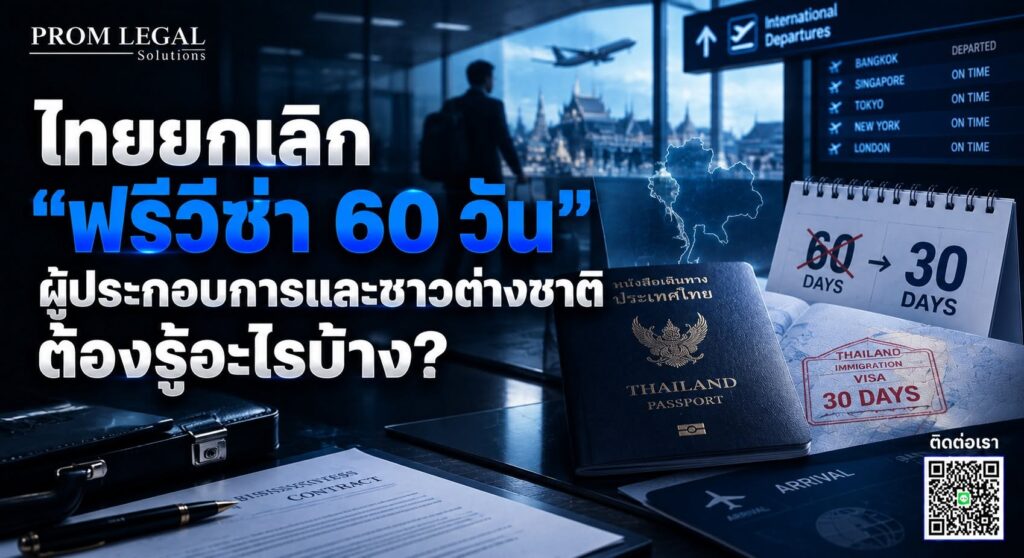
ข่าวนี้กระทบคนจำนวนมาก ทั้งนักท่องเที่ยว นักธุรกิจ และผู้ประกอบการที่มีคู่ค้าหรือพนักงานต่างชาติ เพราะสิทธิเข้าประเทศไทยแบบ “ฟรีวีซ่า 60 วัน” ที่เคยใช้กันสบาย ๆ กำลังจะเปลี่ยนไป
เปรียบง่าย ๆ เหมือน “พรมต้อนรับ” หน้าประตูประเทศที่เคยปูยาวถึง 60 วัน กำลังถูกหดให้สั้นลง หลายประเทศยังเข้าได้โดยไม่ต้องขอวีซ่าล่วงหน้า แต่เวลาพำนักจะน้อยลง วันนี้ Prom Legal Solution ขอสรุปการเปลี่ยนแปลงและสิ่งที่ควรระวังให้ฟังค่ะ
เกิดอะไรขึ้น
กระทรวงมหาดไทยออกประกาศ ลงวันที่ 26 สิงหาคม 2569 ปรับสิทธิการเข้าประเทศไทยครั้งใหม่ โดยยกเลิกสิทธิยกเว้นวีซ่าแบบพำนักได้สูงสุด 60 วัน ซึ่งเดิมครอบคลุม 93 ประเทศ/ดินแดน (ใช้มาตั้งแต่ 15 กรกฎาคม 2567) และกำหนดสิทธิใหม่สำหรับชาวต่างชาติ อาศัยมติคณะรัฐมนตรีเมื่อวันที่ 14 กรกฎาคม 2569 ลงนามโดยนายอนุทิน ชาญวีรกูล ประกาศในราชกิจจานุเบกษาเมื่อวันที่ 31 สิงหาคม 2569 และมีผลบังคับใช้ตั้งแต่วันที่ 15 กันยายน 2569 เป็นต้นไป
สรุปสิทธิใหม่แบ่งเป็น 3 กลุ่ม
| กลุ่มสิทธิ | จำนวน | สาระสำคัญ |
| ฟรีวีซ่า 30 วัน | 60 ประเทศ/ดินแดน | เข้าไทยได้โดยไม่ต้องขอวีซ่าล่วงหน้า พำนักได้ 30 วัน |
| ฟรีวีซ่า 15 วัน | 2 ประเทศ | เซเชลส์ และมอริเชียส |
| Visa on Arrival (VOA) | 3 ประเทศ | อาเซอร์ไบจาน เบลารุส และเซอร์เบีย ขอวีซ่าเมื่อเดินทางถึง |
กลุ่มฟรีวีซ่า 30 วัน (60 ประเทศ/ดินแดน): ออสเตรเลีย, ออสเตรีย, บาห์เรน, เบลเยียม, บัลแกเรีย, ภูฏาน, บรูไน, แคนาดา, โครเอเชีย, ไซปรัส, เช็ก, เดนมาร์ก, เอสโตเนีย, ฟีจี, ฟินแลนด์, ฝรั่งเศส, จอร์เจีย, เยอรมนี, กรีซ, ฮังการี, ไอซ์แลนด์, อินโดนีเซีย, อินเดีย, ไอร์แลนด์, อิสราเอล, อิตาลี, ญี่ปุ่น, จอร์แดน, คูเวต, คีร์กีซสถาน, ลัตเวีย, ลิกเตนสไตน์, ลิทัวเนีย, ลักเซมเบิร์ก, มอลตา, มาเลเซีย, มัลดีฟส์, เนเธอร์แลนด์, นิวซีแลนด์, นอร์เวย์, โอมาน, ฟิลิปปินส์, โปแลนด์, โปรตุเกส, กาตาร์, โรมาเนีย, ซาอุดีอาระเบีย, สิงคโปร์, สโลวัก, สโลวีเนีย, แอฟริกาใต้, สเปน, สวีเดน, สวิตเซอร์แลนด์, ไต้หวัน, ตุรกี, ยูเครน, สหรัฐอาหรับเอมิเรตส์, สหราชอาณาจักร, สหรัฐอเมริกา
ข้อควรทราบเพิ่มเติม: ผู้ใช้สิทธิยกเว้นวีซ่า 30 วัน ที่เดินทางเข้าทางด่านพรมแดนทางบก จะเข้าราชอาณาจักรได้ไม่เกิน 2 ครั้งต่อปีปฏิทิน ยกเว้นผู้ถือหนังสือเดินทางมาเลเซีย บรูไน อินโดนีเซีย และสิงคโปร์
สรุปง่าย ๆ
- ยกเลิกสิทธิ “ฟรีวีซ่า 60 วัน” แบบเดิม
- หลายประเทศยังเข้าไทยได้โดยไม่ต้องขอวีซ่าล่วงหน้า แต่ระยะเวลาพำนักลดลงเหลือ 30 วัน
- เซเชลส์และมอริเชียส ได้ 15 วัน
- อาเซอร์ไบจาน เบลารุส และเซอร์เบีย เปลี่ยนเป็น Visa on Arrival
- ผู้ใช้สิทธิยกเว้นวีซ่า 30 วัน ที่เข้าทางด่านพรมแดนทางบก เข้าได้ไม่เกิน 2 ครั้งต่อปีปฏิทิน (ยกเว้นมาเลเซีย บรูไน อินโดนีเซีย และสิงคโปร์)
- มีผลบังคับใช้ตั้งแต่วันที่ 15 กันยายน 2569 (15 วันหลังประกาศในราชกิจจานุเบกษาเมื่อวันที่ 31 สิงหาคม 2569)
สิ่งที่ต้องระวังเป็นพิเศษ
การลดวันพำนักกระทบคนที่วางแผนอยู่ไทยยาว โดยเฉพาะกลุ่มที่มาทำงาน ทำธุรกิจ หรือพำนักระยะยาว ที่เคยใช้ช่องฟรีวีซ่า 60 วัน ต่อไปอาจต้องวางแผนขอวีซ่าให้ถูกประเภทตั้งแต่ต้น
ข้อควรระวัง (เจ็บแต่จบ): ฟรีวีซ่าคือสิทธิเพื่อ “การท่องเที่ยว” ไม่ใช่การเข้ามาทำงาน หากตั้งใจทำงานหรือทำธุรกิจในไทย ต้องขอวีซ่าและใบอนุญาตทำงานให้ถูกประเภท ส่วนการอยู่เกินกำหนด (overstay) มีโทษปรับ กักตัว และอาจถูกขึ้นบัญชีห้ามเข้าประเทศ อย่าประมาทเรื่องการนับวันเด็ดขาด
สำหรับผู้ประกอบการที่มีพนักงานหรือคู่ค้าต่างชาติ และชาวต่างชาติที่ต้องการพำนักหรือทำงานในไทยอย่างถูกกฎหมาย Prom Legal Solution ให้คำปรึกษาครบวงจร ทั้งการเลือกประเภทวีซ่าที่เหมาะกับวัตถุประสงค์ การขอและต่อวีซ่า การขอใบอนุญาตทำงาน ไปจนถึงการวางแผนพำนักระยะยาว ปรึกษาเราได้เลยค่ะ ก่อนวันมีผลบังคับใช้จะมาถึง
หมายเหตุ: บทความนี้จัดทำขึ้นเพื่อให้ข้อมูลทั่วไปเท่านั้น ข้อมูลอ้างอิงจากประกาศที่เผยแพร่และอาจมีการเปลี่ยนแปลงได้ ผู้อ่านควรตรวจสอบรายละเอียดและวันมีผลบังคับใช้จากราชกิจจานุเบกษาและหน่วยงานราชการที่เกี่ยวข้อง หรือปรึกษาทนายความก่อนดำเนินการใด ๆ
#PromLegalSolution #ฟรีวีซ่า #วีซ่าไทย #ชาวต่างชาติ #VisaOnArrival #กฎหมายคนเข้าเมือง #ที่ปรึกษากฎหมายธุรกิจ #LegalTip #SME #Startup
Thailand Scraps the “60-Day Visa-Free” Scheme: What Businesses and Foreigners Need to Know
This news affects many people, tourists, business travelers, and entrepreneurs with foreign partners or staff, because the “60-day visa-free” entry to Thailand that everyone used with ease is about to change.
Put simply, it is like the “welcome mat” at the country’s door, once rolled out to 60 days, being shortened. Many countries can still enter without a visa in advance, but the length of stay will be reduced. Today, Prom Legal Solution summarizes the change and what to watch out for.
What Happened
The Ministry of Interior issued a new announcement dated 26 August 2026 adjusting entry rights to Thailand, abolishing the visa exemption allowing stays of up to 60 days — a scheme that had covered 93 countries/territories since 15 July 2024 — and setting new rights for foreigners. The change is based on a Cabinet resolution of 14 July 2026, signed by Minister of Interior Anutin Charnvirakul, published in the Royal Gazette on 31 August 2026, and takes effect from 15 September 2026.
The New Rights, in Three Groups
| Group | Number | Key Point |
| 30-day visa-free | 60 countries/territories | Enter Thailand without a visa in advance; stay 30 days |
| 15-day visa-free | 2 countries | Seychelles and Mauritius |
| Visa on Arrival (VOA) | 3 countries | Azerbaijan, Belarus, and Serbia apply for a visa on arrival |
30-day visa-free group (60 countries/territories): Australia, Austria, Bahrain, Belgium, Bulgaria, Bhutan, Brunei, Canada, Croatia, Cyprus, Czech Republic, Denmark, Estonia, Fiji, Finland, France, Georgia, Germany, Greece, Hungary, Iceland, Indonesia, India, Ireland, Israel, Italy, Japan, Jordan, Kuwait, Kyrgyzstan, Latvia, Liechtenstein, Lithuania, Luxembourg, Malta, Malaysia, Maldives, Netherlands, New Zealand, Norway, Oman, Philippines, Poland, Portugal, Qatar, Romania, Saudi Arabia, Singapore, Slovakia, Slovenia, South Africa, Spain, Sweden, Switzerland, Taiwan, Turkey, Ukraine, United Arab Emirates, United Kingdom, United States.
Note: Travelers using the 30-day visa exemption who enter via a land border crossing are limited to 2 entries per calendar year (except holders of Malaysian, Bruneian, Indonesian, and Singaporean passports).
In Short
- The old “60-day visa-free” right is abolished.
- Many countries can still enter without a visa in advance, but the stay is reduced to 30 days.
- Seychelles and Mauritius get 15 days.
- Azerbaijan, Belarus, and Serbia switch to Visa on Arrival.
- Travelers using the 30-day exemption who enter via a land border crossing are limited to 2 entries per calendar year (except Malaysia, Brunei, Indonesia, and Singapore).
- It takes effect from 15 September 2026 (15 days after publication in the Royal Gazette on 31 August 2026).
What to Watch Out For
The shorter stay affects those planning to be in Thailand long term, especially people coming to work, do business, or reside long term who previously relied on the 60-day visa-free window. Going forward, they may need to plan for the correct type of visa from the start.
Caveat: A visa-free entry is a right for “tourism,” not for coming to work. If you intend to work or run a business in Thailand, you must obtain the correct visa and work permit. Overstaying carries fines, detention, and possible blacklisting from re-entry, so never be careless about counting your days.
For businesses with foreign staff or partners, and for foreigners who want to stay or work in Thailand legally, Prom Legal Solution offers end-to-end advice, from choosing the visa type that fits your purpose and applying for or extending visas, to work permits and long-stay planning. Talk to us before the effective date arrives.
Note: This article is for general information only. The information is based on a published announcement and may change. Readers should verify the details and effective date from the Royal Gazette and the relevant government agencies, or consult a lawyer before taking any action.
#PromLegalSolution #ฟรีวีซ่า #วีซ่าไทย #ชาวต่างชาติ #VisaOnArrival #กฎหมายคนเข้าเมือง #ที่ปรึกษากฎหมายธุรกิจ #LegalTip #SME #Startup