(English Below)
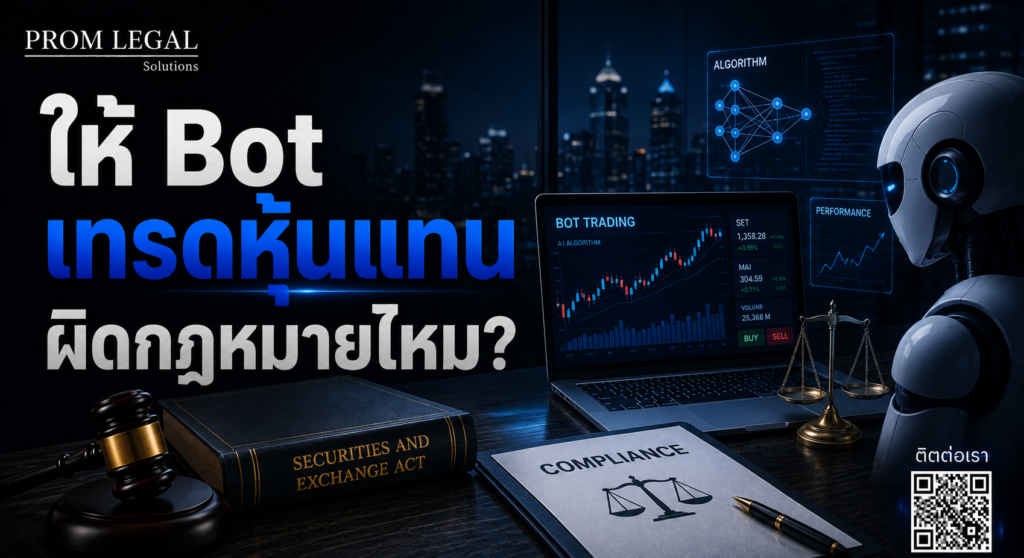
คนส่วนใหญ่เข้าใจเรื่องนี้คลาดเคลื่อนไปคนละทาง บางคนคิดว่า Bot เป็นของต้องห้าม บางคนคิดว่าใช้ได้เต็มที่แบบไม่มีกรอบ แต่ความจริงคืออยู่ตรงกลางและมีรายละเอียดที่ควรรู้ก่อนตัดสินใจใช้
เปรียบง่าย ๆ Bot เหมือนลูกจ้างที่ทำตามคำสั่งเป๊ะทุกตัวอักษร ไม่มีวันเหนื่อย ไม่มีอารมณ์ และตัดสินใจได้ในเสี้ยววินาที ข้อดีคือมันไม่ลังเลและไม่พลาดจังหวะที่คุณตั้งเงื่อนไขไว้ แต่ถ้าคุณสั่งให้ลูกจ้างคนนี้ไปทำสิ่งที่ผิด มันก็จะทำผิดได้เร็วกว่าและถี่กว่ามนุษย์หลายเท่า นี่คือเหตุผลที่หน่วยงานกำกับดูแลต้องวางกรอบควบคุมเป็นพิเศษ วันนี้ Prom Legal Solution ขอพาไปทำความเข้าใจว่า Bot เทรดหุ้นในสายตากฎหมายคืออะไร ต้องขออนุญาตหรือไม่ และเส้นแบ่งระหว่างการลงทุนที่ชาญฉลาดกับการทำผิดกฎหมายอยู่ตรงไหน
Bot เทรดหุ้น ในสายตากฎหมายคืออะไร?
สิ่งที่นักลงทุนเรียกกันติดปากว่า “Bot” หรือ “Robot Trade” ในทางการคือ ชุดคำสั่งคอมพิวเตอร์สำหรับการซื้อขายโดยอัตโนมัติ (Algorithmic Trading) ซึ่งเป็นส่วนหนึ่งของการใช้คอมพิวเตอร์ส่งคำสั่งซื้อขายที่ตลาดหลักทรัพย์แห่งประเทศไทย (SET) เรียกรวมว่า “Program Trading”
| ระดับ | ความหมาย |
|---|---|
| Program Trading | ร่มใหญ่ หมายถึงการส่งคำสั่งซื้อขายด้วยคอมพิวเตอร์ |
| Algorithmic Trading | ชุดคำสั่งซื้อขายอัตโนมัติ อยู่ภายใต้ร่ม Program Trading |
| High Frequency Trading (HFT) | การส่งคำสั่งด้วยความเร็วสูงและปริมาณมาก เป็นกลุ่มย่อยที่ถูกกำกับเข้มงวดที่สุด ผู้ใช้ต้องขึ้นทะเบียนกับตลาดหลักทรัพย์ฯ ก่อนเริ่มใช้งาน |
ใช้ Bot เทรดหุ้น ต้องขออนุญาตไหม?
คำถามคือ เปิดโปรแกรมแล้วยิงคำสั่งเข้าตลาดเองได้เลยหรือเปล่า คำตอบคือไม่ได้ค่ะ ตามหลักเกณฑ์ของตลาดหลักทรัพย์ฯ ผู้ที่ประสงค์จะใช้ Program Trading ต้องได้รับอนุญาตจากตลาดหลักทรัพย์ฯ ก่อน และคำสั่งของ Bot ต้องส่งผ่านระบบบริหารความเสี่ยงก่อนส่งคำสั่ง (PTRM หรือ Pre Trade Risk Management) ของบริษัทสมาชิก (โบรกเกอร์) ที่ได้รับอนุญาตให้ใช้งานแล้วเท่านั้น
ทั้งนี้ ผู้ลงทุนไม่ต้องยื่นขออนุญาตต่อตลาดหลักทรัพย์ฯ ด้วยตนเอง แต่บริษัทสมาชิกจะทำหน้าที่ยื่นขออนุญาตแทนลูกค้า และใน PTRM บางรูปแบบ การอนุญาตจะพิจารณาเป็นรายกลยุทธ์ (Strategy)
ทำไมโบรกเกอร์ต้องคอยคัดกรองคำสั่งของ Bot?
เพราะกฎเกณฑ์กำหนดให้บริษัทสมาชิกต้องมีมาตรการควบคุมหลายชั้น เริ่มจากการคัดกรองลูกค้า (Customer Screening) ที่ต้องกำหนดวงเงิน (credit limit) และให้ลูกค้ารับทราบความเสี่ยงและข้อจำกัดความรับผิดจากการใช้ Algorithmic Trading
ต่อด้วยการคัดกรองคำสั่ง (Order Screening) ที่ต้องมีระบบป้องกันคำสั่งซึ่งอาจกระทบตลาด สร้างความผันผวนผิดปกติ หรือเข้าข่ายผิดกฎหมาย เช่น คำสั่งดันราคาหลักทรัพย์ การส่งคำสั่งแล้วยกเลิก (order and cancel) การซอยคำสั่ง (split orders) และการซื้อขายอำพราง (wash sale) โดยต้องควบคุมลึกถึงระดับรหัสลูกค้า (Client ID) ไม่ใช่แค่ระดับบัญชี และบริษัทสมาชิก (ไม่ใช่ผู้ลงทุน) ยังมีหน้าที่ทบทวนพารามิเตอร์การทำงานของ Bot อย่างน้อยปีละครั้ง
“ลงทุนอัจฉริยะ” หรือ “ปั่นหุ้น” กันแน่?
ใจความหลักของเรื่องนี้คือ กฎหมายไม่ได้ลงโทษที่เครื่องมือ แต่ลงโทษที่การกระทำ ไม่ว่าคุณจะเคาะคำสั่งด้วยมือหรือให้โปรแกรมทำแทน ถ้าเจตนาและผลของมันคือการสร้างราคาเทียม สร้างปริมาณซื้อขายเทียม หรือหลอกให้ผู้อื่นเข้าใจสภาพตลาดผิดไปจากความจริง ย่อมเข้าข่ายความผิดฐานสร้างราคาหลักทรัพย์ (market manipulation) ตาม มาตรา 244/3 แห่งพระราชบัญญัติหลักทรัพย์และตลาดหลักทรัพย์ พ.ศ. 2535 ซึ่งมีทั้งโทษทางอาญาตามมาตรา 296 และมาตรการลงโทษทางแพ่ง
ตัวอย่างที่ทำให้ Bot กลายจากเครื่องมือลงทุนเป็นเครื่องมือทำผิด เช่น การตั้งให้ส่งและยกเลิกคำสั่งจำนวนมากเพื่อหลอกให้ตลาดเห็นดีมานด์ปลอม หรือการจับคู่ซื้อขายกันเองเพื่อปั่นวอลุ่มให้ดูคึกคัก สิ่งเหล่านี้ Bot ทำได้ในปริมาณและความถี่ที่มนุษย์ทำเองไม่ได้ แต่กลับตรวจจับได้ง่ายกว่า เพราะทุกคำสั่งทิ้งร่องรอยข้อมูลไว้ชัดเจนและย้อนดูได้ทั้งหมด
ในอนาคตจะเป็นอย่างไร?
มาตรการยกระดับความเชื่อมั่นในเรื่องการขายชอร์ต (Short Selling) และ Program Trading ไม่ใช่เรื่องอนาคตอีกต่อไป เพราะทยอยบังคับใช้มาตั้งแต่ปี 2567 และผ่านการทบทวนเมื่อเดือนกุมภาพันธ์ 2568 ล่าสุดตลาดหลักทรัพย์ฯ ได้เปิดรับฟังความคิดเห็นหัวข้อ “การปรับปรุงมาตรการเพื่อยกระดับความเชื่อมั่น” ระหว่างวันที่ 13-29 พฤษภาคม 2569 โดยจะปรับปรุง 3 เพิ่ม 2 และยกเลิก 3 มาตรการ คงเหลือ 9 มาตรการ คาดว่าจะมีผลบังคับใช้ภายในไตรมาส 3 ปี 2569 และคงไว้อย่างน้อย 18 เดือน
ประเด็นที่กระทบผู้ใช้ Bot โดยตรงคือ การเปลี่ยนวิธีขึ้นทะเบียน HFT จากการพิจารณาอุปกรณ์เชื่อมต่อ (co-location) มาเป็นการพิจารณาพฤติกรรมการส่งคำสั่งแบบ post-trade การเก็บค่าธรรมเนียมเพิ่ม (Extra Charge) กับบัญชีที่ส่งคำสั่งจำนวนมากแต่จับคู่ซื้อขายจริงน้อย (มี OTR สูง) และการยกเลิกเกณฑ์ระยะเวลาขั้นต่ำที่คำสั่งต้องคงอยู่ในกระดาน (Minimum Resting Time) ทิศทางของกฎเกณฑ์จึงมุ่งไปที่ความโปร่งใสและการตรวจสอบได้
สำหรับนักลงทุนรายย่อยและผู้ประกอบธุรกิจหลักทรัพย์ นี่คือสัญญาณชัดเจนว่า การใช้ Bot อย่างสบายใจในระยะยาวต้องมาพร้อมกับการติดตามหลักเกณฑ์ที่อัปเดตอยู่เสมอ ไม่ใช่ตั้งค่าเพียงครั้งเดียวแล้วปล่อยยาวโดยไม่เหลียวกลับมาดูอีกเลย
รับจ้างเทรดให้คนอื่น หรือขาย Bot ผิดไหม?
อีกกรณีที่มักถูกมองข้ามคือ การรับจ้างเทรดให้ผู้อื่นด้วย Bot การขายหรือให้เช่า Bot พร้อมสัญญาณซื้อขาย รวมถึงการรับบริหารพอร์ตให้ลูกค้า พฤติกรรมเหล่านี้อาจเข้าข่ายการประกอบธุรกิจหลักทรัพย์ประเภทการจัดการกองทุนส่วนบุคคล หรือการเป็นที่ปรึกษาการลงทุน โดยไม่ได้รับใบอนุญาต ซึ่งเป็นคนละความผิดกับการสร้างราคาหลักทรัพย์โดยสิ้นเชิง
สรุป
Bot เทรดหุ้นเป็นเครื่องมือที่ถูกกฎหมาย หากใช้ภายใต้กรอบที่ตลาดหลักทรัพย์ฯ และสำนักงาน ก.ล.ต. กำหนด กล่าวคือได้รับอนุญาต ส่งคำสั่งผ่านระบบบริหารความเสี่ยงของโบรกเกอร์ และไม่นำไปใช้บิดเบือนตลาด สิ่งที่เป็นเส้นแบ่งจริง ๆ คือ เจตนา และวิธีใช้ ไม่ใช่ตัวโปรแกรม การเข้าใจกรอบนี้ตั้งแต่ต้นจึงช่วยให้คุณลงทุนได้อย่างมั่นใจและหลีกเลี่ยงความเสี่ยงที่อาจตามมาโดยไม่รู้ตัว
หากคุณมีคำถามเรื่องการใช้ Algo หรือ Bot Trading ให้ถูกกติกา การวางระบบ compliance สำหรับผู้ประกอบธุรกิจ หรือกำลังถูกตรวจสอบเกี่ยวกับการซื้อขายหลักทรัพย์ ทีมกฎหมาย Prom Legal Solution ยินดีให้คำปรึกษาเพื่อช่วยให้คุณลงทุนและดำเนินธุรกิจได้อย่างมั่นใจและถูกกฎหมายค่ะ
อนึ่ง Bot ที่ใช้ในตลาดสินทรัพย์ดิจิทัลอยู่ภายใต้กรอบกฎหมายคนละฉบับกัน คือ พ.ร.ก. การประกอบธุรกิจสินทรัพย์ดิจิทัล พ.ศ. 2561 ซึ่งมีรายละเอียดแตกต่างกันอยู่พอสมควร ไว้จะมาเล่าให้ฟังในตอนต่อไป
หมายเหตุ: เนื้อหานี้เป็นข้อมูลทั่วไปเพื่อความเข้าใจเบื้องต้นเท่านั้น ไม่ถือเป็นความเห็นทางกฎหมายสำหรับกรณีเฉพาะราย การดำเนินการใด ๆ ควรขอคำปรึกษาจากที่ปรึกษากฎหมายเป็นรายกรณี
#PromLegalSolution #กฎหมายหลักทรัพย์ #Botเทรดหุ้น #AlgorithmicTrading #ProgramTrading #HFT #สินทรัพย์ดิจิทัล #ปรึกษากฎหมาย #ที่ปรึกษากฎหมายธุรกิจ #นักลงทุน #LegalTip #SME #Startup
Letting a Bot Trade Stocks for You: Is It Illegal?
Most people misunderstand this in opposite directions. Some think a “bot” is forbidden; others think you can use it freely with no limits. The reality is in the middle, with details you should know before deciding to use one.
Put simply, a bot is like an employee who follows every instruction to the letter, never tires, has no emotions, and can decide in a split second. The upside is that it does not hesitate and never misses the moment you set your conditions. But if you tell this employee to do something wrong, it will do wrong faster and far more often than a human. This is why regulators must set up special controls. Today, Prom Legal Solution explains what a stock-trading bot is in the eyes of the law, whether you need permission, and where the line lies between smart investing and breaking the law.
What Is a Stock-Trading Bot in the Eyes of the Law?
What investors casually call a “bot” or “robot trade” is officially a set of computer instructions for automated trading (Algorithmic Trading), which is part of using computers to send trade orders that the Stock Exchange of Thailand (SET) collectively calls “Program Trading.”
| Level | Meaning |
|---|---|
| Program Trading | The umbrella term, meaning sending trade orders by computer |
| Algorithmic Trading | Automated sets of trade instructions, under the Program Trading umbrella |
| High Frequency Trading (HFT) | Sending orders at high speed and in large volume, the sub-group most strictly regulated; users must register with the SET before starting |
Do You Need Permission to Use a Trading Bot?
The question is whether you can just open the program and fire orders into the market yourself. The answer is no. Under SET rules, anyone who wishes to use Program Trading must first obtain the SET’s permission, and the bot’s orders must be sent through the Pre-Trade Risk Management system (PTRM) of a member firm (broker) that is already authorized to use it.
Note that investors do not have to apply to the SET themselves; the member firm applies on the client’s behalf, and in some forms of PTRM, permission is considered on a per-strategy basis.
Why Must Brokers Screen a Bot’s Orders?
Because the rules require member firms to have multiple layers of control. It starts with Customer Screening, which must set a credit limit and have the client acknowledge the risks and liability limitations of using Algorithmic Trading.
Next is Order Screening, which must have a system to prevent orders that may affect the market, create abnormal volatility, or amount to illegality, such as orders pushing a security’s price, order-and-cancel, split orders, and wash sales, and this must be controlled down to the Client ID level, not just the account level. The member firm (not the investor) also has a duty to review the bot’s operating parameters at least once a year.
“Smart Investing” or “Market Manipulation”?
The core point is that the law does not punish the tool; it punishes the act. Whether you key in orders by hand or let a program do it, if the intent and effect are to create artificial prices, artificial trading volume, or to mislead others about the true state of the market, it amounts to the offence of market manipulation under Section 244/3 of the Securities and Exchange Act B.E. 2535 (1992), which carries both criminal penalties under Section 296 and civil sanctions.
Examples that turn a bot from an investment tool into a tool for wrongdoing include setting it to send and cancel large numbers of orders to trick the market into seeing fake demand, or matching trades with oneself to inflate volume so it looks lively. A bot can do these in volumes and at frequencies a human cannot, yet they are easier to detect, because every order leaves clear data traces that can all be reviewed.
What Will the Future Look Like?
Measures to raise confidence in Short Selling and Program Trading are no longer a future matter, as they have been phased in since 2567 (2024) and were reviewed in February 2568 (2025). Most recently, the SET opened a public consultation on “Improving Measures to Raise Confidence” from 13 to 29 May 2569 (2026), revising 3, adding 2, and abolishing 3 measures, leaving 9 measures, expected to take effect within Q3 of 2569 (2026) and be kept for at least 18 months.
The points that directly affect bot users are: changing the HFT registration method from considering the connecting equipment (co-location) to considering post-trade order behavior; charging an Extra Charge on accounts that send many orders but match few actual trades (a high OTR); and abolishing the Minimum Resting Time rule for how long an order must remain on the board. The direction of the rules is therefore toward transparency and auditability.
For retail investors and securities business operators, this is a clear signal that using a bot with peace of mind over the long run must come with constantly following updated rules, not setting it once and leaving it for good without ever looking back.
Is Trading for Others, or Selling a Bot, Illegal?
Another often-overlooked case is trading for others with a bot, selling or renting out a bot with trading signals, and managing portfolios for clients. These behaviors may amount to conducting a securities business of private fund management, or being an investment advisor, without a license, which is an entirely different offence from market manipulation.
Key Takeaways
A stock-trading bot is a legal tool if used within the framework set by the SET and the SEC Office, that is, with permission, sending orders through the broker’s risk-management system, and not used to distort the market. The real dividing line is intent and how it is used, not the program itself. Understanding this framework from the start helps you invest with confidence and avoid risks that could otherwise follow without you realizing.
If you have questions about using Algo or Bot Trading within the rules, setting up a compliance system for your business, or are under investigation regarding securities trading, the legal team at Prom Legal Solution is glad to advise so you can invest and run your business with confidence and legality.
Note as well that bots used in the digital-asset market fall under a different law, the Emergency Decree on Digital Asset Businesses B.E. 2561 (2018), with quite different details, which we will cover in a future installment.
Note: This content is general information for basic understanding only. It is not legal advice for any specific case. Any action should be taken after consulting a legal advisor on a case-by-case basis.
#PromLegalSolution #กฎหมายหลักทรัพย์ #Botเทรดหุ้น #AlgorithmicTrading #ProgramTrading #HFT #สินทรัพย์ดิจิทัล #ปรึกษากฎหมาย #ที่ปรึกษากฎหมายธุรกิจ #นักลงทุน #LegalTip #SME #Startup