
(English Below)
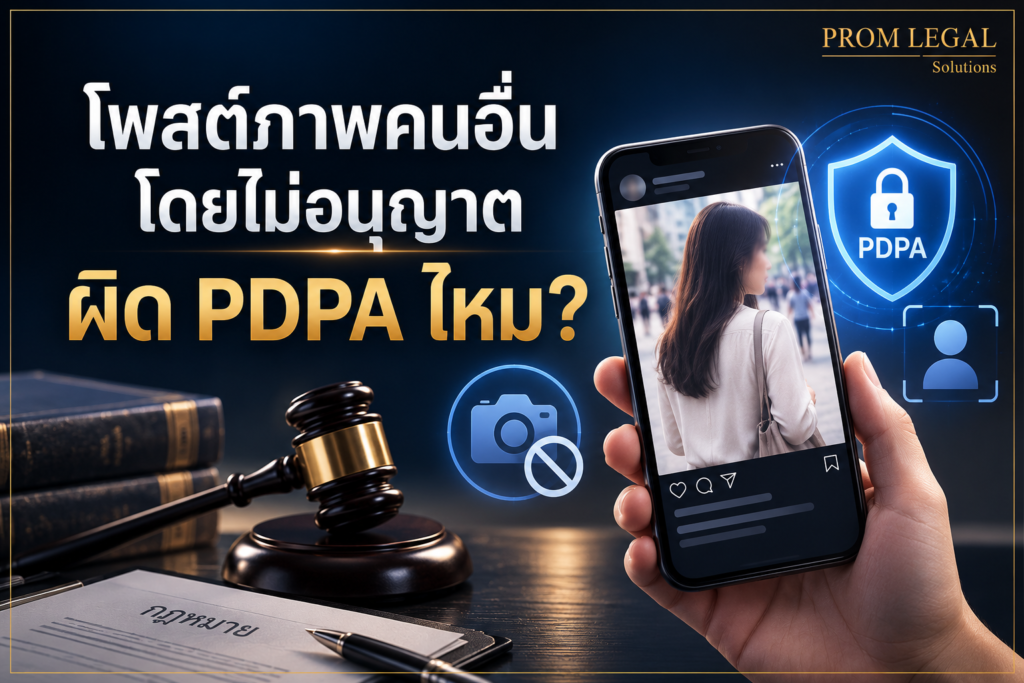
ยุคนี้ใคร ๆ ก็ถ่ายรูปแล้วโพสต์ลงโซเชียลได้ในไม่กี่วินาที แต่ถ้าในภาพนั้นมี “หน้าคนอื่น” ติดมาด้วย เช่น ลูกค้าในร้าน เพื่อนร่วมงาน หรือคนแปลกหน้าที่เดินผ่าน แล้วเราเอาไปโพสต์โดยไม่ได้ขออนุญาต คำถามคือ เราจะผิดกฎหมายไหม? ผิด PDPA หรือผิดอาญากันแน่?
คำตอบสั้น ๆ คือ “อาจผิดได้หลายทางพร้อมกัน” ขึ้นอยู่กับบริบทและเนื้อหา เปรียบเหมือนการขับรถ ที่อาจผิดได้ทั้งกฎจราจรและก่อให้เกิดความเสียหายต่อผู้อื่นในคราวเดียว วันนี้ Prom Legal Solution ขอพาทุกท่านไปแยกแยะให้ชัดทีละชั้นค่ะ
ชั้นที่ 1: มุมมอง PDPA (กฎหมายคุ้มครองข้อมูลส่วนบุคคล)
ภาพถ่ายที่เห็นใบหน้าหรือทำให้ระบุตัวบุคคลได้ ถือเป็น “ข้อมูลส่วนบุคคล” การนำไปโพสต์เผยแพร่จึงเป็น “การเปิดเผยข้อมูลส่วนบุคคล” ซึ่งตาม พ.ร.บ.คุ้มครองข้อมูลส่วนบุคคล พ.ศ. 2562 หลักคือ โดยทั่วไปต้องมีฐานทางกฎหมายรองรับ หรือได้รับ ความยินยอม จากเจ้าของข้อมูลก่อน (มาตรา 19, 24, 27) ทั้งนี้ PDPA ไม่ได้กำหนดว่าต้องขอความยินยอมทุกกรณี หากมีฐานทางกฎหมายอื่นตามที่กฎหมายกำหนด ก็อาจประมวลผลข้อมูลได้
แต่ที่สำคัญมากคือ ข้อยกเว้นตามมาตรา 4 ที่ระบุว่า กฎหมายนี้ ไม่ใช้บังคับ กับการเก็บรวบรวม ใช้ หรือเปิดเผยข้อมูลส่วนบุคคล “เพื่อประโยชน์ส่วนตนหรือกิจกรรมในครอบครัวเท่านั้น”
| สถานการณ์ | มุมมอง PDPA |
| โพสต์รูปครอบครัว/เพื่อน ลงเฟซส่วนตัวล้วน ๆ | โดยทั่วไปเข้าข้อยกเว้นกิจกรรมส่วนตัว (มาตรา 4) ไม่อยู่ใต้บังคับ PDPA |
| ร้านค้า/บริษัท นำรูปลูกค้าไปโพสต์โปรโมต | เป็นการใช้เพื่อธุรกิจ โดยทั่วไปต้องมีฐานทางกฎหมายที่เหมาะสม และหลายกรณีควรได้รับความยินยอมจากเจ้าของข้อมูล (มาตรา 24, 27) |
| นำรูปพนักงาน/บุคคลอื่นไปใช้เชิงพาณิชย์ | ควรมีความยินยอมหรือฐานทางกฎหมายที่เหมาะสมรองรับ (มาตรา 19) ทั้งนี้ ในความสัมพันธ์นายจ้าง–ลูกจ้าง ความยินยอมอาจไม่ใช่ฐานที่มั่นคงนัก เพราะอาจถูกโต้แย้งเรื่องความสมัครใจ จึงควรพิจารณาฐานประโยชน์โดยชอบด้วยกฎหมาย (มาตรา 24(5)) ประกอบ |
ข้อสังเกต: เส้นแบ่งสำคัญอยู่ที่ “วัตถุประสงค์” หากเป็นเรื่องส่วนตัวแท้ ๆ มักได้รับยกเว้น แต่พอข้ามมาเป็นการใช้เชิงธุรกิจหรือองค์กร PDPA ก็มักจะเข้ามาเกี่ยวข้อง
ชั้นที่ 2: มุมมองอาญา (เมื่อภาพนั้นทำให้เขาเสียหาย)
PDPA เน้นเรื่อง “การจัดการข้อมูล” แต่ถ้าการโพสต์ภาพนั้นมีลักษณะ ทำให้ผู้อื่นเสียชื่อเสียง ถูกดูหมิ่น หรือถูกเกลียดชัง ก็อาจเข้าข่ายความผิดอาญาอีกชั้นหนึ่ง
| ความผิด | สาระสำคัญและโทษ |
| หมิ่นประมาทโดยการโฆษณา (ป.อาญา มาตรา 328) | โพสต์ภาพพร้อมข้อความใส่ความผู้อื่นต่อบุคคลที่สามผ่านสื่อ จนน่าจะเสียชื่อเสียง โทษจำคุกไม่เกิน 2 ปี และปรับไม่เกิน 200,000 บาท |
| นำเข้าภาพตัดต่อ (พ.ร.บ.คอมพิวเตอร์ฯ มาตรา 16) | นำเข้าสู่ระบบคอมพิวเตอร์ซึ่งภาพบุคคลที่สร้างขึ้น ตัดต่อ เติม หรือดัดแปลง โดยน่าจะทำให้เสียชื่อเสียงหรืออับอาย โทษจำคุกไม่เกิน 3 ปี และปรับไม่เกิน 200,000 บาท |
โดยทั่วไปทั้งสองฐานนี้เป็นความผิดอันยอมความได้ และยังต้องพิจารณาข้อยกเว้นตามกฎหมายเป็นรายกรณี โดยประมวลกฎหมายอาญากำหนดข้อยกเว้นบางประการ เช่น การแสดงความคิดเห็นโดยสุจริตเพื่อประโยชน์สาธารณะ ซึ่งต้องพิจารณาตามข้อเท็จจริงของแต่ละกรณี
ข้อควรระวัง: มาตรา 14 แห่ง พ.ร.บ.คอมพิวเตอร์ฯ ระบุชัดว่ากรณีข้อมูลเท็จที่เป็น “การหมิ่นประมาท” ให้ใช้ประมวลกฎหมายอาญา ไม่ใช่นำมาตรา 14 มาใช้ ดังนั้นการโพสต์ด่าทอใส่ความทั่วไปจึงเป็นเรื่องหมิ่นประมาทตามประมวลกฎหมายอาญา
ชั้นที่ 3: มุมมองแพ่ง (เรียกค่าเสียหาย)
นอกจากโทษทางอาญาและความรับผิดตาม PDPA แล้ว ผู้เสียหายยังอาจ ฟ้องเรียกค่าสินไหมทดแทนฐานละเมิดตามประมวลกฎหมายแพ่งและพาณิชย์ รวมถึงความเสียหายจากการละเมิดสิทธิในความเป็นส่วนตัวหรือชื่อเสียงได้อีกทางหนึ่ง ทั้งสามชั้นนี้สามารถเกิดขึ้นควบคู่กันได้ในเหตุการณ์เดียว
ข้อควรระวัง (เจ็บแต่จบ): ไม่ใช่ว่าโพสต์ภาพที่ติดหน้าคนอื่นจะผิดเสมอไป ภาพวิวที่บังเอิญมีคนเดินผ่าน หรือการโพสต์ส่วนตัวที่ไม่ได้ทำให้ใครเสียหาย มักไม่เป็นปัญหา สิ่งที่ทำให้ “ผิด” คือบริบท วัตถุประสงค์เชิงพาณิชย์ การไม่มีความยินยอม และเนื้อหาที่ทำให้ผู้อื่นเสียหาย ทั้งนี้ การถ่ายภาพหรือเผยแพร่ภาพในพื้นที่สาธารณะไม่ได้หมายความว่าสามารถนำภาพไปใช้ได้ทุกวัตถุประสงค์ โดยเฉพาะเมื่อมุ่งเน้นตัวบุคคลหรือใช้เพื่อการโฆษณาหรือแสวงหาประโยชน์ทางการค้า
สรุป
- ภาพที่ระบุตัวบุคคลได้คือ ข้อมูลส่วนบุคคล การเปิดเผยเชิงธุรกิจโดยทั่วไปต้องมีฐานหรือความยินยอม (PDPA มาตรา 19, 24, 27) แต่การใช้ส่วนตัว/ครอบครัวได้รับ ยกเว้น (มาตรา 4)
- ถ้าภาพหรือข้อความทำให้ผู้อื่นเสียชื่อเสียง อาจผิด หมิ่นประมาทโดยการโฆษณา (ป.อาญา มาตรา 328) หรือภาพตัดต่อตาม พ.ร.บ.คอมพิวเตอร์ฯ มาตรา 16
- ผู้เสียหายยัง ฟ้องแพ่ง เรียกค่าเสียหายได้ และทั้งสามชั้นเกิดพร้อมกันได้
- กุญแจสำคัญอยู่ที่ บริบท วัตถุประสงค์ ความยินยอม และเนื้อหา
เรื่องการใช้ภาพและข้อมูลส่วนบุคคลมีรายละเอียดที่ละเอียดอ่อนและซ้อนทับกันหลายกฎหมาย Prom Legal Solution ให้บริการครบวงจร ทั้งให้คำปรึกษาการปฏิบัติตาม PDPA วางระบบความยินยอม ไปจนถึงดำเนินคดีหมิ่นประมาทและละเมิด ปรึกษาเราได้เลยค่ะ ก่อนที่ปัญหาจะบานปลาย
บทความนี้จัดทำขึ้นเพื่อให้ความรู้ทั่วไปทางกฎหมายเท่านั้น มิใช่ความเห็นทางกฎหมายสำหรับกรณีเฉพาะเรื่อง ผู้อ่านควรปรึกษาทนายความเพื่อรับคำแนะนำที่เหมาะสมกับข้อเท็จจริงของท่าน
การพิจารณาว่าการโพสต์ภาพบุคคลชอบด้วยกฎหมายหรือไม่ ต้องพิจารณาข้อเท็จจริงเป็นรายกรณี ทั้งลักษณะของภาพ วัตถุประสงค์ในการเผยแพร่ ความคาดหมายในความเป็นส่วนตัว และผลกระทบที่เกิดขึ้น
_/
Posting Someone Else’s Photo Without Permission: A PDPA Breach or a Criminal Offence?
These days anyone can snap a photo and post it to social media in seconds. But if that photo also captures someone else’s face, a customer in your shop, a colleague, or a stranger walking by, and you post it without asking, the question is: are you breaking the law? Is it a PDPA breach, or a criminal offence?
The short answer: “It could be several things at once,” depending on context and content. It’s a bit like driving, where one act can breach traffic rules and cause harm to others at the same time. Today, Prom Legal Solution breaks it down layer by layer.
Layer 1: The PDPA Angle (Personal Data Protection)
A photo showing a face or otherwise identifying a person is personal data. Posting it publicly is a “disclosure of personal data,” and under the Personal Data Protection Act B.E. 2562 (2019), the general rule is that you typically need a lawful basis, or the data subject’s consent, first (Sections 19, 24, 27). The PDPA does not require consent in every case; where another lawful basis under the Act applies, the data may be processed without it.
Crucially, Section 4 exempts the collection, use, or disclosure of personal data carried out “for purely personal benefit or household activity.”
| Situation | PDPA View |
| Posting family/friends’ photos on a purely personal profile | Generally falls under the personal-activity exemption (Section 4); not subject to PDPA |
| A shop/company posting a customer’s photo to promote itself | This is business use; it generally requires an appropriate lawful basis, and in many cases consent from the data subject should be obtained (Sections 24, 27) |
| Using an employee’s or other person’s image commercially | Consent or an appropriate lawful basis should be in place (Section 19). In an employment context, consent may not be a robust basis, as it can be challenged as not freely given, so legitimate interest (Section 24(5)) should also be considered |
Note: The key dividing line is purpose. Purely personal matters are usually exempt, but once it crosses into business or organisational use, PDPA generally applies.
Layer 2: The Criminal Angle (When the Photo Harms Them)
PDPA focuses on “data handling,” but if posting the photo tends to damage someone’s reputation, or expose them to contempt or hatred, it may also be a criminal offence on a separate layer.
| Offence | Key Point and Penalty |
| Defamation by publication (Penal Code Section 328) | Posting a photo with text that imputes something to another before third parties through media, likely to harm their reputation: imprisonment up to 2 years and a fine up to THB 200,000 |
| Uploading a doctored image (Computer Crime Act Section 16) | Importing into a computer system an image of a person that was created, edited, added to, or altered, likely to cause loss of reputation or humiliation: imprisonment up to 3 years and a fine up to THB 200,000 |
These are generally compoundable offences, and statutory exceptions must still be assessed case by case; the Penal Code provides certain exceptions, such as good-faith expression of opinion for the public benefit, which must be assessed on the facts of each case.
Caution: Section 14 of the Computer Crime Act expressly says that false information amounting to “defamation” is to be handled under the Penal Code, not Section 14. So ordinary defamatory posts are dealt with as Penal Code defamation.
Layer 3: The Civil Angle (Claiming Damages)
Beyond criminal penalties and PDPA liability, the injured person may also sue for damages in tort under the Civil and Commercial Code, including loss arising from infringement of privacy or reputation. All three layers can arise together from a single incident.
Caveat: Not every photo capturing another person’s face is unlawful. A scenic shot with someone incidentally walking by, or a personal post that harms no one, is usually fine. What makes it “wrong” is the context, a commercial purpose, the absence of consent, and content that harms others. Taking or sharing photos in a public place does not mean the images may be used for any purpose, particularly where they focus on an individual or are used for advertising or commercial gain.
Key Takeaways
- An identifying photo is personal data; business disclosure generally needs a basis or consent (PDPA Sections 19, 24, 27), but personal/household use is exempt (Section 4).
- If the photo or text harms someone’s reputation, it may be defamation by publication (Penal Code Section 328) or a doctored image under Computer Crime Act Section 16.
- The injured person can also sue civilly for damages, and all three layers can occur together.
- The key factors are context, purpose, consent, and content.
Using images and personal data involves sensitive, overlapping areas of law. Prom Legal Solution offers end-to-end support, from PDPA compliance advice and consent frameworks to litigating defamation and tort. Talk to us before a problem escalates.
This article is for general legal information only and is not legal advice for any specific case. Please consult a lawyer for advice tailored to your facts.
Whether posting a person’s photo is lawful must be assessed case by case, taking into account the nature of the image, the purpose of publication, the reasonable expectation of privacy, and the resulting impact.
#PDPA #ข้อมูลส่วนบุคคล #โพสต์ภาพ #หมิ่นประมาท #พรบคอมพิวเตอร์ #กฎหมายธุรกิจ #DataPrivacy #PromLegalSolution #LegalTip #SME #Startup