(English Below)
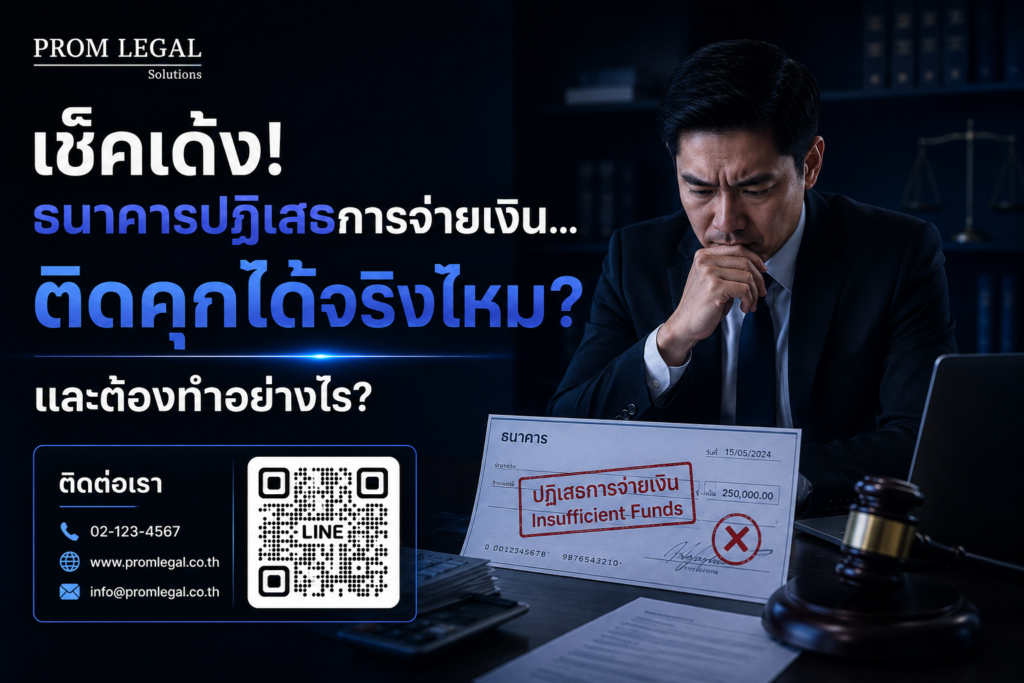
ลองนึกภาพว่าคุณส่งของให้ลูกค้าครบถ้วน แล้วได้ “เช็ค” มาหนึ่งใบแทนเงินสด พอถึงวันนัด คุณนำเช็คไปขึ้นเงินที่ธนาคารด้วยความมั่นใจ… แต่กลับได้ใบ “คืนเช็ค” พร้อมข้อความว่า “เงินในบัญชีไม่พอจ่าย” กลับมาแทน
เหตุการณ์แบบนี้เราเรียกกันติดปากว่า “เช็คเด้ง” ซึ่งสร้างความเสียหายและความกังวลให้เจ้าของธุรกิจ SME จำนวนมาก หลายคนสงสัยว่า “แล้วคนที่ออกเช็คให้เรา ติดคุกได้ไหม?” หรือ “เราจะได้เงินคืนทางไหน?”
วันนี้ Prom Legal Solution ขอพาทุกท่านไปทำความเข้าใจเรื่อง “เช็คเด้ง” แบบครบทุกมุม ทั้งด้านอาญาและด้านแพ่ง เพื่อให้คุณรู้สิทธิ และรับมือได้อย่างถูกต้องค่ะ
เช็คเด้ง ไม่ได้ผิดอาญาทุกกรณี
นี่คือจุดที่คนเข้าใจผิดกันมากที่สุดค่ะ หลายคนคิดว่า “เช็คเด้ง = ติดคุกแน่นอน” แต่ความจริงไม่ใช่เลย
ความผิดอาญาเรื่องเช็คอยู่ภายใต้ พระราชบัญญัติว่าด้วยความผิดอันเกิดจากการใช้เช็ค พ.ศ. 2534 โดย มาตรา 4 วางหลักไว้ชัดเจนว่า การออกเช็คจะเป็นความผิดอาญาได้ ต้องครบ “องค์ประกอบ” ดังนี้ค่ะ
| องค์ประกอบความผิด | คำอธิบาย |
| 1. ออกเช็คเพื่อชำระ “หนี้ที่มีอยู่จริงและบังคับได้ตามกฎหมาย” | ต้องมีหนี้จริง และเป็นหนี้ที่ฟ้องร้องบังคับกันได้ |
| 2. มีลักษณะการกระทำอย่างใดอย่างหนึ่ง | เช่น เจตนาไม่ให้มีการใช้เงินตามเช็ค, ขณะออกไม่มีเงินในบัญชี, เงินในบัญชีไม่พอจ่าย, ถอนเงินออกจนไม่พอ หรือสั่งห้ามธนาคารจ่ายโดยทุจริต |
| 3. ธนาคารปฏิเสธการจ่ายเงิน | เมื่อนำเช็คไปขึ้นเงินโดยชอบด้วยกฎหมายแล้ว ธนาคารปฏิเสธจ่าย |
โทษตามกฎหมาย: ปรับไม่เกิน 60,000 บาท หรือจำคุกไม่เกิน 1 ปี หรือทั้งจำทั้งปรับ
หัวใจสำคัญ: “หนี้ต้องมีอยู่จริงและบังคับได้”
ทำไมเราถึงเน้นย้ำเรื่อง “หนี้ที่มีอยู่จริงและบังคับได้” คะ? เพราะนี่คือ องค์ประกอบความผิด ไม่ใช่แค่รายละเอียดปลีกย่อย หากขาดข้อนี้ไป คดีอาญาก็ไม่เกิดขึ้นเลย ซึ่งศาลฎีกาวางแนวไว้อย่างน่าสนใจ
ออกเช็คตาม “สัญญารับสภาพหนี้” อาจไม่ผิด โดยศาลฎีกาที่ 307/2549 วินิจฉัยว่า การรับสภาพหนี้ ไม่ได้ก่อให้เกิดมูลหนี้ขึ้นใหม่ เพียงแต่ทำให้อายุความสะดุดหยุดลง การฟ้องโดยอ้างเฉพาะสัญญารับสภาพหนี้จึงขาดองค์ประกอบความผิด ทั้งนี้ ฎีกานี้วินิจฉัยที่ “การบรรยายฟ้อง” ที่ขาดองค์ประกอบ มิใช่ว่าการออกเช็คตามสัญญารับสภาพหนี้จะไม่ผิดเสมอไป หากในข้อเท็จจริงมีมูลหนี้เดิมที่บังคับได้และโจทก์บรรยายฟ้องถึงมูลหนี้เดิมด้วย ก็ยังอาจเป็นความผิดได้ (เทียบ ฎ. 7283/2540)
หนี้เงินกู้ที่สัญญาปิดอากรแสตมป์ไม่ครบ ยังเป็นความผิดได้ โดยศาลฎีกาที่ 6318/2548 วินิจฉัยว่า สัญญากู้ที่ปิดอากรแสตมป์ไม่ครบ ใช้เป็นพยานหลักฐานไม่ได้ เฉพาะในคดีแพ่ง เท่านั้น แต่ในคดีอาญารับฟังได้ จึงถือว่าออกเช็คเพื่อชำระหนี้ที่มีอยู่จริงและบังคับได้
ต้องมี “เจตนา” ด้วย โดยศาลฎีกาที่ 1730/2565 วินิจฉัยว่า เมื่อผู้แทนนิติบุคคลผู้ลงนามในเช็คไม่รู้ว่าวันออกเช็คเงินในบัญชีไม่พอ ถือว่าขาดเจตนา จึงไม่เป็นความผิดตามมาตรา 4 ทั้งนี้ “เจตนา” มิใช่องค์ประกอบลำดับที่แยกออกมาต่างหาก แต่เป็นองค์ประกอบภายในที่ต้องมีควบคู่กับองค์ประกอบภายนอกเสมอ ตามประมวลกฎหมายอาญา มาตรา 59 กล่าวคือ ผู้ออกเช็คต้องรู้ข้อเท็จจริงอันเป็นองค์ประกอบความผิด เช่น รู้ว่าในวันออกเช็คเงินในบัญชีไม่พอ จึงจะถือว่ามีเจตนากระทำความผิด
ข้อควรระวัง (เจ็บแต่จบ): การออกเช็คเพื่อ “ค้ำประกัน” หรือ “กู้ยืมแบบไม่มีหนี้เดิม” หรือเช็คลงวันที่ล่วงหน้าเพื่อเป็นประกัน อาจไม่เข้าข่ายความผิดอาญา เพราะไม่ใช่การชำระหนี้ที่มีอยู่จริง ฉะนั้นการคิดว่า “ถือเช็คไว้ก็อุ่นใจ ฟ้องอาญาได้แน่” จึงเป็นความเข้าใจที่อันตรายค่ะ
ถ้าไม่ผิดอาญา… เรายังเรียกเงินคืนได้! (ทางแพ่ง)
ข่าวดีคือ แม้บางกรณีจะไม่เข้าข่ายความผิดอาญา แต่ “เช็ค” คือตั๋วเงินชนิดหนึ่ง ผู้ทรงเช็ค (คนที่ถือเช็คโดยชอบ) ย่อมมีสิทธิ ฟ้องเรียกเงินตามเช็คทางแพ่ง จากผู้สั่งจ่ายได้เสมอค่ะ
| ประเด็น | หลักกฎหมาย |
| ไม่ต้องบอกกล่าวก่อนฟ้อง | ผู้ทรงเช็คฟ้องผู้สั่งจ่ายได้เลยเมื่อเช็คถึงกำหนด (ฎ. 169/2528) |
| อายุความ 1 ปี | นับแต่ “วันที่ลงในเช็ค” (วันสั่งจ่าย) ตาม ป.พ.พ. มาตรา 1002 (ฎ. 9539/2544) |
| ยื่นเกิน 6 เดือนก็ยังฟ้องผู้สั่งจ่ายได้ | แม้พ้นกำหนดนำเช็คไปขึ้นเงิน 6 เดือน ก็ไม่เสียสิทธิเรียกเงินจากผู้สั่งจ่าย (ฎ. 169/2528) |
| เรียกดอกเบี้ยได้ | คิดดอกเบี้ยผิดนัดได้นับแต่วันที่เช็คถึงกำหนด |
| ข้อยกเว้น: ผู้สลักหลังมีอายุความ 6 เดือน | อายุความ 1 ปีข้างต้นใช้กับ “ผู้ทรงเช็ค” ที่ฟ้องผู้สั่งจ่าย แต่หากเป็น “ผู้สลักหลัง” ที่ได้ใช้เงินไปแล้วและฟ้องไล่เบี้ยเอาแก่ผู้สั่งจ่าย จะอยู่ภายใต้ ป.พ.พ. มาตรา 1003 ซึ่งมีอายุความเพียง 6 เดือน นับแต่วันที่เข้าถือเอาเช็คและใช้เงิน (เทียบ ฎ. 6339/2539) ผู้รับโอนเช็คต่อมาจึงควรระวังจุดนี้ |
ระวังอายุความ 1 ปี! เป็นเรื่องที่พลาดกันบ่อยที่สุด หลายคนมัวแต่เจรจาทวงถามจนเลยปี แล้วสิทธิฟ้องตามเช็คก็ขาดอายุความไป จึงควรรีบปรึกษาทนายความตั้งแต่เนิ่น ๆ ค่ะ
เช็คเด้งแล้ว ทำอย่างไร? (ทำตามนี้ทันที)
- เก็บหลักฐานให้ครบ ได้แก่ ตัวเช็ค ใบคืนเช็ค (ระบุเหตุผลการปฏิเสธ) และเอกสารแสดงมูลหนี้ (ใบสั่งซื้อ สัญญา ใบส่งของ)
- ส่งหนังสือบอกกล่าวทวงถาม ให้ผู้สั่งจ่ายชำระเงิน ซึ่งสำคัญทั้งทางอาญาและแพ่ง
- ประเมินว่าเข้าองค์ประกอบอาญาหรือไม่ คือ มีหนี้จริง บังคับได้ และมีเจตนาหรือไม่
- ดำเนินการให้ทันอายุความ เพราะคดีแพ่งตามเช็คมีอายุความเพียง 1 ปี
รู้ไว้: หากผู้ออกเช็คนำเงินมาชำระเต็มจำนวนภายใน 30 วัน นับแต่ได้รับหนังสือบอกกล่าวว่าธนาคารไม่จ่ายเงิน หรือหนี้นั้นสิ้นผลผูกพันก่อนศาลพิพากษาถึงที่สุด “คดีอาญาเป็นอันเลิกกัน” ตามมาตรา 7 ค่ะ
สรุป
- เช็คเด้ง ไม่ได้ผิดอาญาเสมอไป เพราะต้องครบองค์ประกอบตาม พ.ร.บ.เช็คฯ มาตรา 4 โดยเฉพาะ “หนี้ที่มีอยู่จริงและบังคับได้” และ “เจตนา”
- แม้ไม่ผิดอาญา ก็ยัง ฟ้องเรียกเงินทางแพ่ง ได้ในฐานะผู้ทรงเช็ค
- อายุความฟ้องตามเช็คเพียง 1 ปี อย่าปล่อยให้ขาดอายุความ
- ชำระเงินภายใน 30 วันหลังบอกกล่าว ทำให้ คดีอาญาเลิกกัน ได้
ปัญหาเช็คเด้งมีรายละเอียดทางกฎหมายซ่อนอยู่มากกว่าที่คิด และแต่ละกรณีมีทางออกต่างกัน Prom Legal Solution ให้บริการครบวงจร ตั้งแต่ตรวจสอบมูลหนี้ ส่งหนังสือบอกกล่าว ไปจนถึงดำเนินคดีทั้งทางแพ่งและอาญา ปรึกษาเราได้เลยค่ะ ก่อนที่สิทธิของคุณจะหมดเวลา
บทความนี้จัดทำขึ้นเพื่อให้ความรู้ทั่วไปทางกฎหมายเท่านั้น มิใช่ความเห็นทางกฎหมายสำหรับกรณีเฉพาะเรื่อง ผู้อ่านควรปรึกษาทนายความเพื่อรับคำแนะนำที่เหมาะสมกับข้อเท็จจริงของท่าน
#เช็คเด้ง #คดีเช็ค #ธนาคารปฏิเสธการจ่ายเงิน #พรบเช็ค #กฎหมายธุรกิจ #BouncedCheque #PromLegalSolution #LegalTip #SME #Startup
Bounced Cheque! When the Bank Refuses to Pay: Can You Really Go to Jail, and What Should You Do?
Imagine you’ve delivered everything your client ordered, and instead of cash you receive a cheque. On the due date you walk into the bank, confident, only to be handed a “returned cheque” slip marked “insufficient funds.”
This is what we casually call a bounced cheque, and it causes real damage and anxiety for many SME owners. The two questions everyone asks are: “Can the person who issued the cheque actually go to jail?” and “How do I get my money back?”
Today, Prom Legal Solution will walk you through bounced cheques from every angle, both criminal and civil, so you know your rights and can respond correctly.
A Bounced Cheque Is Not Always a Crime
This is the single most misunderstood point. Many people assume “bounced cheque = certain jail time.” That is simply not true.
Criminal liability for cheques falls under the Act on Offences Arising from the Use of Cheques, B.E. 2534 (1991), and Section 4 sets out clear elements that must ALL be met.
| Element | Explanation |
| 1. The cheque pays “a debt that genuinely exists and is legally enforceable” | There must be a real debt, and one that can be enforced in court |
| 2. One of the listed acts is present | e.g. intent not to honour the cheque, no funds in the account at issuance, insufficient funds, withdrawing funds so the balance is too low, or fraudulently ordering the bank to stop payment |
| 3. The bank refuses payment | The bank dishonours the cheque when it is duly presented |
Penalty: a fine of up to THB 60,000, imprisonment of up to 1 year, or both.
The Heart of It: a Real, Enforceable Debt
Why do we keep stressing “a real, enforceable debt”? Because it is an element of the offence itself, not a minor detail. Without it, no crime arises at all. The Supreme Court has drawn some interesting lines here.
A cheque issued under a “debt-acknowledgement agreement” may not be an offence. Supreme Court Decision 307/2549 held that acknowledging a debt does not create a new obligation; it merely interrupts the limitation period. A charge resting on that alone lacks an element of the offence. Note that this decision turned on a defective indictment that omitted an element, rather than holding that issuing a cheque under a debt-acknowledgement agreement can never be an offence. If the facts show an underlying enforceable debt and the prosecution pleads that original debt, the offence may still stand (cf. Decision 7283/2540).
A loan whose contract lacks proper stamp duty can still ground the offence. Decision 6318/2548 held that an under-stamped loan contract is inadmissible only in civil cases; in criminal cases it remains admissible, so the cheque still pays a real, enforceable debt.
Intent is required too. Decision 1730/2565 held that where a company’s authorised signatories did not know there were insufficient funds on the date of issue, the requisite intent was absent, so there was no offence under Section 4. Note that intent is not a separate, standalone element listed alongside the others; it is the mental element that must accompany the physical elements at all times, under Section 59 of the Criminal Code. In other words, the drawer must be aware of the facts constituting the offence (for example, knowing that funds were insufficient on the date of issue) before criminal intent can be made out.
Caveat: Cheques issued purely as a guarantee, or for a loan with no underlying debt, may not constitute a criminal offence because they do not pay a genuinely existing debt. Assuming “holding a cheque guarantees a criminal case” is a dangerous misconception.
No Crime? You Can Still Recover Your Money (Civil Route)
The good news: even when there’s no crime, a cheque is a type of negotiable instrument. The lawful holder always has the right to sue the drawer civilly for the cheque amount.
| Issue | Legal Principle |
| No prior notice needed | The holder may sue the drawer immediately once the cheque matures (Decision 169/2528) |
| 1-year limitation period | Counted from the date written on the cheque, per Civil and Commercial Code Section 1002 (Decision 9539/2544) |
| Presenting after 6 months still allows a claim against the drawer | Even past the 6-month presentation window, the right to claim against the drawer survives (Decision 169/2528) |
| Interest can be claimed | Default interest runs from the maturity date |
| Exception: endorsers have only 6 months | The 1-year limit above applies to a holder suing the drawer. But an endorser who has already paid and seeks recourse against the drawer falls under Section 1003, with a limitation period of only 6 months from the date of taking up the cheque and paying (cf. Decision 6339/2539). Anyone who takes the cheque by later transfer should watch this point. |
Mind the 1-year limit! This is the most common slip: people negotiate and chase payment until the year lapses, and the right to sue on the cheque expires. Consult a lawyer early.
Your Step-by-Step Action Plan
- Gather all evidence: the cheque, the returned-cheque slip (with the reason), and proof of the underlying debt (PO, contract, delivery note).
- Send a formal demand letter, which matters for both criminal and civil paths.
- Assess the criminal elements: is there a real, enforceable debt and the requisite intent?
- Act within the limitation period, because a civil claim on the cheque lasts only 1 year.
Note: If the issuer pays in full within 30 days of receiving notice of dishonour, or the debt is extinguished before final judgment, the criminal case ends under Section 7.
Key Takeaways
- A bounced cheque is not always a crime because all elements of Section 4 must be met, especially a real, enforceable debt plus intent.
- Even without a crime, you can still sue civilly as the cheque holder.
- The civil limitation period is just 1 year, so don’t let it lapse.
- Paying within 30 days of notice can end the criminal case.
Bounced-cheque problems hide far more legal detail than most expect, and every case has a different solution. Prom Legal Solution offers end-to-end support, from verifying the debt and issuing demand letters to litigating both civil and criminal matters. Talk to us before your rights run out of time.
This article is for general legal information only and is not legal advice for any specific case. Please consult a lawyer for advice tailored to your facts.
#เช็คเด้ง #คดีเช็ค #ธนาคารปฏิเสธการจ่ายเงิน #พรบเช็ค #กฎหมายธุรกิจ #BouncedCheque #PromLegalSolution #LegalTip #SME #Startup