(English Below)
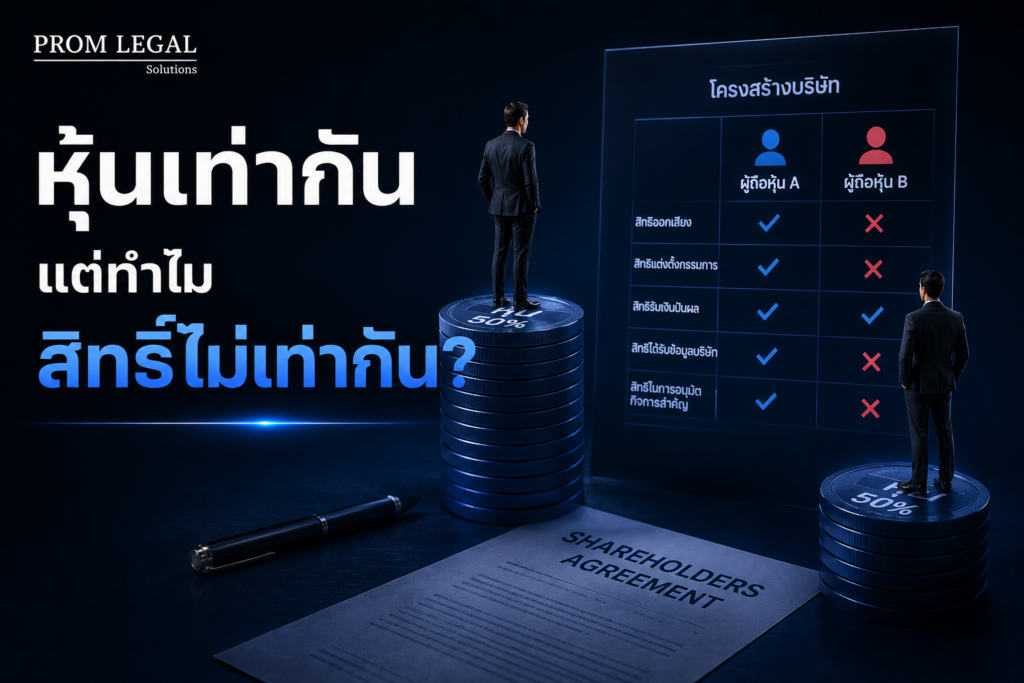
การร่างสัญญาผู้ถือหุ้น (Shareholders’ Agreement หรือ SHA) ก็เหมือนกับการตัดสูทที่ร้านตัดเสื้อ บางทีคุณกับเพื่อนมีไซส์ที่ใกล้เคียงกันมาก แต่ก็ไม่สามารถตัดแบบเดียวกันได้ เพราะบางคนอาจไหล่ตก อกซ้ายขวาไม่เท่ากัน สัญญานี้ก็เปรียบเสมือนเสื้อตัวเดียวที่ทุกคนต้องสวมใส่ไปตลอดชีวิตของบริษัท ถ้าตัดแบบ ready-to-wear แล้วเอามาปรับไซส์ มันอาจพอใส่ได้ แต่จะไม่มีวัน fit แบบ 100% เพราะแต่ละคนมีบทบาทในบริษัทที่ต่างกัน และสิทธิ์ควรตามบทบาท ไม่ใช่แค่ตามสัดส่วนหุ้นที่ถืออยู่
วันนี้พวกเรา Prom Legal Solution จะพาคุณมาดูมุมมองจากนักกฎหมายว่า ทำไมผู้ถือหุ้นแต่ละคนจึงไม่ควรได้สิทธิ์เท่ากันทุกเรื่อง ควรแบ่งผู้ถือหุ้นออกเป็นกี่ประเภท และแต่ละประเภทควรได้สิทธิ์อะไรบ้าง ในรูปแบบสรุปอ่านง่าย เข้าใจได้ทันทีค่ะ
ก่อนร่างสัญญา ต้องถามก่อนว่า ใครเป็นใครในบริษัทนี้?
ความผิดพลาดที่พบบ่อยที่สุดคือ การร่างสัญญาโดยยังไม่ได้คุยให้ชัดว่าแต่ละคนมีบทบาทอะไรในบริษัท แล้วก็กำหนดสิทธิ์ให้เท่ากันทุกคนตามสัดส่วนหุ้น ซึ่งฟังดูยุติธรรม แต่ในทางปฏิบัติอาจสร้างปัญหาได้อย่างมาก เพราะคนที่นั่งทำงานทุกวันกับคนที่แค่ลงทุนแล้วรอรับผลตอบแทน ย่อมไม่ควรมีสิทธิ์เหมือนกันในทุกเรื่อง
ดังนั้น ขั้นแรกสุดก่อนร่างสัญญาคือ การทำความเข้าใจบทบาทของแต่ละคน แล้วจึงค่อยกำหนดสิทธิ์ที่เหมาะสม ผู้ถือหุ้นอาจแบ่งประเภทได้คร่าวๆ เป็น 4 กลุ่มหลัก ดังนี้
| ประเภท | บทบาท | สิทธิ์ที่ควรมี | หน้าที่ / เงื่อนไขพิเศษ |
| Founder / Co-founder | คนสร้างธุรกิจ + ทำงานจริงในบริษัท | • ตั้งกรรมการได้อย่างน้อย x คน
• ตั้ง CEO • สิทธิ์ Veto ในที่ประชุมผู้ถือหุ้น • ถือหุ้นได้ 2 ประเภท: จ่ายด้วยเงิน + จ่ายด้วยแรงงาน |
• ต้องปฏิบัติหน้าที่ในบริษัท
• หากออกหุ้นตอบแทนแรงงาน ต้องได้รับมติที่ประชุม (มติทั่วไป ณ ตั้งบริษัท / มติพิเศษกรณีเพิ่มทุน) |
| Investor | คนเอาเงินมาลงทุน แต่ไม่บริหารงาน | • ตั้งกรรมการได้อย่างน้อย x คน
• ตั้ง CFO • ได้รับ Share Premium ตามราคา Valuation ไม่ใช่ราคาพาร์ |
• จ่ายราคาหุ้นตาม Valuation ของบริษัท เพื่อไม่ให้ Founder ถูก Dilute มากเกินไป
• ไม่เข้าบริหารงานประจำ |
| Active Shareholder | ถือหุ้น + มีบทบาทและหน้าที่ในบริษัท | • สิทธิ์ตามสัดส่วนหุ้นทั่วไป
• อาจมีสิทธิ์ Veto เฉพาะเรื่องที่เกี่ยวกับหน้าที่ของตน • ได้รับเงินตอบแทนการบริหาร |
• มี Job Description ชัดเจนในสัญญา
• หากผิดสัญญา อาจถูก Call Option บังคับขายหุ้น (Founder/Co-founder มักอยู่ในกลุ่มนี้ด้วย) |
| Passive Shareholder | ถือหุ้น แต่ไม่มีส่วนร่วมในการดำเนินงาน | • สิทธิ์รับเงินปันผล
• สิทธิ์ออกเสียงในที่ประชุมผู้ถือหุ้น • สิทธิ์ขายหุ้น (ตามเงื่อนไขที่ระบุในสัญญา) • สิทธิ์ได้รับข้อมูลตามที่กำหนด |
• ไม่มีหน้าที่รับผิดชอบในการบริหาร
• มักเน้นการระบุสิทธิ์ให้ชัดเจนเป็นหลัก ไม่ได้ระบุหน้าที่มาก |
หุ้นที่จ่ายด้วยแรงงาน (Sweat Equity)
สำหรับ Founder/Co-founder ที่ไม่ได้จ่ายเงินสด แต่นำแรงงานและความเชี่ยวชาญมาแลกกับหุ้น กระบวนการออกหุ้นต้องทำให้ถูกต้องตามกฎหมาย โดยที่ประชุมผู้ถือหุ้นต้องมีมติอนุมัติการออกหุ้นดังกล่าว หากเป็นการจัดตั้งบริษัทใหม่ใช้มติทั่วไป (เสียงเกินกึ่งหนึ่ง) ตาม ป.พ.พ. มาตรา 1108 แต่หากเป็นการเพิ่มทุนในภายหลังต้องใช้มติพิเศษ (เสียงไม่ต่ำกว่า 3 ใน 4) ตาม ป.พ.พ. มาตรา 1220 ประกอบมาตรา 1194 และต้องระบุให้ชัดว่า “สิ่งที่นำมาชำระค่าหุ้น” มีมูลค่าเป็นเท่าไร เพื่อไม่ให้ถูกโต้แย้งในภายหลัง ทั้งนี้ พึงระวังว่ากฎหมายไทยกำหนดให้ “สิ่งที่นำมาชำระค่าหุ้น” ต้องเป็นสิ่งที่มีมูลค่าและส่งมอบได้จริง ณ ขณะออกหุ้น (เช่น ทรัพย์สินหรือทรัพย์สินทางปัญญา) การออกหุ้นเพื่อแลกกับ “แรงงานที่จะทำในอนาคต” ล้วน ๆ อาจมีปัญหาเรื่องความสมบูรณ์ ในทางปฏิบัติจึงนิยมใช้กลไกทยอยรับสิทธิ์ในหุ้น (Vesting) ควบคู่กับสิทธิ์ซื้อหุ้นคืน (Call Option) นอกจากนี้ มูลค่าหุ้นที่ผู้ก่อตั้งได้รับเป็นค่าตอบแทนแรงงานยังถือเป็นเงินได้พึงประเมินที่ต้องเสียภาษี จึงควรวางแผนภาษีไว้ตั้งแต่ต้น
ทำไม Investor ต้องจ่ายแพงกว่าราคาพาร์?
เมื่อ Investor เข้ามาร่วมทุนในภายหลัง หากให้ Investor ซื้อหุ้นในราคาพาร์เดียวกับ Founder ที่ตั้งบริษัทมาตั้งแต่ต้น ก็แปลว่า Investor ได้สัดส่วนหุ้นเท่ากันโดยจ่ายเงินน้อยกว่า ซึ่งทำให้ Founder ถูกลดสัดส่วนหุ้นอย่างไม่เป็นธรรม ดังนั้น Investor ควรเข้ามาในราคา Valuation ของบริษัท ณ ขณะนั้น พร้อม Share Premium เพื่อให้สะท้อนมูลค่าที่แท้จริงของบริษัทที่สร้างมาแล้ว
ตัวอย่างเช่น หุ้นราคาพาร์ 10 บาท แต่บริษัท Valuation อยู่ที่ 10 ล้านบาท กับทุนจดทะเบียน 100,000 บาท (10,000 หุ้น) ราคา Valuation ต่อหุ้นอยู่ที่ 1,000 บาท Investor ควรจ่าย 1,000 บาทต่อหุ้น ไม่ใช่ 10 บาทตามราคาพาร์ ส่วนต่าง 990 บาทต่อหุ้นคือ Share Premium ที่บันทึกในบัญชีแยกต่างหาก
สิทธิ์บางอย่างต้องใส่ใน AOA ด้วย ไม่ใช่แค่ใน SHA
นี่คือจุดที่ทำกันพลาดบ่อยมาก ตกลงสิทธิ์กันไว้ใน SHA แล้วคิดว่าเสร็จแล้ว แต่จริงๆ SHA เป็นเพียงสัญญาระหว่างผู้ถือหุ้นด้วยกันเท่านั้น สามารถใช้บังคับกันได้เฉพาะคู่สัญญา หากต้องการให้สิทธิ์บางอย่างบังคับใช้ได้กับบุคคลภายนอก (เช่น ผู้ถือหุ้นรายใหม่ที่เข้ามาซื้อหุ้นต่อ) ต้องนำสิทธิ์นั้นบรรจุไว้ในข้อบังคับบริษัท (Articles of Association หรือ AOA) ด้วย
สิทธิที่ควรจะต้องใส่ใน AOA ด้วย ยกตัวอย่างเช่น สิทธิ์ Veto ในที่ประชุมผู้ถือหุ้น สิทธิ์ตั้งกรรมการเฉพาะกลุ่ม ข้อจำกัดการโอนหุ้น (Right of First Refusal) และ สิทธิ์รับเงินปันผลพิเศษ (Preferred Dividend) ทั้งนี้ “สิทธิ์ Veto” ในทางปฏิบัติควรกำหนดกลไกให้ชัด เช่น ระบุเป็นวาระสงวน (Reserved Matters) ที่ต้องได้รับความยินยอมของผู้ถือหุ้นกลุ่มนั้น หรือออกเป็นหุ้นบุริมสิทธิที่มีสิทธิ์ออกเสียงพิเศษ มากกว่าการเขียนคำว่า “veto” ไว้ลอย ๆ
พวกเรา Prom Legal Solution พร้อมดูแลทุกปัญหาทางกฎหมายให้คุณ ด้วยบริการร่างและตรวจสอบสัญญาผู้ถือหุ้นแบบครบวงจร ตั้งแต่การสัมภาษณ์เพื่อทำความเข้าใจบทบาทของแต่ละฝ่าย การออกแบบโครงสร้างสิทธิ์ที่เหมาะสม ไปจนถึงการประสานงานกับนักบัญชีเรื่อง Share Premium และ Sweat Equity ให้ถูกต้องตามกฎหมาย อย่าปล่อยให้สัญญาสำเร็จรูปมาแทนความรอบคอบตั้งแต่แรก ตัดเสื้อทั้งที ตัดให้ fit แต่แรกดีกว่าแก้ทีหลังตอนมันตึงแล้ว หากคุณมีข้อสงสัยประการใด สามารถติดต่อเพื่อขอคำปรึกษาได้เลยค่ะ
#PromLegalSolution #ที่ปรึกษากฎหมาย #SHA #สัญญาผู้ถือหุ้น #ผู้ถือหุ้น #หุ้น #Startup #SME #กฎหมายธุรกิจ #SharePremium #SweatEquity #AOA #ข้อบังคับบริษัท #LegalTip
Equal Shares, but Why Unequal Rights?
Drafting a Shareholders’ Agreement (SHA) is much like tailoring a suit. You and your friend might have very similar sizes, but you cannot wear the exact same cut—one person might have sloped shoulders, or a slightly asymmetrical chest. This agreement is like a single piece of clothing that everyone must wear for the entire lifespan of the company. If you buy a “ready-to-wear” template and try to alter the size, it might fit adequately, but it will never be a 100% perfect fit. This is because each person plays a different role in the company, and their rights should align with those roles, not just the proportion of shares they hold.
Today, we at Prom Legal Solution will share a legal perspective on why shareholders should not have identical rights across the board, how to properly categorize shareholders, and what specific rights each category deserves. We have summarized this into an easy-to-read, immediately applicable guide.
Before Drafting the Contract: Who is Who in This Company?
The most common mistake is drafting the contract before clearly discussing each person’s role in the company, resulting in equal rights for everyone based purely on their shareholding percentage. This sounds fair, but in practice, it can create massive operational bottlenecks. A person who grinds in the company every single day should not have the exact same decision-making rights on all matters as someone who merely invested money and is waiting for returns.
Therefore, the very first step before drafting an SHA is to thoroughly understand everyone’s role and then assign appropriate rights. Shareholders can be roughly divided into 4 main categories:
| Category | Role | Recommended Rights | Duties / Special Conditions |
| Founder / Co-founder | Business creator + actual worker in the company | – Appoint at least ‘x’ directors
– Appoint the CEO – Veto rights in shareholder meetings – Can hold 2 types of shares: paid with cash + paid with labor (Sweat Equity) |
– Must perform duties in the company
– Issuing shares for labor requires a shareholder resolution (Ordinary resolution upon incorporation / Special resolution for subsequent capital increases) |
| Investor | Injects capital but does not manage operations | – Appoint at least ‘x’ directors
– Appoint the CFO – Shares priced at Valuation with a Share Premium, not Par Value |
– Must pay the share price according to company Valuation to prevent excessive Founder dilution
– Does not participate in daily management |
| Active Shareholder | Holds shares + has active roles and duties in the company | – Standard rights proportional to shareholding
– May have Veto rights strictly related to their specific duties – Receives management compensation |
– Clear Job Description stated in the contract
– If they breach the contract, they may face a Call Option (forced to sell shares) (Founders often fall into this group as well) |
| Passive Shareholder | Holds shares but has no involvement in operations | – Right to receive dividends
– Voting rights in shareholder meetings – Right to sell shares (subject to contract conditions) – Right to access specified information |
– No management responsibilities
– Focus is primarily on clarifying rights rather than assigning duties |
Shares Paid with Labor (Sweat Equity)
For Founders or Co-founders who do not pay in cash but exchange their labor and expertise for shares, the share issuance process must be legally compliant. The shareholder meeting must pass a resolution approving such issuance. If this occurs during the establishment of a new company, an Ordinary Resolution (majority vote) is required under Civil and Commercial Code (CCC) Section 1108. However, if this is done during a subsequent capital increase, a Special Resolution (not less than three-fourths of the votes) is required under CCC Section 1220 in conjunction with Section 1194. Furthermore, it must be explicitly stated how much the “consideration given for the shares” is valued at, to prevent future legal disputes. Note, however, that Thai law requires the consideration for shares to be something of real, deliverable value at the time of issuance (such as property or intellectual property); issuing shares purely in exchange for future labor may be legally vulnerable, so in practice this is commonly structured through share vesting coupled with a call option. In addition, the value of shares a founder receives as compensation for labor is treated as assessable income subject to tax and should be planned for from the outset.
Why Must Investors Pay More Than Par Value?
When an Investor joins the venture later, if they are allowed to buy shares at the exact same par value as the original Founders, it implies the Investor acquires an equal equity stake while paying significantly less. This unfairly dilutes the Founders. Therefore, an Investor should enter at the company’s current Valuation price, including a Share Premium, to accurately reflect the true value of the company that has already been built.
Example: Suppose the par value is 10 THB, but the company’s Valuation is 10 million THB against a registered capital of 100,000 THB (10,000 shares). The valuation price per share is 1,000 THB. The Investor should pay 1,000 THB per share, not the 10 THB par value. The 990 THB difference per share is the “Share Premium,” which must be recorded in a separate accounting ledger.
Certain Rights Must Be in the AOA, Not Just the SHA
This is a very frequent oversight: agreeing on rights in the SHA and assuming the legal work is done. In reality, the SHA is merely a private contract among the shareholders and is only enforceable between the contracting parties. If you want certain rights to be enforceable against third parties (such as a new shareholder buying into the company), those rights must also be embedded in the company’s Articles of Association (AOA).
Rights that should absolutely be included in the AOA include Veto rights in shareholder meetings, the right of specific groups to appoint directors, share transfer restrictions (Right of First Refusal), and the right to special dividends (Preferred Dividend). In practice, a “veto” should be given a concrete mechanism—for example, defining it as a list of reserved matters requiring that group’s consent, or issuing preference shares carrying enhanced voting rights—rather than simply writing the word “veto.”
We at Prom Legal Solution are ready to handle all your legal challenges with our comprehensive SHA drafting and review services. From interviewing parties to understand each role and designing the appropriate rights structure, to coordinating with accountants regarding Share Premiums and Sweat Equity for strict legal compliance.
Do not let ready-made templates replace legal prudence from day one. When tailoring a suit, it is far better to measure it to fit perfectly from the start than to try and fix it later when it’s too tight.
If you have any questions or require consultation, please contact us today.
#PromLegalSolution #LegalConsultant #SHA #ShareholdersAgreement #Shareholders #Shares #Startup #SME #BusinessLaw #SharePremium #SweatEquity #AOA #ArticlesOfAssociation #LegalTip