(English Below)
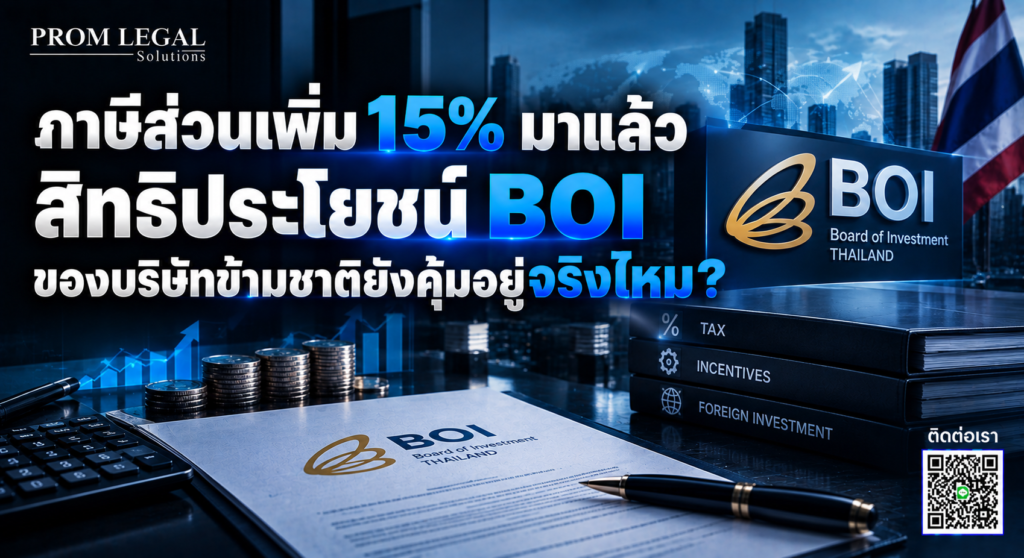
หลายบริษัทเลือกลงทุนในไทยเพราะได้สิทธิยกเว้นภาษีเงินได้นิติบุคคลจาก BOI แต่วันนี้คำถามเปลี่ยนไปเป็น “ได้ยกเว้นภาษีที่ไทย แต่สุดท้ายต้องไปจ่ายที่อื่นแทนหรือเปล่า?” เพราะโลกเข้าสู่ยุคภาษีขั้นต่ำทั่วโลก (Global Minimum Tax) ว่าภาระภาษีของบริษัทข้ามชาติขนาดใหญ่ในแต่ละ ประเทศต้องไม่ต่ำกว่า 15%
วันนี้ Prom Legal Solution ขอพาไปดูว่าใครต้องเสีย และสิทธิ BOI ยังคุ้มอยู่หรือไม่ค่ะ
กฎหมายฉบับนี้คืออะไร
พระราชกำหนดภาษีส่วนเพิ่ม พ.ศ. 2567 มีผลใช้บังคับตั้งแต่วันที่ 1 มกราคม 2568 ตามมาตรการ Pillar Two หรือ GloBE Rules ของ OECD/G20 Inclusive Framework on BEPS เพื่อรักษาสิทธิเก็บภาษีของ ไทย กฎการจัดเก็บภาษีส่วนเพิ่มภายในประเทศ หรือ Qualified Domestic Minimum Top-Up Tax (QDMTT) นี้ จะจัดเก็บจากนิติบุคคลในเครือและกิจการร่วมค้าทุกรายที่ตั้งอยู่ในไทยทุกรายที่ตั้งอยู่ในไทย ที่ถึงเกณฑ์ ไม่ว่าบริษัทแม่ของกลุ่มจะอยู่ในไทยหรือต่างประเทศ (มาตรา 52) มิฉะนั้นภาษีส่วนต่างจากบริษัทในไทย จะตกเป็นรายได้ของประเทศที่บริษัทแม่ตั้งอยู่แทน
ใครต้องเสีย และเสียอย่างไร
| ประเด็น | สาระสำคัญ |
| ผู้อยู่ในบังคับ (มาตรา 26) | บริษัทในไทยที่อยู่ในกลุ่มบริษัทข้ามชาติซึ่งมีรายได้ตามงบการเงินรวม ตั้งแต่ 750 ล้านยูโร ในอย่างน้อย 2 ใน 4 รอบบัญชีก่อนหน้า คาดว่ามีราว 1,200 บริษัท ธุรกิจ SME ทั่วไปไม่อยู่ในบังคับ |
| อัตราขั้นต่ำ | 15% ของอัตราภาษีที่แท้จริง (ETR) คำนวณรวมรายประเทศ ไม่ใช่รายบริษัท |
| หน้าที่ยื่นแบบ (มาตรา 54-58) | แจ้งข้อมูล ยื่น GloBE Information Return และยื่นแบบพร้อม ชำระภาษีภายใน 15 เดือนนับแต่ สิ้นรอบบัญชีของบริษัทแม่ลำดับ สูงสุด (รอบแรก 18 เดือน) กลุ่มบริษัทอาจมอบหมายให้บริษัท ในไทยรายหนึ่งยื่นแทนรายอื่นได้ |
| บทลงโทษ (มาตรา 77-78, 84) | เบี้ยปรับ 2 เท่าของภาษี เงินเพิ่ม 1.5% ต่อเดือน และโทษปรับไม่เกิน 200,000 บาท หากไม่ยื่นโดยไม่มีเหตุอันสมควร |
การออกพระราชกำหนดภาษีส่วนเพิ่มนี้ ส่งผลกระทบกับบริษัทข้ามชาติไม่ใช่น้อย ทั้งการจ่ายภาษีที่เพิ่มขึ้นของนิติบุคคล รวมถึงผลกระทบที่จะเกิดขึ้นหลังจากนี้ โดยทางกรมสรรพากรและ BOI ก็ได้หาแนวทางและหารือการบรรเทาผลกระทบ ตลอดจนการกำหนดสิทธิประโยชน์ในรูปแบบของการสนับสนุนทางการเงิน เพื่อทดแทนสิทธิประโยชน์ทางภาษี และส่งผลให้ฐานภาษีต่ำลง เพื่อทำให้ยังดึงดูดการลงทุนและการแข่งขัน
แล้ว BOI ยังคุ้มอยู่จริงไหม
บริษัทที่ได้ยกเว้นหรือลดหย่อนภาษีจาก BOI อาจมี ETR ต่ำกว่า 15% และต้องเสียภาษีส่วนเพิ่มในส่วนที่ขาด ทั้งนี้ การคำนวณอิงงบการเงินพร้อมรายการปรับปรุง ไม่ใช่ กำไรทางภาษีในแบบ ภ.ง.ด.50
ตัวอย่างอย่างง่าย: กำไร 100 ปกติเสียภาษี 20 ถ้าได้ยกเว้นจาก BOI เสีย 0 แต่เมื่อพระราชกำหนดใช้บังคับ อาจต้องเสียภาษีส่วนเพิ่มสูงสุด 15 (ก่อนหักส่วนที่ยอมให้หักตามค่าจ้างและสินทรัพย์ หรือ SBIE) มูลค่าสิทธิยกเว้นภาษีจึงลดจาก 20 เหลือไม่เกิน 5
อย่างไรก็ดี BOI ยืนยันเมื่อ 12 พฤศจิกายน 2568 ว่า “จะไม่มีการยกเลิกการให้สิทธิประโยชน์ด้านภาษีอากร” ทั้งการยกเว้นและลดหย่อนภาษี
ไม่ต้องรอยื่นแบบ งบการเงินต้องสะท้อนแล้ว
แม้กำหนดยื่นแบบรอบแรกคือ กลางปี 2570 (ภายใน 18 เดือนนับแต่วันสิ้นรอบบัญชีปี 2568) แต่สภาวิชาชีพ บัญชีวางแนวว่า กิจการต้องรับรู้ค่าใช้จ่ายภาษี ส่วนเพิ่มในงบการเงินตั้งแต่ไตรมาสที่ 1 ปี 2568 ตาม TAS 12 เรื่อง ภาษีเงินได้ เพราะพระราชกำหนดมีผลใช้ บังคับแล้ว โดยให้คำนวณตามหลักเกณฑ์ GloBE ของ OECD ไปก่อน แม้กฎหมายลำดับรองที่กำหนด รายละเอียดการคำนวณจะยังไม่ออก และเมื่อกฎหมายลำดับรอง ประกาศใช้ ต้องปรับปรุงผลต่างทันที ฝ่ายบัญชีและผู้สอบบัญชีจึงต้องเข้ามามีส่วนร่วมตั้งแต่ตอนนี้ ไม่ใช่เฉพาะฝ่ายภาษี
สรุป
พระราชกำหนดภาษีส่วนเพิ่มฉบับนี้ ใช้กับกลุ่มข้ามชาติรายได้ตั้งแต่ 750 ล้านยูโร ภาษีขั้นต่ำ 15% คำนวณ รายประเทศ เก็บผ่าน QDMTT, IIR และ UTPR สิทธิ BOI ยังอยู่ แต่มูลค่าอาจลดลง ควรคำนวณผลกระทบ เป็นรายกลุ่มบริษัทยื่นแบบรอบแรกกลางปี 2570 แต่งบการเงินต้องสะท้อนตั้งแต่ปี 2568
Prom Legal Solution ให้คำปรึกษาตั้งแต่การตรวจว่ากลุ่มบริษัทเข้าข่ายหรือไม่ การประเมินผลกระทบต่อสิทธิ BOI จนถึงการเตรียมยื่นแบบ ปรึกษาเราได้เลยค่ะ
บทความนี้จัดทำขึ้นเพื่อให้ความรู้ทั่วไปทางกฎหมายเท่านั้น มิใช่ความเห็นทางกฎหมายสำหรับกรณีเฉพาะเรื่อง รายละเอียดและกฎหมายลำดับรองอาจเปลี่ยนแปลงได้ ผู้อ่านควรตรวจสอบจากราชกิจจานุเบกษาและประกาศกรมสรรพากร และปรึกษาทนายความก่อนดำเนินการใด ๆ
#PromLegalSolution #ภาษีส่วนเพิ่ม #GlobalMinimumTax #PillarTwo #TopUpTax #BOI #ภาษีนิติบุคคล #กฎหมายภาษี #ที่ปรึกษากฎหมายธุรกิจ #LegalTip
The 15% Top-up Tax Is Here: Are BOI Incentives Still Worth It for Multinational Groups?
Many companies chose to invest in Thailand because of corporate income tax exemptions from the BOI. Today, however, the question has become: “We are exempt in Thailand, but will we end up paying the tax somewhere else instead?” The world has entered the era of the Global Minimum Tax, under which the tax burden of large multinational groups in each jurisdiction must not fall below 15%.
Today, Prom Legal Solution looks at who must pay and whether BOI incentives are still worth it.
What Is This Law?
The Emergency Decree on Top-up Tax B.E. 2567 (2024) took effect on 1 January 2025, implementing Pillar Two, the GloBE Rules of the OECD/G20 Inclusive Framework on BEPS, to preserve Thailand’s taxing rights. The Qualified Domestic Minimum Top-up Tax (QDMTT) is collected from every constituent entity located in Thailand, whether the group’s parent is in Thailand or abroad (Section 52). Otherwise, the shortfall attributable to companies in Thailand would become revenue of the jurisdiction where the parent company is located.
Who Pays and How
| Issue | Key Point |
| Scope (Section 26) | Thai entities of multinational groups with consolidated revenue of EUR 750 million or more in at least 2 of the 4 preceding fiscal years; around 1,200 companies are expected to be in scope. Ordinary SMEs are not affected. |
| Minimum rate | 15% of the effective tax rate (ETR), calculated on a blended basis per jurisdiction, not per company (Sections 29 and 32). |
| Filing (Sections 54-58) | Notification, the GloBE Information Return, and the top-up tax return with payment are due within 15 months after the end of the ultimate parent’s fiscal year (18 months for the first year). A group may designate one Thai entity to file on behalf of the others. |
| Penalties
(Sections 77-78, 84) |
A surcharge of 1-2 times the tax, a surcharge of 1.5% per month, and a fine of up to THB 200,000 for failing to file without reasonable cause. |
The Emergency Decree has a considerable impact on multinational groups, both through higher tax payments and through its effects going forward. The Revenue Department and the BOI have therefore been exploring ways to mitigate the impact, including incentives in the form of financial support in place of tax incentives, to reduce the tax burden and keep Thailand attractive for investment and competitive.
So Are BOI Incentives Still Worth It?
Companies with BOI exemptions or reductions may have an ETR below 15% and owe top-up tax on the shortfall. The calculation starts from financial statements with adjustments, not taxable profit on the P.N.D. 50 return.
A simple illustration: on profit of 100, normal tax is 20. With a BOI exemption the company pays 0, but once the Emergency Decree applies it may owe top-up tax of up to 15 (before the substance-based income exclusion, or SBIE, for payroll and tangible assets). The value of the exemption therefore falls from 20 to no more than 5.
That said, the BOI confirmed on 12 November 2025 that it “will not cancel tax incentives”, covering both exemptions and reductions.
No Need to Wait for the Return: Financial Statements Must Reflect It Now
Although the first return is due around mid-2027 (within 18 months after the end of the 2025 fiscal year), the Federation of Accounting Professions has advised that entities must recognise top-up tax expense in their financial statements from the first quarter of 2025 under TAS 12 Income Taxes, because the Emergency Decree is already in force. Entities should calculate under the OECD GloBE Rules in the meantime, even though the secondary legislation setting out the detailed calculation has not yet been issued, and adjust any difference immediately once it is issued. Accounting teams and auditors therefore need to be involved now, not only the tax team.
Conclusion
The Emergency Decree applies to multinational groups with revenue of EUR 750 million or more, imposing a 15% minimum tax calculated per jurisdiction and collected through the QDMTT, IIR, and UTPR. BOI incentives remain but may be worth less, so the impact should be assessed group by group. The first return is due around mid-2027, but financial statements must reflect top-up tax from 2025.
Prom Legal Solution advises on everything from whether a group is in scope and the impact on BOI incentives to filing preparation. Talk to us.
This article is for general legal information only and is not legal advice for any specific case. Details and secondary legislation may change; readers should check the Royal Gazette and Revenue Department announcements and consult a lawyer before taking any action.
#PromLegalSolution #ภาษีส่วนเพิ่ม #GlobalMinimumTax #PillarTwo #TopUpTax #BOI #ภาษีนิติบุคคล #กฎหมายภาษี #ที่ปรึกษากฎหมายธุรกิจ #LegalTip