
(English Below)
ลองนึกภาพการสร้างบ้านสักหลังหนึ่งค่ะ ถ้าผู้รับเหมาแอบลดเหล็ก ลดปูน เพื่อให้บ้านเสร็จเร็วและถูกลง บ้านอาจดูสวยในวันส่งมอบ แต่สุดท้ายรอยร้าวก็จะโผล่ขึ้นมา และคนที่อยู่ในบ้านคือคนที่รับเคราะห์ การสอบเข้ารับราชการก็ไม่ต่างกัน เพราะ “บ้าน” หลังนี้คือหน่วยงานของรัฐที่ดูแลชีวิตประจำวันของคนทั้งตำบลทั้งอำเภอ การคัดคนเข้าไปทำงานจึงต้องวางอยู่บนรากฐานที่ซื่อตรง ไม่ใช่ทางลัด
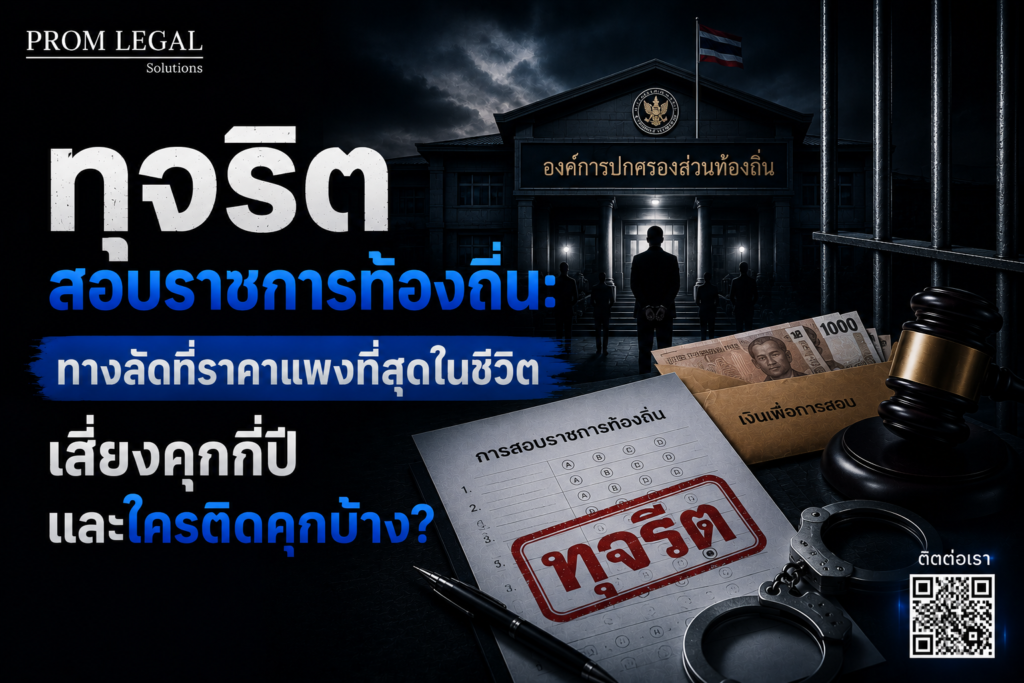
ทุกครั้งที่มีข่าว ทุจริตในการสอบแข่งขันเข้ารับราชการส่วนท้องถิ่น ไม่ว่าจะเป็นข้อสอบรั่ว การจ้างคนเข้าสอบแทน การใช้อุปกรณ์อิเล็กทรอนิกส์รับคำตอบ หรือการจ่ายเงินซื้อตำแหน่ง สังคมมักตั้งคำถามเดียวกันว่า “แล้วคนที่โกงผิดอะไร ติดคุกไหม” คำตอบคือผิดหลายฐานพร้อมกัน และโทษหนักกว่าที่หลายคนคิดมากค่ะ
วันนี้ Prom Legal Solution จึงขอพาไปทำความเข้าใจเรื่องนี้แบบครบทุกมุม ตั้งแต่รูปแบบการโกงที่พบบ่อย ข้อกฎหมายที่เกี่ยวข้อง โทษที่ต้องเจอ ไปจนถึงผลกระทบระยะยาวที่ตามมาทั้งชีวิต
ทำไมการสอบท้องถิ่นจึงเป็นเป้าของการทุจริต?
จากประสบการณ์ตรงในการให้คำปรึกษา เราพบว่าการสอบเข้ารับราชการเป็นสนามที่มี “แรงจูงใจในการโกง” สูงเป็นพิเศษ เพราะตำแหน่งราชการหมายถึงความมั่นคงตลอดชีวิต เงินบำนาญ สวัสดิการ และหน้าตาทางสังคม เมื่อรางวัลสูงและมีผู้แข่งขันจำนวนมาก จึงมีทั้งผู้สมัครที่ยอมจ่าย และขบวนการที่อาศัยช่องว่างหาเงินจากความหวังของคน
สิ่งที่คนจำนวนไม่น้อยเข้าใจผิดคือ คิดว่า “แค่สอบ ไม่ได้ไปปล้นใคร ถ้าโดนจับก็แค่ปรับตกสอบ” ความเข้าใจนี้อันตรายมากค่ะ เพราะในทางกฎหมาย การโกงข้อสอบราชการไม่ใช่แค่ผิดกติกาการสอบ แต่แตะหลายฐานความผิดอาญาแผ่นดินที่ยอมความไม่ได้ และบางฐานมีโทษถึงจำคุกตลอดชีวิต
รูปแบบการทุจริตที่พบบ่อย และความผิดที่ตามมา
| รูปแบบการทุจริต | ลักษณะที่เกิดขึ้นจริง | ฐานความผิดหลักที่เกี่ยวข้อง |
| 1. จ้างคนเข้าสอบแทน (Impersonation) | ใช้คนเก่งสวมรอยเข้าห้องสอบแทนตัวจริง มักใช้บัตรประชาชนหรือเอกสารปลอม | ปลอมและใช้เอกสารราชการปลอม (ป.อาญา ม. 264 ถึง 268) |
| 2. ข้อสอบรั่ว / ซื้อข้อสอบ (Leaked exam) | เจ้าหน้าที่หรือคนวงในนำข้อสอบหรือเฉลยออกมาขายล่วงหน้า | เจ้าพนักงานทุจริตต่อหน้าที่ (ป.อาญา ม. 157 และ พ.ร.ป. ป.ป.ช. ม. 172) |
| 3. ใช้อุปกรณ์อิเล็กทรอนิกส์ (Hi-tech cheating) | ติดกล้อง หูฟัง หรือเครื่องส่งสัญญาณรับคำตอบจากภายนอกห้องสอบ | ทุจริตในการสอบ ร่วมกับฐานปลอมเอกสาร และฉ้อโกงหากมีการจ่ายเงิน |
| 4. จ่ายเงินซื้อตำแหน่ง / วิ่งเต้น (Bribery) | จ่ายเงินให้คนที่อ้างว่าจัดการผลสอบได้ หรือจ่ายให้เจ้าหน้าที่โดยตรง | ให้สินบนเจ้าพนักงาน (ป.อาญา ม. 144) และเรียกรับสินบน (ม. 143, ม. 173 พ.ร.ป. ป.ป.ช.) |
| 5. ขบวนการหลอกลวง (Scam) | อ้างว่ารับประกันผลสอบ เก็บเงินแล้วเชิด หรือทำให้เหยื่อกลายเป็นผู้ร่วมกระทำผิด | ฉ้อโกง และร่วมกันกระทำผิดในฐานข้างต้น |
จะเห็นว่าการทุจริตหนึ่งครั้งมักไม่ได้ผิดแค่ฐานเดียว แต่เป็น “พวง” ของความผิดที่นับโทษรวมกันได้ และดึงคนหลายฝ่ายเข้าไปเกี่ยวข้องพร้อมกัน
เจาะลึก: โกงข้อสอบราชการ เสี่ยงคุกกี่ปีกันแน่?
หลายคนถามว่าโทษจริงหนักแค่ไหน เราขอแยกตามบทบาทของคนที่เกี่ยวข้อง เพื่อให้เห็นภาพชัดค่ะ
- ผู้สมัครที่ใช้เอกสารปลอมหรือจ้างคนสอบแทน
การให้คนอื่นสวมบัตรเข้าสอบแทน หรือทำเอกสารหลักฐานเท็จ เข้าข่าย ปลอมเอกสาร (Forgery) ตามประมวลกฎหมายอาญา มาตรา 264 (โทษจำคุกไม่เกิน 3 ปี หรือปรับไม่เกิน 60,000 บาท หรือทั้งจำทั้งปรับ) และหากเป็นการปลอม เอกสารสิทธิหรือเอกสารราชการ เช่น บัตรประชาชนหรือใบรับรองวุฒิ จะเข้ามาตรา 265 ซึ่งหนักขึ้นเป็นจำคุกตั้งแต่ 6 เดือนถึง 5 ปี และปรับตั้งแต่ 10,000 ถึง 100,000 บาท ส่วนการนำเอกสารปลอมนั้นไปใช้ ก็ผิดซ้ำตามมาตรา 268 อีกฐานหนึ่ง
- เจ้าหน้าที่ที่ทำข้อสอบรั่วหรือช่วยเหลือ
นี่คือกลุ่มที่โทษหนักที่สุดค่ะ เพราะกฎหมายมองว่าเป็นการทรยศต่อความไว้วางใจของรัฐ เจ้าพนักงานที่ปฏิบัติหรือละเว้นหน้าที่โดยมิชอบหรือโดยทุจริต มีความผิดตาม ประมวลกฎหมายอาญา มาตรา 157 และ พ.ร.บ. ประกอบรัฐธรรมนูญว่าด้วยการป้องกันและปราบปรามการทุจริต พ.ศ. 2561 มาตรา 172 ซึ่งระวางโทษจำคุกตั้งแต่ 1 ถึง 10 ปี และยิ่งถ้ามีการ เรียกรับสินบน ตามมาตรา 173 ของกฎหมาย ป.ป.ช. โทษพุ่งขึ้นเป็นจำคุกตั้งแต่ 5 ถึง 20 ปี หรือจำคุกตลอดชีวิต และปรับตั้งแต่ 100,000 ถึง 400,000 บาท หากเจ้าพนักงานเป็นคนปลอมเอกสารในหน้าที่เองยังเจอมาตรา 161 ที่โทษจำคุกถึง 10 ปีอีกด้วย
- คนที่จ่ายเงินซื้อตำแหน่ง
หลายคนคิดว่าตัวเองเป็น “เหยื่อ” ที่จ่ายเงินไป แต่ในทางกฎหมาย ผู้ที่ให้หรือสัญญาว่าจะให้ทรัพย์สินแก่เจ้าพนักงานเพื่อจูงใจให้ทำผิดหน้าที่ ก็เป็นผู้กระทำผิดฐาน ให้สินบน (Bribery) ตามประมวลกฎหมายอาญา มาตรา 144 (จำคุกไม่เกิน 5 ปี) เช่นกัน ส่วนคนกลางที่อ้างว่าวิ่งเต้นได้ก็ผิดตามมาตรา 143 ฐานเรียกรับเพื่อจูงใจเจ้าพนักงาน
ข้อควรระวังที่สำคัญ: ความผิดเหล่านี้ส่วนใหญ่เป็น ความผิดอาญาแผ่นดิน ที่ยอมความไม่ได้ แม้คู่กรณีจะตกลงกันเองก็ไม่ทำให้คดีจบ และคดีทุจริตที่อยู่ในอำนาจของ ป.ป.ช. นั้นไม่มีอายุความในชั้นการหลบหนี กล่าวคือถ้าหนีคดี ระยะเวลาที่หลบหนีจะไม่ถูกนับเป็นอายุความ ทำให้ “หนีไปเรื่อย ๆ แล้วรอให้คดีหมดอายุ” ใช้ไม่ได้อีกต่อไป อย่างไรก็ดี ทุกกรณีต้องพิจารณาข้อเท็จจริงเฉพาะเรื่องและพยานหลักฐานประกอบ การถูกกล่าวหายังไม่เท่ากับการมีความผิด เพราะทุกคนได้รับการสันนิษฐานว่าบริสุทธิ์จนกว่าศาลจะมีคำพิพากษาถึงที่สุด
เทียบให้เห็นภาพ: เลือกทางลัด vs เลือกทางที่สุจริต
| ประเด็น | ถ้าเลือกทางลัด (ทุจริต) | ถ้าสอบด้วยความสุจริต |
| ความเสี่ยงทางอาญา | ถูกดำเนินคดีหลายฐาน เสี่ยงจำคุกตั้งแต่ไม่กี่ปีจนถึงตลอดชีวิต | ไม่มีความเสี่ยงทางอาญาจากการสอบ |
| สถานะการทำงาน | ถูกเพิกถอนสิทธิ ปลดออก และมักถูกห้ามสมัครสอบราชการอีก | บรรจุได้อย่างมั่นคง เติบโตในสายงานได้ |
| ประวัติส่วนตัว | มีประวัติอาชญากรรมติดตัว กระทบการสมัครงานและการใช้ชีวิต | ประวัติสะอาด ได้รับความน่าเชื่อถือ |
| เงินที่จ่ายไป | มักสูญเปล่า ทวงคืนยาก และอาจกลายเป็นพยานหลักฐานเอาผิดตัวเอง | นำไปลงทุนกับการเตรียมตัวที่ได้ผลจริง |
| ผลต่อส่วนรวม | ทำลายความเชื่อมั่นในระบบราชการ คนเก่งที่ตั้งใจเสียโอกาส | ระบบได้คนที่มีความสามารถจริงมาทำงานให้ประชาชน |
ทางลัดที่ดูเหมือนประหยัดเวลา จึงเป็นทางที่ราคาแพงที่สุด เพราะสิ่งที่ต้องจ่ายไม่ใช่แค่เงิน แต่คืออิสรภาพ ประวัติ และอนาคตทั้งชีวิตค่ะ
สรุป
ข่าวทุจริตสอบราชการท้องถิ่นไม่ใช่เรื่องไกลตัว และไม่ใช่แค่ “การโกงข้อสอบ” ธรรมดา แต่เป็นการกระทำที่พ่วงความผิดอาญาหลายฐานพร้อมกัน ตั้งแต่ปลอมเอกสาร ให้และรับสินบน ไปจนถึงเจ้าพนักงานทุจริตต่อหน้าที่ ซึ่งบางฐานมีโทษถึงจำคุกตลอดชีวิต ที่สำคัญคือเป็นความผิดที่ยอมความไม่ได้ และดึงทุกฝ่ายที่เกี่ยวข้องเข้าไปรับผิดร่วมกัน ทั้งผู้สอบ ผู้จ่าย คนกลาง และเจ้าหน้าที่ การเตรียมตัวสอบอย่างสุจริตจึงไม่ใช่แค่เรื่องของจริยธรรม แต่เป็นการปกป้องอนาคตของตัวเองในทางกฎหมายด้วย
หากคุณหรือคนใกล้ตัวกำลังถูกกล่าวหา ถูกชักชวนเข้าร่วมขบวนการ หรือไม่แน่ใจว่าการกระทำใดเข้าข่ายผิดกฎหมาย Prom Legal Solution พร้อมให้คำปรึกษาด้านกฎหมายแบบครบวงจร ตั้งแต่การประเมินความเสี่ยง การวางแนวทางต่อสู้คดี ไปจนถึงการดูแลตลอดกระบวนการ ติดต่อเราได้เลยค่ะ ก่อนที่เรื่องเล็กจะกลายเป็นคดีใหญ่
หมายเหตุ: บทความนี้จัดทำขึ้นเพื่อให้ความรู้ทางกฎหมายในเชิงทั่วไปเท่านั้น ไม่ถือเป็นการให้คำปรึกษาทางกฎหมายเฉพาะกรณี อัตราโทษและรายละเอียดของกฎหมายอาจมีการแก้ไขเปลี่ยนแปลง ผู้ที่มีปัญหาทางกฎหมายควรปรึกษาทนายความหรือผู้เชี่ยวชาญเพื่อพิจารณาข้อเท็จจริงเป็นรายกรณี
#ทุจริตสอบราชการ #สอบท้องถิ่น #กฎหมายอาญา #สินบน #ปปช #CivilServiceExam #AntiCorruption #ExamFraud #PromLegalSolution #LegalTip #SME #Startup
Cheating on Local Government Civil Service Exams: The Most Expensive Shortcut of Your Life. How Many Years in Prison, and Who Gets Charged?
Picture building a house. If the contractor secretly skimps on the steel and cement to finish faster and cheaper, the house may look beautiful on handover day, but cracks will eventually appear, and the people living inside are the ones who suffer. Recruiting people into the civil service is no different, because this “house” is a state agency that looks after the daily lives of an entire district. Selecting who works there must rest on an honest foundation, not a shortcut.
Every time there is news about fraud in the local government civil service examination (leaked exams, hiring someone to sit the test in your place, electronic cheating devices, or paying to buy a position) society asks the same question: “What law did the cheaters actually break, and do they go to prison?” The answer is that they break several offenses at once, and the penalties are far heavier than most people imagine.
Today, Prom Legal Solution would like to walk you through this topic from every angle: the common forms of cheating, the relevant laws, the penalties involved, and the long-term consequences that can follow for the rest of your life.
Why are local exams a target for fraud?
From our direct consulting experience, civil service examinations are an arena with unusually strong “incentives to cheat.” A government post means lifelong security, a pension, benefits, and social prestige. When the reward is high and competitors are many, you get both applicants willing to pay and organized rings that exploit loopholes to profit from people’s hopes.
A dangerous misconception many people hold is: “It’s only an exam, I didn’t rob anyone. Worst case, I just fail.” In legal terms, cheating on a government exam is not merely breaking exam rules. It touches several non-compoundable criminal offenses, and some of them carry penalties up to life imprisonment.
Common forms of fraud and the offenses that follow
| Form of fraud | What actually happens | Main offenses involved |
| 1. Hiring an impersonator | A skilled person sits the exam in place of the real applicant, often using a fake ID card or documents | Forgery and use of forged official documents (Penal Code ss. 264 to 268) |
| 2. Leaked or sold exams | An official or insider sells exam papers or answer keys in advance | Malfeasance by an official (Penal Code s. 157 and Organic Anti-Corruption Act 2018, s. 172) |
| 3. Hi-tech cheating | Hidden cameras, earpieces, or transmitters receive answers from outside the exam room | Exam fraud, combined with forgery and deception where money changes hands |
| 4. Paying to buy a position | Paying someone who claims to fix results, or paying an official directly | Offering a bribe (Penal Code s. 144) and demanding a bribe (s. 143; Anti-Corruption Act s. 173) |
| 5. Fraud rings | Promising to guarantee results, taking the money and vanishing, or turning the victim into a co-offender | Fraud, plus joint commission of the offenses above |
A single act of cheating rarely breaks just one offense. It is usually a “bundle” of offenses whose penalties can be counted together, dragging multiple parties in at the same time.
A closer look: exactly how many years in prison?
Many people ask how heavy the real penalty is. Let us break it down by the role of each person involved.
- The applicant who uses forged documents or an impersonator
Letting someone else use your ID to sit the exam, or creating false evidence, amounts to forgery under Penal Code Section 264 (imprisonment of up to 3 years, a fine of up to 60,000 baht, or both). If it involves forging a right-conferring or official document, such as a national ID card or a degree certificate, Section 265 applies, raising the penalty to imprisonment of 6 months to 5 years and a fine of 10,000 to 100,000 baht. Using that forged document is a separate offense again under Section 268.
- The official who leaks exams or assists
This group faces the heaviest penalties, because the law treats it as a betrayal of public trust. An official who unlawfully or dishonestly performs or omits a duty commits an offense under Penal Code Section 157 and Section 172 of the Organic Act on Anti-Corruption B.E. 2561 (2018), punishable by 1 to 10 years in prison. If a bribe is demanded under Section 173 of the Anti-Corruption Act, the penalty jumps to imprisonment of 5 to 20 years or life imprisonment, plus a fine of 100,000 to 400,000 baht. An official who forges documents within their own duty also faces Section 161, which carries up to 10 years.
- The person who pays to buy a position
Many people think of themselves as the “victim” who paid money, but in law, anyone who gives or promises property to an official to induce a breach of duty also commits the offense of offering a bribe under Penal Code Section 144 (up to 5 years). The middleman who claims to be able to fix things is liable under Section 143 for demanding payment to influence an official.
An important caution: Most of these are non-compoundable criminal offenses against the state. Even if the parties settle privately, the case does not end. For corruption cases within the jurisdiction of the National Anti-Corruption Commission (NACC), the time spent absconding does not count toward the limitation period, so “running and waiting for the case to expire” no longer works. That said, every case turns on its specific facts and evidence. Being accused is not the same as being guilty, because everyone is presumed innocent until a final court judgment.
Side by side: the shortcut vs the honest path
| Issue | If you take the shortcut (cheating) | If you sit the exam honestly |
| Criminal risk | Prosecution on multiple counts, risking anywhere from a few years to life imprisonment | No criminal risk from the exam |
| Employment status | Rights revoked, dismissal, and usually barred from future government exams | A secure appointment and room to grow |
| Personal record | A criminal record that affects jobs and daily life | A clean record and earned credibility |
| Money paid | Usually lost, hard to recover, and may become evidence against you | Invested in preparation that genuinely works |
| Effect on society | Erodes trust in the civil service; capable, honest candidates lose out | The system gains genuinely capable people to serve the public |
The shortcut that looks like a time-saver is in fact the most expensive path, because the price is not just money. It is your freedom, your record, and your entire future.
Conclusion
News of fraud in local government exams is closer to home than it seems, and it is not just ordinary “exam cheating.” It is conduct that bundles several criminal offenses together, from forgery and bribery to official malfeasance, some carrying life imprisonment. Crucially, these offenses cannot be settled privately, and they pull in everyone involved: the applicant, the payer, the middleman, and the official. Preparing for an exam honestly is therefore not only an ethical matter, but a way to protect your own legal future.
If you or someone close to you is being accused, is being recruited into such a scheme, or is unsure whether an act crosses the legal line, Prom Legal Solution offers end-to-end legal support, from risk assessment and defense strategy to guidance through the entire process. Contact us before a small matter becomes a major case.
Disclaimer: This article is provided for general legal education only and does not constitute specific legal advice. Penalties and legal details may change. Anyone facing a legal issue should consult a lawyer or specialist to assess the facts case by case.
#CivilServiceExam #AntiCorruption #ExamFraud #Bribery #ThaiLaw #CriminalLaw #NACC #PromLegalSolution #LegalTip #SME #Startup