
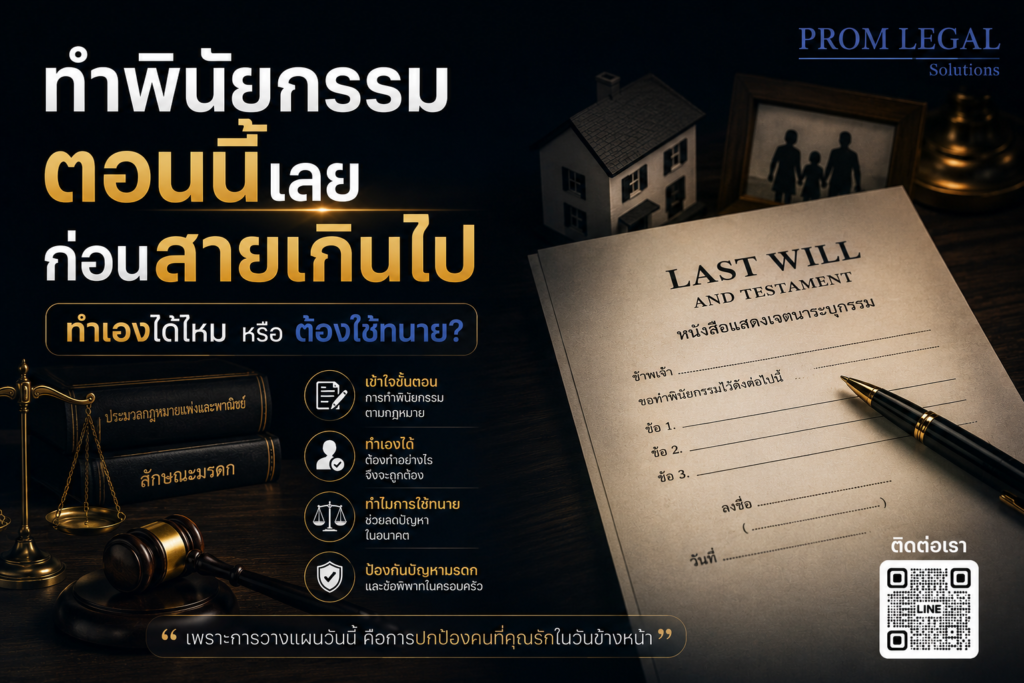
(English Below)
“เดี๋ยวค่อยทำก็ได้ ยังไม่แก่” เป็นประโยคที่หลายคนพูดกับตัวเอง จนวันหนึ่งเรื่องไม่คาดฝันก็มาถึง แล้วทรัพย์สินที่สร้างมาทั้งชีวิตกลับกลายเป็นชนวนให้คนข้างหลังทะเลาะกัน พินัยกรรมจึงไม่ใช่เรื่องของคนแก่หรือคนรวยเท่านั้น แต่คือ “ของขวัญชิ้นสุดท้าย” ที่เราเตรียมไว้ให้คนที่เรารัก เพื่อไม่ให้เขาต้องมาปวดหัวทีหลัง
คำถามยอดฮิตคือ “พินัยกรรมทำเองได้ไหม หรือต้องจ้างทนาย?” คำตอบคือ ทำเองได้ค่ะ กฎหมายเปิดช่องไว้ แต่มี “กับดัก” เล็ก ๆ ที่ทำให้พินัยกรรมเสียเปล่าได้ง่ายกว่าที่คิด วันนี้ Prom Legal Solution ขอพาทุกท่านไปดูให้ครบทั้งแบบของพินัยกรรมและข้อควรระวังค่ะ
พินัยกรรมมีกี่แบบ และทำเองได้แบบไหน
ตามประมวลกฎหมายแพ่งและพาณิชย์ พินัยกรรมทำได้ 5 แบบ โดย 2 แบบแรกเป็นแบบที่ทำเองได้ง่ายที่สุด
| แบบพินัยกรรม | สาระสำคัญ |
| 1. เขียนเองทั้งฉบับ (มาตรา 1657) | ผู้ทำต้องเขียนข้อความทั้งหมด วันเดือนปี และลงลายมือชื่อ ด้วยลายมือตนเอง ไม่ต้องมีพยาน (แต่ห้ามพิมพ์ และใช้ลายพิมพ์นิ้วมือแทนไม่ได้) |
| 2. แบบธรรมดา (มาตรา 1656) | ทำเป็นหนังสือ ลงวันเดือนปี ผู้ทำลงลายมือชื่อต่อหน้าพยานอย่างน้อย 2 คนพร้อมกัน และพยานลงลายมือชื่อรับรอง |
| 3. เอกสารฝ่ายเมือง (มาตรา 1658) | แจ้งข้อความต่อนายอำเภอ/ผู้อำนวยการเขต ต่อหน้าพยาน 2 คน เจ้าหน้าที่จดและรับรอง น่าเชื่อถือสูง |
| 4. เอกสารลับ (มาตรา 1660) | ผนึกซองพินัยกรรม ลงลายมือชื่อคาบรอยผนึก แล้วนำไปแสดงต่อนายอำเภอและพยาน |
| 5. ด้วยวาจา (มาตรา 1663) | ทำได้เฉพาะกรณีพิเศษ เช่น ตกอยู่ในอันตรายใกล้ตาย โรคระบาด หรือสงคราม โดยแสดงเจตนาต่อหน้าพยาน 2 คน |
ทำเองได้ แต่ระวัง “กับดัก” ที่ทำให้พินัยกรรมเสีย
นี่คือจุดที่คนทำเองพลาดบ่อยที่สุด และเป็นเหตุผลว่าทำไมพินัยกรรมที่ตั้งใจดีกลับใช้ไม่ได้
ผู้รับทรัพย์ห้ามเป็นพยานหรือผู้เขียน ตาม มาตรา 1653 ผู้เขียนหรือพยานในพินัยกรรมจะเป็นผู้รับทรัพย์ตามพินัยกรรมนั้นไม่ได้ และห้ามรวมถึงคู่สมรสของผู้เขียนหรือพยานด้วย หลายคนให้ลูกที่จะได้รับมรดกมาเป็นพยานเซ็น ผลคือข้อกำหนดยกทรัพย์ให้คนนั้นเสียเปล่า
พยานต้องไม่ใช่บุคคลต้องห้าม ตาม มาตรา 1670 ผู้ที่ยังไม่บรรลุนิติภาวะ คนวิกลจริตหรือเสมือนไร้ความสามารถ และคนหูหนวก เป็นใบ้ หรือตาบอดทั้งสองข้าง เป็นพยานไม่ได้
การแก้ไขต้องลงลายมือชื่อกำกับ การขูด ลบ ตก เติม หรือแก้ไขพินัยกรรม หากไม่ทำตามแบบและลงลายมือชื่อกำกับ ส่วนที่แก้ย่อมไม่สมบูรณ์ (มาตรา 1656, 1657)
อายุของผู้ทำ ผู้ทำพินัยกรรมต้องมีอายุ 15 ปีบริบูรณ์ขึ้นไป (มาตรา 25, 1703)
ข้อควรระวัง (เจ็บแต่จบ): พินัยกรรมเขียนเองที่ “ผิดแบบ” แม้เพียงนิดเดียว เช่น พิมพ์แทนการเขียน ไม่ลงวันที่ หรือใช้พยานผิดคน อาจทำให้ทั้งฉบับหรือบางส่วนเสียเปล่า แล้วทรัพย์มรดกต้องกลับไปแบ่งตามทายาทโดยธรรม ซึ่งอาจไม่ตรงกับเจตนาของเราเลย
แล้วเมื่อไหร่ควรใช้ทนาย?
ทำเองเหมาะกับกรณีทรัพย์สินไม่ซับซ้อนและผู้รับชัดเจน แต่ควรปรึกษาทนายความเมื่อ ทรัพย์สินมีมูลค่าสูงหรือหลายประเภท (ที่ดิน หุ้น ธุรกิจ บัญชีต่างประเทศ), มีทายาทหลายคนหรือครอบครัวซับซ้อน, ต้องการตั้งผู้จัดการมรดก, หรือกังวลว่าพินัยกรรมจะถูกโต้แย้งภายหลัง ทนายจะช่วยให้ถ้อยคำรัดกุม ถูกแบบ และลดความเสี่ยงข้อพิพาท
สรุป
- พินัยกรรมมี 5 แบบ โดย เขียนเองทั้งฉบับ (มาตรา 1657) และ แบบธรรมดา (มาตรา 1656) เป็นแบบที่ทำเองได้
- ทำเองได้ แต่ต้องระวังกับดัก โดยเฉพาะ ผู้รับทรัพย์ห้ามเป็นพยานหรือผู้เขียน (มาตรา 1653) และพยานต้องไม่ใช่บุคคลต้องห้าม (มาตรา 1670)
- การแก้ไขต้องลงลายมือชื่อกำกับ และผู้ทำต้องอายุ 15 ปีขึ้นไป (มาตรา 25, 1703)
- ทรัพย์สินซับซ้อนหรือกังวลเรื่องข้อพิพาท ควรปรึกษาทนายความ เพื่อให้รัดกุม
การทำพินัยกรรมคือการวางแผนเพื่อคนที่เรารัก และทำได้ตั้งแต่วันนี้ Prom Legal Solution ให้บริการครบวงจร ตั้งแต่ให้คำปรึกษา ร่างพินัยกรรมให้ถูกแบบและรัดกุม ไปจนถึงการตั้งผู้จัดการมรดกและจัดการมรดก ปรึกษาเราได้เลยค่ะ ก่อนที่จะสายเกินไป
บทความนี้จัดทำขึ้นเพื่อให้ความรู้ทั่วไปทางกฎหมายเท่านั้น มิใช่ความเห็นทางกฎหมายสำหรับกรณีเฉพาะเรื่อง ผู้อ่านควรปรึกษาทนายความเพื่อรับคำแนะนำที่เหมาะสมกับข้อเท็จจริงของท่าน
#พินัยกรรม #มรดก #วางแผนมรดก #ทายาท #ผู้จัดการมรดก #กฎหมายครอบครัว #Will #PromLegalSolution #LegalTip #SME #Startup
Make Your Will Now, Before It’s Too Late: Can You Do It Yourself, or Do You Need a Lawyer?
“I’ll do it later, I’m not old yet.” Many people tell themselves this until the unexpected arrives, and the wealth they built over a lifetime becomes the spark for those left behind to fight over. A will is not just for the elderly or the wealthy; it is the “final gift” we prepare for those we love, so they don’t suffer headaches later.
The most common question is: “Can I make a will myself, or do I have to hire a lawyer?” The answer is yes, you can; the law allows it, but there are small “traps” that void a will more easily than you’d think. Today, Prom Legal Solution walks you through all the forms of will and the pitfalls to watch for.
How Many Forms of Will Are There, and Which Can You Make Yourself?
Under the Civil and Commercial Code, a will may be made in 5 forms; the first two are the easiest to do yourself.
| Form of Will | Key Points |
| 1. Holographic (Section 1657) | The maker must write the entire text, the date, and their signature by their own hand. No witnesses needed (but no typing, and a thumbprint cannot replace the signature) |
| 2. Ordinary written (Section 1656) | Made in writing, dated, signed by the maker before at least 2 witnesses present together, who then sign to certify |
| 3. Public document (Section 1658) | Declared before the District Officer with 2 witnesses; the official records and certifies it; highly credible |
| 4. Secret document (Section 1660) | The sealed will is signed across the seal, then shown to the District Officer and witnesses |
| 5. Oral (Section 1663) | Allowed only in special circumstances, such as imminent danger of death, an epidemic, or war, declared before 2 witnesses |
You Can Do It Yourself, but Beware the “Traps” That Void a Will
This is where DIY wills most often fail, and why a well-intentioned will can end up invalid.
A beneficiary cannot be a witness or the writer. Under Section 1653, the writer or a witness to a will cannot be a beneficiary under it, and this extends to their spouse too. Many people have the very child who is to inherit sign as a witness, and the gift to that person becomes void.
Witnesses must not be disqualified persons. Under Section 1670, a minor, a person of unsound mind or a quasi-incompetent person, and a person who is deaf, mute, or blind in both eyes cannot be a witness.
Amendments must be signed alongside. Any erasure, deletion, insertion, or alteration is invalid unless made in the proper form and signed alongside (Sections 1656, 1657).
Age of the maker. A will-maker must be at least 15 years old (Section 25, 1703).
Caveat: A holographic will that is even slightly “off form,” such as typed instead of handwritten, undated, or witnessed by the wrong person, may be wholly or partly void, and the estate then reverts to division among statutory heirs, which may not match your intentions at all.
So When Should You Use a Lawyer?
Doing it yourself suits simple assets with clear beneficiaries. But consult a lawyer when the assets are high-value or varied (land, shares, a business, foreign accounts), there are many heirs or a complex family, you want to appoint an estate administrator, or you worry the will may be challenged later. A lawyer helps make the wording watertight, in proper form, and reduces the risk of disputes.
Key Takeaways
- A will has 5 forms; the holographic (Section 1657) and ordinary written (Section 1656) can be done yourself.
- You can do it yourself, but beware the traps, especially that a beneficiary cannot be a witness or writer (Section 1653), and witnesses must not be disqualified persons (Section 1670).
- Amendments must be signed alongside, and the maker must be at least 15 years old (Section 25, 1703).
- For complex assets or dispute concerns, consult a lawyer to make it watertight.
Making a will is planning for those you love, and you can do it starting today. Prom Legal Solution offers end-to-end support, from advice and drafting a proper, watertight will to appointing estate administrators and managing the estate. Talk to us before it’s too late.
This article is for general legal information only and is not legal advice for any specific case. Please consult a lawyer for advice tailored to your facts.
#พินัยกรรม #มรดก #วางแผนมรดก #ทายาท #ผู้จัดการมรดก #กฎหมายครอบครัว #Will #PromLegalSolution #LegalTip #SME #Startup