(English Below)
“จะขายของออนไลน์ ต้องจดบริษัทด้วยไหม” “ทำฟรีแลนซ์อยู่คนเดียว จดบริษัทไปทำไม” นี่คือคำถามที่ผู้ประกอบการมือใหม่ถามกันบ่อยที่สุด และก็เป็นคำถามที่ตอบผิดพลาดแล้วเสียใจทีหลังมากที่สุดเช่นกัน
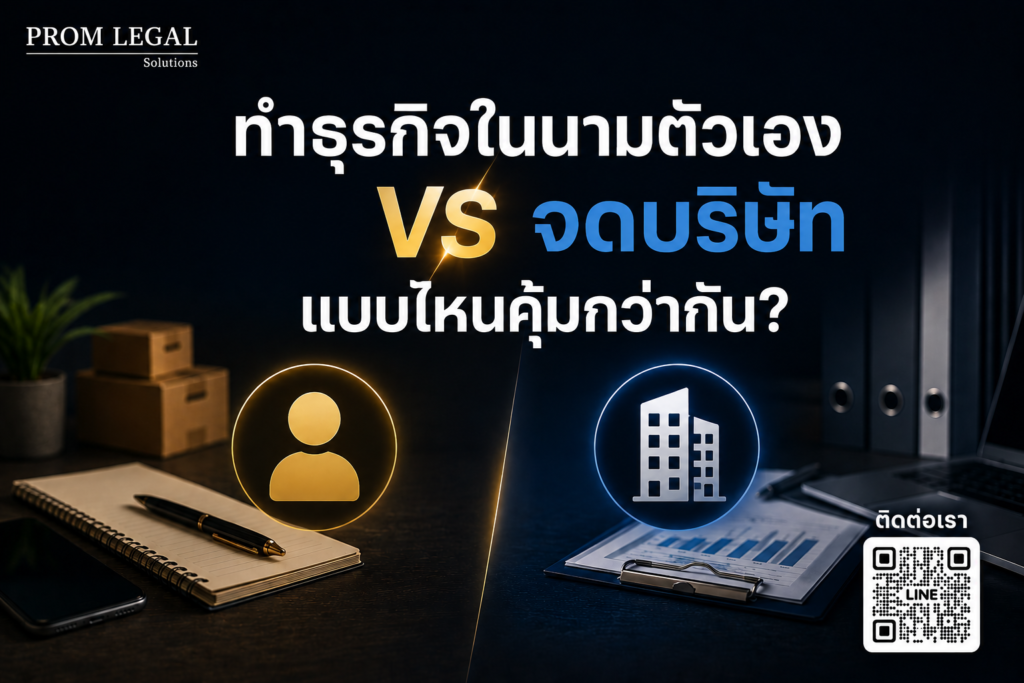
วันนี้พวกเรา Prom Legal Solution จะพาคุณมาเปรียบเทียบอย่างตรงไปตรงมาว่า การทำธุรกิจในนามบุคคลธรรมดากับการจดบริษัทจำกัดนั้น ต่างกันอย่างไรในมุมกฎหมายและภาษี พร้อมบอกด้วยว่าแบบไหนเหมาะกับธุรกิจรูปแบบใด ในรูปแบบสรุปอ่านง่าย เข้าใจได้ทันทีค่ะ
เมื่อคุณ “ทำธุรกิจในนามตัวเอง” ไม่ว่าจะเป็นร้านค้าออนไลน์ ฟรีแลนซ์ หรือธุรกิจส่วนตัวที่ไม่ได้จดทะเบียน ในทางกฎหมายคุณกับธุรกิจคือ “คนคนเดียวกัน” ทุกหนี้สิน ทุกสัญญา ทุกความรับผิดชอบของธุรกิจ คือความรับผิดชอบของคุณในฐานะบุคคลธรรมดาโดยตรง ซึ่งหมายความว่าหากธุรกิจมีหนี้ เจ้าหนี้มีสิทธิ์บังคับคดีมาถึงทรัพย์สินส่วนตัวของคุณได้
แต่เมื่อจดบริษัทจำกัด บริษัทจะกลายเป็น “นิติบุคคล” ที่มีสถานะทางกฎหมายแยกจากตัวเจ้าของอย่างชัดเจน สามารถถือทรัพย์สิน ทำสัญญา และฟ้องร้องในนามตัวเองได้ โดยผู้ถือหุ้นมีความรับผิดจำกัดเพียงเท่าจำนวนเงินที่ลงทุน ทรัพย์สินส่วนตัวจึงมีเกราะป้องกันทางกฎหมาย
ตารางเปรียบเทียบ: บุคคลธรรมดา vs บริษัทจำกัด
| ประเด็น | บุคคลธรรมดา / ร้านค้า | บริษัทจำกัด |
| ความรับผิด | ไม่จำกัด เจ้าของรับผิดด้วยทรัพย์สินส่วนตัว | จำกัด ผู้ถือหุ้นรับผิดเฉพาะเงินที่ลงทุน |
| ภาษีเงินได้ | บุคคลธรรมดา อัตราก้าวหน้า 0–35% | นิติบุคคล อัตรา 20% (SME ได้อัตราพิเศษ: ยกเว้น–15%–20%) |
| ต้นทุนการจัดตั้ง | ต่ำมาก ไม่ต้องจด หรือจดง่าย | มีค่าใช้จ่ายจดทะเบียน + ค่าทำบัญชีรายปี |
| ความน่าเชื่อถือ | ต่ำกว่า ฝ่ายคู่ค้าและสถาบันการเงินให้ความเชื่อถือน้อยกว่า | สูงกว่า ง่ายต่อการเข้าถึงสินเชื่อและสัญญาใหญ่ |
| การระดมทุน | ทำได้ยาก ไม่มีโครงสร้างหุ้น | ทำได้ง่าย แบ่งหุ้น ขายหุ้นเพิ่มได้ |
| ภาระด้านบัญชี | ยื่นภาษีปีละครั้ง | ต้องทำบัญชี ปิดงบ ยื่น สรรพากร + DBD |
โดยหนึ่งในเหตุผลที่หลายคนตัดสินใจจดบริษัทคือเรื่องภาษี การทำธุรกิจในนามบุคคลธรรมดาหมายความว่ารายได้จากธุรกิจจะถูกรวมเข้ากับรายได้ส่วนตัว และเสียภาษีในอัตราก้าวหน้าตามประมวลรัษฎากรสูงสุดถึง 35% แต่หากจดบริษัทจำกัด กำไรของบริษัทจะเสียภาษีเงินได้นิติบุคคลในอัตรา 20% และสำหรับ SME (ทุนชำระแล้วไม่เกิน 5 ล้านบาท และรายได้ไม่เกิน 30 ล้านบาทต่อปี) ยังได้รับสิทธิอัตราพิเศษ คือ กำไรสุทธิ 300,000 บาทแรกได้รับยกเว้น ส่วน 300,001–3,000,000 บาท เสียภาษีในอัตรา 15% และส่วนที่เกิน 3,000,000 บาท เสียในอัตรา 20% ตามที่กรมสรรพากรกำหนด
อย่างไรก็ตาม การจดบริษัทไม่ได้หมายความว่าจะเสียภาษีน้อยกว่าทุกกรณี เพราะยังมีต้นทุนทำบัญชี ภาษีเงินปันผล และโครงสร้างการรับเงินเดือนหรือกำไรที่ต้องพิจารณาร่วมกัน เมื่อบริษัทจ่ายเงินปันผลให้ผู้ถือหุ้น เงินปันผลนั้นจะถูกหักภาษี ณ ที่จ่ายในอัตรา 10% โดยผู้รับเงินปันผลสามารถเลือกให้ถือเป็น final tax หรือนำมารวมคำนวณภาษีเงินได้บุคคลธรรมดาพร้อมเครดิตภาษีเงินปันผลก็ได้ แล้วแต่ทางเลือกใดจะได้ประโยชน์มากกว่า ดังนั้น การวางแผนโครงสร้างภาษีให้ดีตั้งแต่ต้นจึงสำคัญมาก และนี่คือจุดที่ควรปรึกษาผู้เชี่ยวชาญก่อนตัดสินใจ
แล้วจะรู้ได้ยังไง ว่าแบบไหนเหมาะกับคุณ?
ทำธุรกิจในนามตัวเองเหมาะกับ
- ธุรกิจที่เพิ่งเริ่มต้น ยังทดสอบตลาด รายได้ยังไม่สม่ำเสมอ
- ฟรีแลนซ์หรือผู้ให้บริการรายเดียวที่ไม่มีความเสี่ยงทางกฎหมายสูง
- ธุรกิจที่ต้องการต้นทุนดำเนินการต่ำที่สุดในระยะแรก
จดบริษัทจำกัดเหมาะกับ
- ธุรกิจที่มีรายได้สม่ำเสมอและมีกำไรในระดับที่การเสียภาษีนิติบุคคลคุ้มกว่าภาษีบุคคลธรรมดา (หมายเหตุ: เกณฑ์รายได้เกิน 1.8 ล้านบาทต่อปีเป็นเกณฑ์จดทะเบียน VAT ซึ่งบังคับใช้กับทั้งบุคคลธรรมดาและนิติบุคคล ไม่ใช่เกณฑ์ที่บังคับให้ต้องจดบริษัท)
- ธุรกิจที่ต้องการสร้างความน่าเชื่อถือเพื่อทำสัญญาใหญ่หรือขอสินเชื่อ
- ธุรกิจที่มีความเสี่ยงทางกฎหมายหรือการเงินสูง และต้องการป้องกันทรัพย์สินส่วนตัว
- ธุรกิจที่ต้องการขยายทีม ระดมทุน หรือรับนักลงทุนในอนาคต
สิ่งที่เราพบบ่อยที่สุดในการให้คำปรึกษาคือผู้ประกอบการที่เริ่มต้นในนามบุคคลธรรมดาแล้วโตเกินกว่าโครงสร้างนั้นรองรับได้ เมื่อถึงเวลาต้องย้ายมาเป็นบริษัทกลับมีภาระภาษีค้างอยู่ มีสัญญาที่ต้องโอนย้าย หรือเสียสิทธิ์บางอย่างไปแล้ว การวางแผนโครงสร้างธุรกิจตั้งแต่วันแรกจึงไม่ใช่เรื่องที่ควรมองข้าม
พวกเรา Prom Legal Solution พร้อมดูแลทุกปัญหาทางกฎหมายให้คุณด้วยบริการแบบ One-Stop Service ตั้งแต่การให้คำปรึกษาเลือกโครงสร้างธุรกิจ การจดทะเบียนบริษัท การจัดทำบัญชีรายเดือนและที่ปรึกษาด้านภาษี ไปจนถึงการดูแลด้านกฎหมายในระยะยาว อย่าปล่อยให้ความไม่รู้กฎหมายมาทำให้คุณเสียเปรียบ โฟกัสกับสิ่งที่ต้องทำตรงหน้า แล้วปล่อยให้เรื่องกฎหมายเป็นหน้าที่ของเรา หากคุณมีข้อสงสัยประการใด สามารถติดต่อเพื่อขอคำปรึกษาได้เลยค่ะ
หมายเหตุ: บทความนี้จัดทำขึ้นเพื่อให้ข้อมูลทั่วไปเท่านั้น ไม่ถือเป็นคำแนะนำทางกฎหมายหรือภาษีสำหรับกรณีเฉพาะ การตัดสินใจเลือกโครงสร้างธุรกิจควรพิจารณาจากข้อเท็จจริงของธุรกิจแต่ละราย และควรปรึกษาทนายความหรือผู้เชี่ยวชาญก่อนตัดสินใจ
#จดบริษัท #บุคคลธรรมดา #โครงสร้างธุรกิจ #ภาษีนิติบุคคล #ผู้ประกอบการมือใหม่ #SMEไทย #กฎหมายธุรกิจ #ที่ปรึกษากฎหมาย #PromLegalSolution #จดทะเบียนบริษัท #วางแผนภาษี
Doing Business as an Individual vs. Registering a Company: Which is More Worthwhile?
“Do I need to register a company to sell things online?” “I am a solo freelancer; why should I bother registering a company?” These are the most frequently asked questions by new entrepreneurs—and unfortunately, they are also the questions that, when answered incorrectly, lead to the most regret later on.
Today, we at Prom Legal Solution will provide a straightforward comparison between doing business as a natural person (individual) and registering a limited company. We will examine the distinct legal and tax differences and guide you on which structure best suits your specific business model. We have summarized this into an easy-to-read, immediately applicable guide.
The Legal Divide: You vs. Your Business When you “do business in your own name”—whether as an online merchant, a freelancer, or an unregistered personal business—the law considers you and your business to be the “exact same person.” Every debt, every contract, and every liability of the business falls directly on your shoulders as an individual. This means that if the business incurs debt, creditors have the legal right to seize your personal assets to cover it.
Conversely, when you register a Limited Company, the company becomes a “Juristic Person” (Legal Entity). It possesses a legal status completely separate from its owners. It can hold assets, enter into contracts, and sue or be sued in its own name. Most importantly, the shareholders’ liability is strictly limited to the amount of capital they have invested. Your personal assets are therefore shielded behind a protective legal wall known as the corporate veil.
Summary Comparison: Individual vs. Limited Company
| Feature | Individual / Sole Proprietorship | Limited Company |
| Legal Liability | Unlimited: The owner is fully liable with their personal assets. | Limited: Shareholders are liable only up to their invested capital. |
| Income Tax | Personal Income Tax: Progressive rates from 0–35%. | Corporate Income Tax: Flat rate of 20% (SMEs get special reduced rates: Exempt – 15% – 20%). |
| Setup & Maintenance Costs | Very low: No formal registration required (or very simple commercial registration). | Higher: Involves registration fees and mandatory annual accounting/auditing costs. |
| Credibility | Lower: Less trusted by corporate partners and financial institutions. | Higher: Easier access to commercial loans and large B2B contracts. |
| Fundraising | Difficult: No share structure to offer investors. | Easy: Can easily divide, issue, and sell shares to raise capital. |
| Accounting Burden | Simple: File personal income taxes once or twice a year. | Strict: Must maintain formal accounting, close annual books, and submit financial statements to the Revenue Department and the DBD. |
The Tax Factor: Why Many Choose to Incorporate Taxes are often the primary catalyst for incorporation. Doing business in your own name means your business revenue is combined with your personal income, subjecting it to Thailand’s progressive personal income tax rates, which can reach up to 35%.
If you register a limited company, your corporate profits are taxed at a standard rate of 20%. Furthermore, if your business qualifies as an SME (paid-up capital not exceeding 5 million THB and annual revenue not exceeding 30 million THB), you are entitled to special tax privileges:
- The first 300,000 THB of net profit is tax-exempt.
- Profits from 300,001 to 3,000,000 THB are taxed at 15%.
- Profits exceeding 3,000,000 THB are taxed at 20%.
Crucial Caveat: Registering a company does not automatically guarantee you will pay fewer taxes in every scenario. You must factor in corporate accounting costs, the 10% withholding tax on dividend payouts, and how you structure your salary versus company profits. Proper tax structuring from Day 1 is critical, which is exactly why you should consult an expert before making a decision.
How Do You Know Which Structure is Right for You?
Doing Business as an Individual is suitable for:
- Businesses that are just starting out, testing the market, or have irregular income.
- Solo freelancers or single service providers with very low legal liability risks.
- Businesses that require the absolute lowest operational costs in their early stages.
Registering a Limited Company is suitable for:
- Businesses with consistent income and profit levels where corporate tax rates are mathematically more beneficial than personal progressive rates. (Note: The 1.8 million THB annual revenue threshold for mandatory VAT registration applies to BOTH individuals and companies; it is not a legal trigger that forces you to incorporate).
- Businesses that need high credibility to secure large contracts or bank loans.
- Businesses with high legal or financial risks that absolutely require the protection of personal assets.
- Businesses planning to expand their team, raise funds, or bring in partners/investors in the future.
The Cost of Waiting Too Long The most common issue we encounter in our consultations is entrepreneurs who started as individuals and grew far beyond what that structure could safely support. By the time they are forced to transition into a company, they are entangled in tax arrears, complex contract transfers, and lost tax privileges. Planning your business structure from Day 1 is not an issue you should overlook.
We at Prom Legal Solution are ready to handle all your legal challenges with our One-Stop Service—from business structure consultation and company registration to monthly accounting, tax planning, and long-term legal counsel. Do not let legal unawareness put you at a disadvantage. Focus on the tasks in front of you, and leave the legal matters to us.
If you have any questions or require consultation, please contact us today.
Disclaimer: This article is prepared for general informational purposes only and does not constitute specific legal or tax advice. Decisions regarding business structures should be based on the unique facts of each business. You should consult a lawyer or professional expert before making a final decision.
#CompanyRegistration #SoleProprietorship #BusinessStructure #CorporateTax #NewEntrepreneurs #ThaiSME #BusinessLaw #LegalConsultant #PromLegalSolution #TaxPlanning