
(English Below)
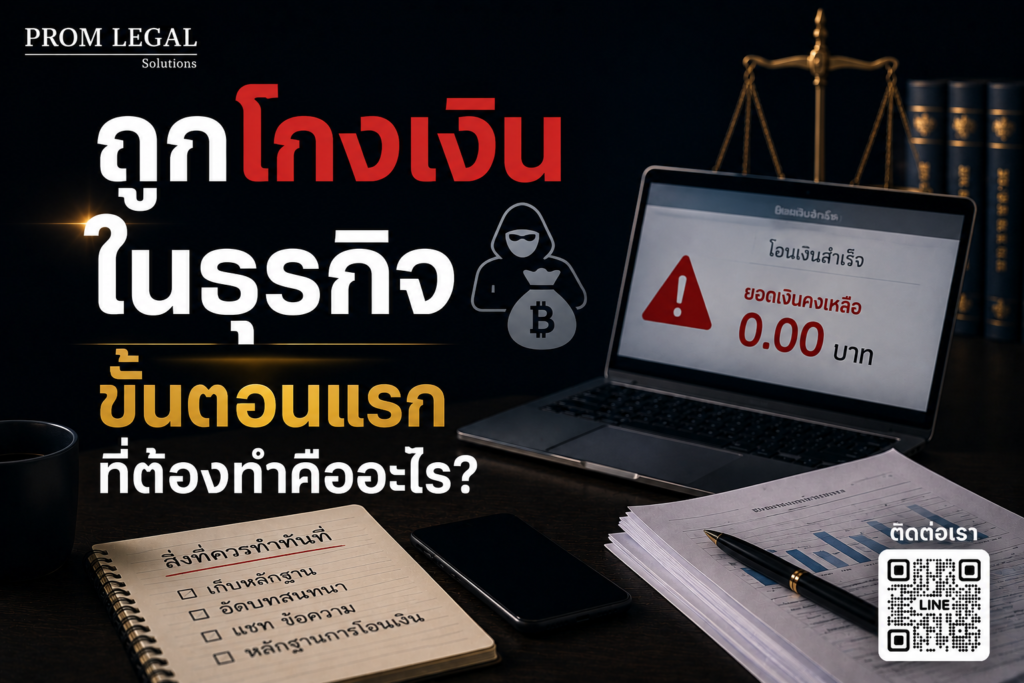
โอนเงินไปแล้ว ของไม่มา สัญญาที่มีไว้ก็ไม่ได้ทำตาม หุ้นส่วนเบิกเงินบริษัทหนีหาย ทุกสถานการณ์เหล่านี้คือฝันร้ายที่ผู้ประกอบการหลายคนเผชิญ และสิ่งที่น่ากลัวที่สุดไม่ใช่แค่การสูญเสียเงิน แต่คือการไม่รู้ว่าต้องทำอะไรก่อน จนทำให้พลาดโอกาสที่จะได้เงินคืนหรือดำเนินคดีได้อย่างมีประสิทธิภาพ
วันนี้พวกเรา Prom Legal Solution จะพาคุณมาทำความเข้าใจอย่างตรงไปตรงมาว่า เมื่อถูกโกงเงินในธุรกิจ ขั้นตอนแรกที่ต้องทำคืออะไร กฎหมายสามารถช่วยคุณได้อย่างไรบ้าง และอะไรบ้างที่ห้ามทำเพื่อไม่ให้เสียรูปคดี ในรูปแบบสรุปอ่านง่าย เข้าใจได้ทันทีค่ะ
ก่อนเลือกเส้นทางกฎหมาย สิ่งสำคัญคือ ต้องรู้ว่าเราเจอการโกงรูปแบบใด เพราะแต่ละรูปแบบใช้กฎหมายที่ต่างกันค่ะ เช่น คู่ค้าหรือซัพพลายเออร์รับเงินแล้ว ไม่ส่งสินค้า/บริการ หุ้นส่วนยักยอกเงินบริษัทหรือใช้ทรัพย์สินบริษัทเพื่อประโยชน์ส่วนตัว พนักงานทุจริต เบิกเงิน ปลอมเอกสาร หรือขโมยข้อมูลลูกค้า
การโกงออนไลน์ เช่น ปลอมตัวเป็นคู่ค้า ส่งอีเมลหลอกโอนเงิน หรือเป็นการลงทุนหลอกลวง แชร์ลูกโซ่ หรืออ้างผลตอบแทนเกินจริง
6 ขั้นตอนที่ต้องทำทันทีเมื่อถูกโกง
- ใช้สติในการโต้ตอบ อย่าโต้ตอบในทันที
เพราะความโกรธอาจทำให้ส่งข้อความหรือโทรหาผู้โกงโดยพลการ ซึ่งอาจทำให้หลักฐานเสียหายหรือเปิดให้ถูกโต้แย้งทางกฎหมายกลับมาได้
- รวบรวมหลักฐานที่เกี่ยวข้อง
สัญญา ใบเสร็จ หลักฐานการโอนเงิน บทสนทนา (LINE, อีเมล) เอกสารทางธุรกิจทุกอย่าง เก็บในรูปแบบที่ลบไม่ได้ เช่น ภาพถ่าย สำเนา
- ปรึกษาทนายความ
ก่อนแจ้งความหรือฟ้องคดี ทนายจะช่วยประเมินว่าข้อเท็จจริงครบองค์ประกอบความผิดอาญาหรือแพ่งหรือไม่ และเลือกเส้นทางที่คุ้มค่าที่สุด
- แจ้งความร้องทุกข์
ยื่นต่อเจ้าพนักงานตำรวจ พร้อมพยานหลักฐาน หากเป็นการโกงทางออนไลน์สามารถแจ้งเพิ่มเติมที่ กองบังคับการปราบปรามการกระทำความผิดเกี่ยวกับอาชญากรรมทางเทคโนโลยี (บก.ปอท.) โดยแจ้งความร้องทุกข์ซึ่งจะต้องมีการระบุในบันทึกประจำวันว่า “ร้องทุกข์ไว้เพื่อต้องการดำเนินคดีจนถึงที่สุด”
- ฟ้องคดีแพ่ง (ถ้าจำเป็น)
คดีอาญาช่วยลงโทษ แต่ไม่ได้เงินคืนเสมอไป คดีแพ่งตาม ป.พ.พ. ช่วยเรียกค่าเสียหายและทรัพย์สินคืนโดยตรง สองเส้นทางดำเนินคู่กันได้
- ระวังอายุความ
ควรตรวจสอบอายุความของแต่ละกรณีด้วย โดยคดีอาญาฉ้อโกงทั่วไป (ม.341) มีอายุความ 10 ปี ตาม ป.อ. ม.95(3) ส่วนฉ้อโกงประชาชน (ม.343) อายุความ 15 ปี ต้องร้องทุกข์ภายใน 3 เดือนนับแต่รู้เรื่องและรู้ตัวผู้กระทำผิด คดีแพ่งละเมิด 1 ปีนับแต่รู้ตัวผู้โกง (แต่ไม่เกิน 10 ปี) และคดีแพ่งผิดสัญญาโดยทั่วไป 10 ปี ยิ่งช้ายิ่งเสียเปรียบ
กฎหมายไทยที่อาจเข้าข่ายในกรณีนี้
| กฎหมายที่เกี่ยวข้อง | ใช้เมื่อไหร่? |
| ป.อ. มาตรา 341 (ฉ้อโกง) | ผู้ใดหลอกลวงผู้อื่นด้วยการแสดงข้อความอันเป็นเท็จ หรือปกปิดข้อความจริง จนได้ทรัพย์สินไป จำคุกไม่เกิน 3 ปี และ/หรือปรับ |
| ป.อ. มาตรา 343 (ฉ้อโกงประชาชน) | กรณีหลอกลวงคนจำนวนมาก เช่น แชร์ลูกโซ่ ลงทุนปลอม โทษหนักขึ้น จำคุกไม่เกิน 5 ปี |
| พ.ร.บ. คอมพิวเตอร์ฯ มาตรา 14 | การโกงผ่านสื่ออิเล็กทรอนิกส์ ออนไลน์ หรือปลอมเอกสารดิจิทัล จำคุกไม่เกิน 5 ปี |
| ป.พ.พ. ว่าด้วยละเมิด (ม. 420) | เรียกค่าเสียหายทางแพ่งได้ แม้คดีอาญายังไม่สิ้นสุด |
| ป.พ.พ. ว่าด้วยผิดสัญญา (ม. 213-215) | หากมีสัญญาและคู่สัญญาผิดนัด สามารถเรียกค่าเสียหายและบังคับชำระได้ |
สิ่งที่ห้ามทำโดยเด็ดขาด
- อย่าลบข้อความหรือหลักฐานดิจิทัลใดๆ แม้คิดว่าไม่สำคัญ
- อย่าโทรด่าหรือคุกคามผู้โกง อาจถูกกลับฟ้องข้อหาข่มขู่หรือหมิ่นประมาทได้
- อย่ารอนานเกินไป อายุความเดินทุกวัน ยิ่งช้ายิ่งสูญเสียสิทธิ์
- อย่าตกลงเจรจาหรือรับเงินบางส่วนโดยไม่ปรึกษาทนาย อาจถูกตีความว่าสละสิทธิ์เรียกร้องส่วนที่เหลือ
แล้วฟ้องคดีอาญาหรือแพ่งดีกว่ากัน? คำตอบคือ ทั้งสองเส้นทางมีเป้าหมายต่างกัน คดีอาญาให้อำนาจรัฐดำเนินคดีกับผู้โกง และอาจนำไปสู่การจำคุก แต่ไม่ได้รับประกันว่าคุณจะได้เงินคืน ในขณะที่คดีแพ่งมุ่งเรียกทรัพย์สินหรือค่าเสียหายโดยตรง ในหลายกรณีการดำเนินทั้งสองเส้นทางพร้อมกันคือทางที่ชาญฉลาดที่สุด และทนายความที่มีประสบการณ์จะช่วยวางแผนให้สอดคล้องกันได้อย่างมีประสิทธิภาพค่ะ แต่อย่างไรก็ตามควรปรึกษาทนายความเพื่อวิเคราะห์ข้อเท็จจริงก่อน ว่าข้อเท็จจริงครบองค์ประกอบความผิดอาญาหรือแพ่งหรือไม่ มีโอกาสที่จะสามารถดำเนินคดีในด้านไหนได้บ้าง
พวกเรา Prom Legal Solution พร้อมดูแลทุกปัญหาทางกฎหมายให้คุณด้วยบริการแบบ One-Stop Service ตั้งแต่การประเมินคดีและรวบรวมหลักฐาน การแจ้งความดำเนินคดีอาญา ไปจนถึงการฟ้องร้องเรียกค่าเสียหายทางแพ่ง อย่าปล่อยให้ความไม่รู้กฎหมายทำให้คุณสูญเสียสิทธิ์ที่มี โฟกัสกับสิ่งที่ต้องทำตรงหน้า แล้วปล่อยให้เรื่องกฎหมายเป็นหน้าที่ของเรา สามารถติดต่อเพื่อขอคำปรึกษาได้เลยค่ะ
#ถูกโกง #ฉ้อโกง #กฎหมายธุรกิจไทย #คดีอาญา #คดีแพ่ง #แจ้งความ #รวบรวมหลักฐาน #ที่ปรึกษากฎหมาย #PromLegalSolution #ผู้ประกอบการไทย #โกงออนไลน์ #ยักยอกทรัพย์
Defrauded in Business: What is the First Step You Must Take?
Money transferred, but goods never arrive. Contracts are broken. A business partner withdraws company funds and vanishes. These are the nightmares many entrepreneurs face. The most terrifying part is not just the financial loss, but the paralysis of not knowing what to do first—leading to missed opportunities to recover funds or take effective legal action.
Today, we at Prom Legal Solution will give you a straightforward guide on the immediate first steps to take when you are defrauded in business, how the law can protect you, and what you must absolutely avoid doing to protect your case. We have summarized this into an easy-to-read, immediately applicable guide.
Identify the Type of Fraud
Before choosing a legal path, you must identify the exact type of fraud you are facing, as different scenarios require different legal approaches. Common examples include:
- Vendors or suppliers receiving payment but failing to deliver goods or services.
- Business partners embezzling company funds or utilizing corporate assets for personal gain.
- Employees committing internal fraud, forging documents, or stealing customer data.
- Online fraud, such as impersonating partners, phishing emails, fake investments, Ponzi schemes, or exaggerated return claims.
6 Immediate Steps to Take When Defrauded
- 1. Stay Calm and Do Not React Instantly: Anger might drive you to hastily message or call the fraudster. This could result in destroyed evidence or open you up to legal counter-claims.
- 2. Gather All Relevant Evidence: Collect contracts, receipts, transfer slips, chat logs (LINE, emails), and all related business documents. Save them in non-deletable formats, such as physical printouts or screenshots.
- 3. Consult a Lawyer: Before filing a police report or lawsuit, an experienced lawyer will assess whether the facts meet the legal elements of a criminal or civil offense and help you choose the most strategic and cost-effective route.
- 4. File a Police Complaint: File a formal report with the police along with your evidence. For online fraud, you can report to the Technology Crime Suppression Division (TCSD). Crucial tip: Ensure the police blotter explicitly states your intention to “prosecute to the fullest extent of the law” (ร้องทุกข์เพื่อดำเนินคดีจนถึงที่สุด), not just to leave a daily record.
- 5. File a Civil Lawsuit (If Necessary): Criminal cases aim to punish the offender but do not always guarantee your money back. A civil lawsuit under the Civil and Commercial Code (CCC) directly targets the recovery of damages and assets. Both paths can often be pursued simultaneously.
- 6. Beware of the Statute of Limitations: You must verify the legal timeline for your specific case. For instance, general criminal fraud (Section 341) has a 10-year statute, but a complaint must be filed within 3 months from the date you knew of the offense and identified the offender. Public fraud (Section 343) carries a 15-year limit. Civil torts have a 1-year limit from identifying the offender (capped at 10 years), and general breach of contract is 10 years. The longer you wait, the more disadvantaged you become.
Relevant Thai Laws That May Apply
| Relevant Law | When is it applied? |
| Penal Code Sec. 341 (Fraud) | Deceiving others by asserting falsehoods or concealing facts to obtain property. Penalty: Up to 3 years imprisonment and/or fine. |
| Penal Code Sec. 343 (Public Fraud) | Defrauding a large number of people (e.g., Ponzi schemes, fake investments). Heavier penalty: Up to 5 years imprisonment. |
| Computer Crime Act Sec. 14 | Fraud committed via electronic media, online platforms, or using forged digital data. Penalty: Up to 5 years imprisonment. |
| CCC Sec. 420 (Tort) | Used to claim civil damages, even if the criminal case has not yet concluded. |
| CCC Sec. 213-215 (Breach of Contract) | If a valid contract exists and a counterparty defaults, allowing you to claim damages and enforce performance. |
What NOT to Do (Strict Prohibitions)
- Do not delete any messages or digital evidence, even if you think they are unimportant.
- Do not call to curse at or threaten the fraudster; they could counter-sue you for extortion or defamation.
- Do not wait too long. The statute of limitations ticks every single day. Delaying means legally losing your rights.
- Do not negotiate or accept partial payments without consulting a lawyer, as this might be legally interpreted as waiving your right to claim the remainder.
Criminal vs. Civil Lawsuit: Which is Better?
The answer is that both have different objectives. Criminal law utilizes state power to prosecute the fraudster and can lead to imprisonment, but it does not guarantee financial restitution. Meanwhile, civil litigation is specifically aimed at recovering assets or claiming damages directly.
In many commercial scenarios, pursuing both paths simultaneously is the smartest strategy. An experienced lawyer will help orchestrate these paths efficiently. However, you must consult legal counsel to thoroughly analyze the facts first, ensuring the necessary elements for either criminal or civil liability are fully met before taking action.
We at Prom Legal Solution are ready to handle all your legal challenges with our One-Stop Service—from case assessment and evidence gathering to filing criminal complaints and civil lawsuits for damages. Do not let legal unawareness strip you of your rights. Focus on the tasks in front of you, and leave the legal matters to us.
Contact us for a consultation today.
#PromLegalSolution #BusinessFraud #ThaiBusinessLaw #CriminalLaw #CivilLaw #EvidenceGathering #LegalConsultant #ThaiEntrepreneur #OnlineFraud #Embezzlement