
(English Below)
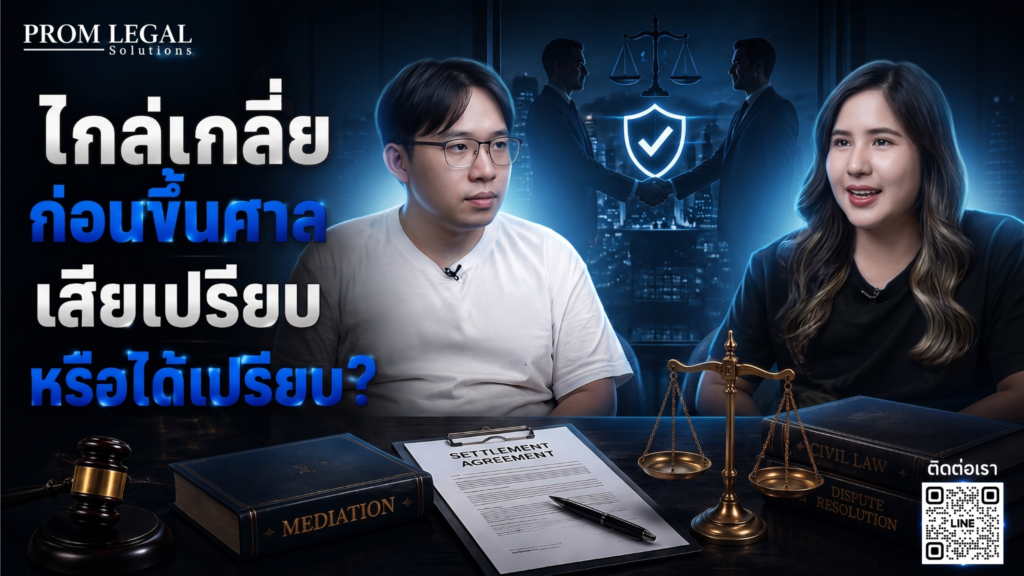
เมื่อมีข้อพิพาทเกิดขึ้น หลายคนคิดทันทีว่า “ต้องฟ้องให้ถึงที่สุด” แต่พอมีคนเสนอให้ “ไกล่เกลี่ย” กลับรู้สึกว่าเหมือนยอมถอย เสียเปรียบ หรือแพ้ตั้งแต่ยังไม่ได้สู้ ความรู้สึกนี้เข้าใจได้ แต่อาจทำให้พลาดทางออกที่ดีที่สุดไปอย่างน่าเสียดาย
เปรียบง่าย ๆ การไกล่เกลี่ยก็เหมือนการหา “ทางลง” ที่ทั้งสองฝ่ายพอรับได้ ก่อนที่จะต้องเสียเวลาและเงินไปกับสงครามที่ยืดเยื้อ ไม่ใช่การยอมแพ้ แต่คือการเลือกจบเรื่องอย่างชาญฉลาด วันนี้ Prom Legal Solution ขอพาไปดูว่าการไกล่เกลี่ยได้เปรียบหรือเสียเปรียบกันแน่ และมีผลทางกฎหมายอย่างไรค่ะ
ไกล่เกลี่ยและประนีประนอมยอมความคืออะไร
หัวใจของเรื่องนี้อยู่ที่ สัญญาประนีประนอมยอมความ ตาม ประมวลกฎหมายแพ่งและพาณิชย์ มาตรา 850 ซึ่งหมายถึงสัญญาที่คู่กรณีตกลงระงับข้อพิพาทที่มีอยู่หรือที่จะมีขึ้น ให้เสร็จไปด้วยการที่ต่างฝ่ายต่างยอมผ่อนผันให้แก่กัน
พูดง่าย ๆ คือ ไม่มีใครได้ทั้งหมดร้อยเปอร์เซ็นต์ แต่ทั้งสองฝ่ายยอมถอยคนละก้าวเพื่อให้เรื่องจบ โดยไม่ต้องรอให้ศาลชี้ขาดว่าใครถูกใครผิด
ไกล่เกลี่ยได้ตอนไหนบ้าง
การไกล่เกลี่ยไม่ได้จำกัดอยู่แค่ในห้องพิจารณาคดี แต่ทำได้หลายจังหวะ
| ช่วงเวลา | รูปแบบ |
| ก่อนฟ้อง (นอกศาล) | ใช้กลไกตาม พระราชบัญญัติการไกล่เกลี่ยข้อพิพาท พ.ศ. 2562 โดยมีผู้ไกล่เกลี่ยที่ขึ้นทะเบียนช่วยเจรจา เมื่อตกลงกันได้จะทำเป็นข้อตกลงระงับข้อพิพาท |
| ก่อนฟ้อง (ผ่านศาล) | ยื่นคำร้องต่อศาลขอไกล่เกลี่ยก่อนฟ้อง ตาม ป.วิ.พ. มาตรา 20 ตรี โดยมีข้อกำหนดของประธานศาลฎีกาว่าด้วยการไกล่เกลี่ยก่อนฟ้อง พ.ศ. 2563 รองรับ ยื่นได้ทั้งแบบปกติและผ่านระบบบริการออนไลน์ศาลยุติธรรม (CIOS) |
| ระหว่างพิจารณาคดี (ในศาล) | เมื่อฟ้องแล้ว ศาลมักส่งเรื่องเข้าสู่การไกล่เกลี่ยตาม ป.วิ.พ. มาตรา 20 ทวิ ก่อนสืบพยาน หากตกลงกันได้ ศาลจะทำ “คำพิพากษาตามยอม” ตามมาตรา 138 |
ไกล่เกลี่ยก่อนฟ้องในศาล ตาม ป.วิ.พ. มาตรา 20 ตรี
จุดที่หลายคนยังไม่รู้คือ แม้ “ยังไม่ได้ยื่นฟ้อง” ก็สามารถใช้บริการไกล่เกลี่ยของศาลได้ค่ะ ตาม ประมวลกฎหมายวิธีพิจารณาความแพ่ง มาตรา 20 ตรี ผู้ที่ประสงค์จะเป็นคู่ความสามารถยื่นคำร้องต่อศาลเพื่อขอให้ศาลแต่งตั้งผู้ประนีประนอมดำเนินการไกล่เกลี่ยได้ก่อนที่จะยื่นฟ้องคดี โดยมีข้อกำหนดของประธานศาลฎีกาว่าด้วยการไกล่เกลี่ยก่อนฟ้อง พ.ศ. 2563 วางรายละเอียดวิธีปฏิบัติไว้ และปัจจุบันยื่นคำร้องได้ทั้งที่ศาลโดยตรงหรือผ่านระบบบริการออนไลน์ศาลยุติธรรม (CIOS)
ข้อดีคือสะดวก ค่าใช้จ่ายน้อย และหากไกล่เกลี่ยสำเร็จ คู่กรณีอาจขอให้ศาลมีคำพิพากษาตามยอม เพื่อให้ข้อตกลงมีสภาพบังคับได้เท่ากับคำพิพากษา ช่วยตัดปัญหาการฟ้องคดีที่ยืดเยื้อได้ตั้งแต่ต้น
ได้เปรียบหรือเสียเปรียบ: ชั่งสองด้านให้เห็นภาพ
| ข้อดีของการไกล่เกลี่ย | ข้อควรระวัง |
| เร็วกว่า จบได้ในไม่กี่นัด ไม่ต้องรอคดีขึ้นสู่ชั้นอุทธรณ์-ฎีกาเป็นปี | อาจต้องยอมลดข้อเรียกร้องบางส่วน ไม่ได้เต็มจำนวนที่หวัง |
| ประหยัด ทั้งค่าธรรมเนียมศาล ค่าทนาย และเวลา | ถ้าประเมินคดีตัวเองผิด อาจยอมความในเงื่อนไขที่เสียเปรียบ |
| ควบคุมผลลัพธ์ได้เอง ตกลงเงื่อนไขที่ทั้งสองฝ่ายรับได้ ไม่ต้องเสี่ยงกับคำตัดสิน | ผลผูกพันทันที กลับไปฟ้องเรื่องเดิมซ้ำไม่ได้ |
| รักษาความสัมพันธ์ เหมาะกับคู่ค้าหรือคนที่ยังต้องทำงานร่วมกันต่อ | ต้องอาศัยความสมัครใจของทั้งสองฝ่าย ถ้าอีกฝ่ายไม่ยอม ก็ไปต่อไม่ได้ |
ผลทางกฎหมายที่ต้องรู้ก่อนตัดสินใจ
ต้องมีหลักฐานเป็นหนังสือ การประนีประนอมยอมความจะฟ้องร้องบังคับกันได้ต่อเมื่อมีหลักฐานเป็นหนังสือลงลายมือชื่อฝ่ายที่ต้องรับผิด ตาม มาตรา 851 ดังนั้นตกลงกันด้วยวาจาอย่างเดียวไม่พอ ต้องทำเป็นเอกสารให้ชัด
มูลหนี้เดิมระงับ เกิดสิทธิใหม่ตามสัญญา ตาม มาตรา 852 เมื่อทำสัญญาประนีประนอมยอมความแล้ว ข้อเรียกร้องเดิมที่แต่ละฝ่ายสละไปย่อมระงับสิ้นไป และเกิดสิทธิใหม่ตามที่ตกลงในสัญญาแทน หมายความว่าจะกลับไปฟ้องเรื่องเดิมอีกไม่ได้
คำพิพากษาตามยอมบังคับได้ทันที หากไกล่เกลี่ยสำเร็จในศาลและศาลพิพากษาตามยอม (มาตรา 138) ข้อตกลงนั้นมีผลเป็นคำพิพากษา หากอีกฝ่ายไม่ปฏิบัติตาม ก็บังคับคดีได้เลยโดยไม่ต้องฟ้องใหม่ ทั้งยังอุทธรณ์ได้จำกัดมาก
ข้อควรระวัง (เจ็บแต่จบ): สัญญาประนีประนอมยอมความเซ็นแล้วผูกพันทันที และปิดประตูการฟ้องเรื่องเดิม ก่อนลงลายมือชื่อจึงควรอ่านเงื่อนไขให้ละเอียด ประเมินคดีของตัวเองตามความจริง และควรปรึกษาทนายเพื่อไม่ให้ยอมความในจุดที่เสียเปรียบโดยไม่รู้ตัว
สรุป
- ไกล่เกลี่ยไม่ใช่การยอมแพ้ แต่คือการเลือกจบเรื่องด้วย การต่างฝ่ายต่างผ่อนผัน (ป.พ.พ. มาตรา 850)
- ทำได้ทั้ง ก่อนฟ้อง ทั้งนอกศาล (พ.ร.บ.การไกล่เกลี่ยข้อพิพาท พ.ศ. 2562) และผ่านศาล (ป.วิ.พ. มาตรา 20 ตรี) รวมถึง ระหว่างคดีในศาล (มาตรา 20 ทวิ และคำพิพากษาตามยอม มาตรา 138)
- ข้อดีคือ เร็ว ประหยัด คุมผลลัพธ์เอง และรักษาความสัมพันธ์ แต่ต้องยอมลดข้อเรียกร้องบางส่วน
- ผลทางกฎหมายสำคัญ: ต้องมีหลักฐานเป็นหนังสือ (มาตรา 851) มูลหนี้เดิมระงับฟ้องซ้ำไม่ได้ (มาตรา 852) และคำพิพากษาตามยอมบังคับได้ทันที
การไกล่เกลี่ยที่ดีต้องมาพร้อมการประเมินคดีอย่างแม่นยำและเงื่อนไขที่รัดกุม Prom Legal Solution ให้บริการครบวงจร ทั้งประเมินโอกาสแพ้ชนะ วางกลยุทธ์เจรจา ร่างและตรวจสัญญาประนีประนอมยอมความ ไปจนถึงว่าความและบังคับคดี ปรึกษาเราได้เลยค่ะ ก่อนตัดสินใจว่าจะสู้หรือจะจบ
บทความนี้จัดทำขึ้นเพื่อให้ความรู้ทั่วไปทางกฎหมายเท่านั้น มิใช่ความเห็นทางกฎหมายสำหรับกรณีเฉพาะเรื่อง ผู้อ่านควรปรึกษาทนายความเพื่อรับคำแนะนำที่เหมาะสมกับข้อเท็จจริงของท่าน
#ไกล่เกลี่ย #ประนีประนอมยอมความ #ระงับข้อพิพาท #คดีความ #คำพิพากษาตามยอม #กฎหมายธุรกิจ #Mediation #PromLegalSolution #LegalTip #SME #Startup
Mediation Before Going to Court: A Disadvantage or an Advantage?
When a dispute arises, many people immediately think, “I have to fight it all the way.” But when someone suggests “mediation,” it can feel like backing down, losing ground, or giving up before the fight even starts. That feeling is understandable, but it may cause you to miss the best way out.
Put simply, mediation is like finding a “way down” that both sides can accept, before wasting time and money on a drawn-out war. It is not surrendering; it is choosing to end the matter wisely. Today, Prom Legal Solution looks at whether mediation is really a disadvantage or an advantage, and its legal effects.
What Are Mediation and a Compromise Agreement?
The heart of this is the compromise agreement under Civil and Commercial Code Section 850, meaning an agreement by which the parties settle an existing or future dispute by each making mutual concessions.
Simply put, no one gets 100 percent, but both sides step back a little to end the matter, without waiting for the court to decide who is right and who is wrong.
When Can You Mediate?
Mediation is not limited to the courtroom; it can happen at several stages.
| Stage | Form |
| Before filing (out of court) | Using the mechanism under the Dispute Mediation Act B.E. 2562 (2019), with a registered mediator helping negotiate; once agreed, a dispute-settlement agreement is made |
| Before filing (through the court) | Petition the court for pre-suit mediation under Civil Procedure Code Section 20 ter, supported by the Regulation of the President of the Supreme Court on Pre-suit Mediation B.E. 2563 (2020); it can be filed normally or through the Courts of Justice online service (CIOS) |
| During the case (in court) | Once filed, the court often refers the matter to mediation under Civil Procedure Code Section 20 bis before taking evidence; if agreed, the court issues a “judgment by compromise” under Section 138 |
Pre-suit Mediation in Court under Civil Procedure Code Section 20 ter
What many people do not realize is that even “before filing a case,” you can use the court’s mediation service. Under Civil Procedure Code Section 20 ter, a prospective party may petition the court to appoint a conciliator to mediate before filing suit, with the Regulation of the President of the Supreme Court on Pre-suit Mediation B.E. 2563 (2020) setting out the procedure. Today the petition can be filed either directly at the court or through the Courts of Justice online service (CIOS).
The upsides are convenience, low cost, and that if mediation succeeds, the parties may ask the court for a judgment by compromise so the agreement becomes enforceable like a judgment, cutting off a drawn-out lawsuit from the very start.
Advantage or Disadvantage: Weighing Both Sides
| Advantages of Mediation | Points to Watch |
| Faster, resolved in a few sessions, no waiting years through appeal and Supreme Court | You may have to reduce part of your claim, not the full amount hoped for |
| Cheaper, saving court fees, legal fees, and time | If you misjudge your own case, you may settle on unfavorable terms |
| You control the outcome, agreeing on terms both sides accept, without gambling on a ruling | It binds immediately; you cannot re-sue on the same matter |
| Preserves relationships, ideal for business partners or people who must keep working together | It requires both sides’ willingness; if the other refuses, it cannot proceed |
Legal Effects You Must Know Before Deciding
Must have written evidence. A compromise can be enforced only if there is written evidence signed by the party liable, under Section 851. So a verbal agreement alone is not enough; it must be clearly documented.
The old claim is extinguished, a new right arises under the agreement. Under Section 852, once a compromise agreement is made, the original claims each party gave up are extinguished, and new rights arise as agreed. This means you cannot go back and sue on the original matter.
A judgment by compromise is immediately enforceable. If mediation succeeds in court and the court gives a judgment by compromise (Section 138), the agreement takes effect as a judgment. If the other side does not comply, you can enforce it directly without suing again, and appeals are very limited.
Caveat: A compromise agreement binds immediately once signed and closes the door on re-suing the same matter. Before signing, read the terms carefully, assess your own case realistically, and consult a lawyer so you do not unknowingly settle on unfavorable terms.
Key Takeaways
- Mediation is not surrender; it is choosing to end a matter through mutual concessions (CCC Section 850).
- It can be done before filing, both out of court (Dispute Mediation Act B.E. 2562 (2019)) and through the court (CPC Section 20 ter), and during a case in court (Section 20 bis and judgment by compromise, Section 138).
- The upsides are speed, savings, control over the outcome, and preserved relationships, but you must reduce part of your claim.
- Key legal effects: it needs written evidence (Section 851), the old claim is extinguished so you cannot re-sue (Section 852), and a judgment by compromise is immediately enforceable.
Good mediation must come with an accurate case assessment and watertight terms. Prom Legal Solution offers end-to-end support, from assessing your chances of winning and planning negotiation strategy to drafting and reviewing compromise agreements and litigating and enforcing. Talk to us before you decide whether to fight or to settle.
This article is for general legal information only and is not legal advice for any specific case. Please consult a lawyer for advice tailored to your facts.
#ไกล่เกลี่ย #ประนีประนอมยอมความ #ระงับข้อพิพาท #คดีความ #คำพิพากษาตามยอม #กฎหมายธุรกิจ #Mediation #PromLegalSolution #LegalTip #SME #Startup