(English Below)
พระราชกฤษฎีกาลดอัตราภาษีมูลค่าเพิ่ม (ฉบับที่ 807) พ.ศ. 2569
เมื่อวันที่ 23 สิงหาคม 2569 ราชกิจจานุเบกษาได้เผยแพร่พระราชกฤษฎีกาออกตามความในประมวลรัษฎากร ว่าด้วยการลดอัตราภาษีมูลค่าเพิ่ม (ฉบับที่ 807) พ.ศ. 2569 ซึ่งเป็นกฎหมายที่ส่งผลโดยตรงต่อต้นทุนสินค้าและบริการของทั้งผู้ประกอบการและประชาชนทั่วไป วันนี้ Prom Legal Solution ขอสรุปการเปลี่ยนแปลงและสิ่งที่ควรเตรียมพร้อมให้ฟังค่ะ
สาระสำคัญของกฎหมาย
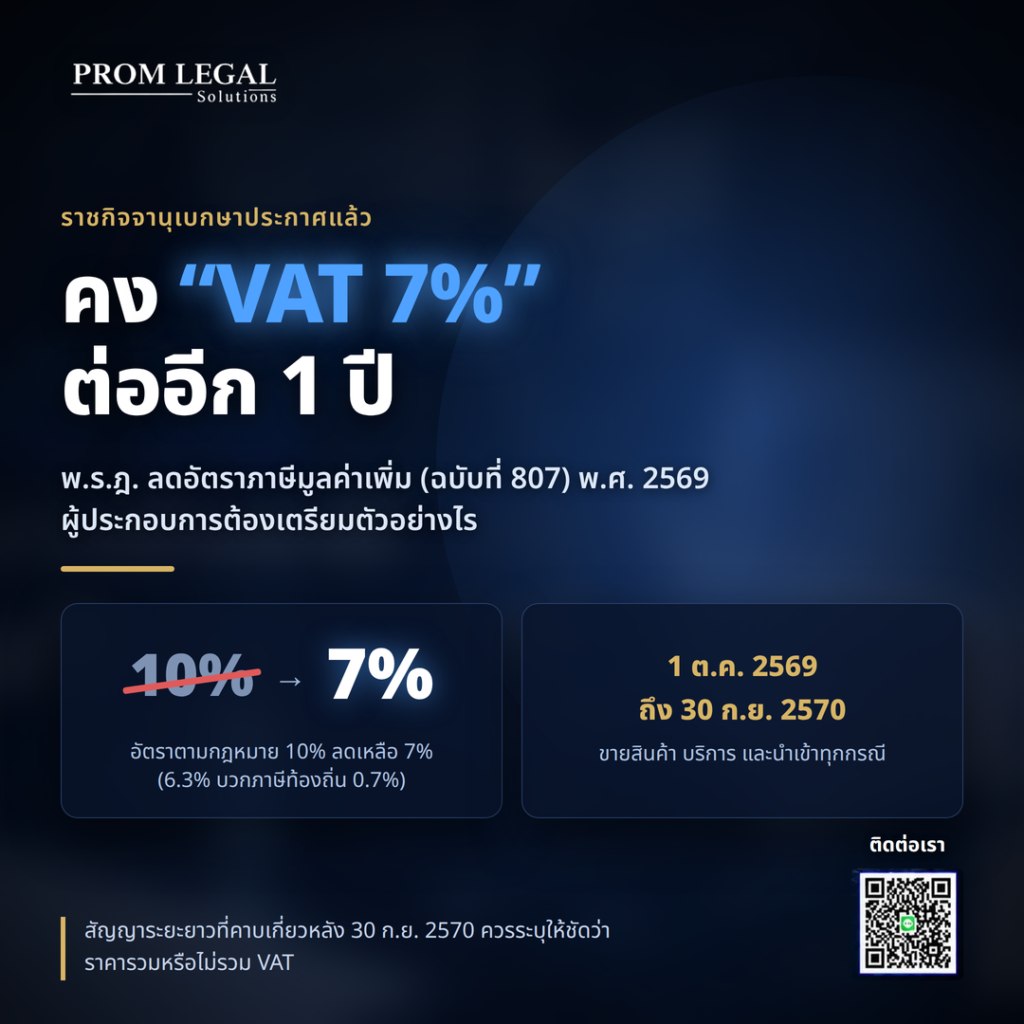
พระราชกฤษฎีกาฉบับนี้กำหนดให้คงจัดเก็บภาษีมูลค่าเพิ่มในอัตราร้อยละ 6.3 สำหรับการขายสินค้า การให้บริการ และการนำเข้าทุกกรณี โดยมีผลบังคับใช้ตั้งแต่วันที่ 1 ตุลาคม 2569 ถึงวันที่ 30 กันยายน 2570 กล่าวคือ อัตรา VAT รวมที่ทุกท่านคุ้นเคยในอัตราร้อยละ 7 จะยังคงเดิมต่อไปอีก 1 ปีภาษี ไม่มีการปรับขึ้น
ทำไมกฎหมายจึงเขียนว่า 6.3% ไม่ใช่ 7%
ตามประมวลรัษฎากร มาตรา 80 อัตราภาษีมูลค่าเพิ่มที่แท้จริงตามกฎหมายกำหนดไว้ที่ร้อยละ 10 แต่รัฐบาลได้ใช้อำนาจตราพระราชกฤษฎีกาลดอัตราลงมาอย่างต่อเนื่องนับตั้งแต่ปี 2540 เพื่อพยุงกำลังซื้อและกระตุ้นเศรษฐกิจ โดยลดเหลือร้อยละ 6.3 แล้วบวกภาษีท้องถิ่นอีก 1 ใน 9 ของภาษีมูลค่าเพิ่ม (ประมาณร้อยละ 0.7) ตามกฎหมายว่าด้วยการกระจายอำนาจให้แก่องค์กรปกครองส่วนท้องถิ่น รวมเป็นภาระภาษีที่ผู้บริโภคจ่ายจริงร้อยละ 7 ด้วยเหตุนี้ รัฐบาลจึงต้องออกพระราชกฤษฎีกาขยายเวลามาตรการนี้เป็นรายปี และฉบับที่ 807 คือการต่ออายุมาตรการดังกล่าวอีกครั้งหนึ่ง
ขอบเขตธุรกรรมที่ได้รับผล
กฎหมายฉบับนี้ครอบคลุมทุกธุรกรรมที่อยู่ในระบบภาษีมูลค่าเพิ่ม ไม่ว่าจะเป็นการขายสินค้า การให้บริการ หรือการนำเข้าสินค้าจากต่างประเทศ โดยไม่จำกัดเฉพาะธุรกิจประเภทใดประเภทหนึ่ง ผู้ประกอบการจดทะเบียนภาษีมูลค่าเพิ่มทุกรายจึงยังคงใช้อัตราร้อยละ 7 ในการออกใบกำกับภาษีตามปกติ
ประโยชน์ต่อประชาชน
การคงอัตราภาษีไว้ที่ร้อยละ 7 แทนการปรับขึ้นสู่อัตราจริงร้อยละ 10 ช่วยลดภาระค่าครองชีพได้อย่างมีนัยสำคัญ เนื่องจากสินค้าและบริการแทบทุกประเภทในชีวิตประจำวันมีภาษีมูลค่าเพิ่มแฝงอยู่ในราคา หากอัตราภาษีปรับขึ้นแม้เพียงเล็กน้อย ย่อมส่งผลกระทบเป็นวงกว้างต่อกำลังซื้อของครัวเรือน
ประโยชน์ต่อผู้ประกอบการ
การไม่ปรับขึ้นอัตราภาษีทำให้ต้นทุนการดำเนินงานและราคาสินค้ามีความแน่นอนต่อเนื่องไปอีกอย่างน้อย 1 ปี ช่วยให้วางแผนธุรกิจ กำหนดราคา และรักษาความสามารถในการแข่งขันได้ง่ายขึ้น อย่างไรก็ตาม ผู้ประกอบการควรตระหนักว่านี่ยังคงเป็นมาตรการชั่วคราวที่ต้องต่ออายุเป็นรายปี มิใช่การแก้ไขกฎหมายถาวร จึงยังมีความเสี่ยงที่อัตราภาษีอาจเปลี่ยนแปลงเมื่อพระราชกฤษฎีกาฉบับนี้สิ้นผล
ประเด็นด้านสัญญาที่ควรพิจารณา
ธุรกิจที่มีสัญญาซื้อขายหรือให้บริการระยะยาวซึ่งคาบเกี่ยวเลยวันที่ 30 กันยายน 2570 ควรตรวจสอบและร่างสัญญาให้รัดกุม โดยระบุให้ชัดเจนว่าราคาที่ตกลงกันเป็นราคารวมหรือไม่รวมภาษีมูลค่าเพิ่ม กำหนดเงื่อนไขรองรับกรณีอัตราภาษีเปลี่ยนแปลงในอนาคต และตกลงล่วงหน้าว่าฝ่ายใดจะรับภาระส่วนต่างที่อาจเกิดขึ้น เพื่อป้องกันข้อพิพาททางสัญญาในภายหลัง
ประเด็นด้าน Tax Compliance
ฝ่ายบัญชีและการเงินควรตรวจสอบให้ระบบออกใบกำกับภาษีและระบบบัญชีสอดคล้องกับอัตราที่บังคับใช้จริงในแต่ละช่วงเวลา โดยเฉพาะธุรกรรมที่เกิดขึ้นคาบเกี่ยวรอยต่อของปีภาษี พร้อมทั้งจัดเก็บเอกสารอ้างอิงพระราชกฤษฎีกาฉบับนี้ไว้ประกอบการตรวจสอบภาษีในอนาคต
สิ่งที่ควรเตรียมพร้อมต่อไป
เนื่องจากมาตรการนี้มีกำหนดสิ้นสุดในวันที่ 30 กันยายน 2570 ผู้ประกอบการควรติดตามมติคณะรัฐมนตรีและประกาศราชกิจจานุเบกษาอย่างใกล้ชิดในช่วงก่อนหมดอายุมาตรการ พร้อมเตรียมแผนรับมือทั้งกรณีมีการขยายเวลาต่อ และกรณีที่อัตราภาษีปรับขึ้นสู่อัตราจริงตามกฎหมาย โดยทบทวนโครงสร้างราคาสินค้า เงื่อนไขสัญญา และระบบบัญชีให้พร้อมปรับตัวได้ทันท่วงที
หากท่านต้องการคำปรึกษาเกี่ยวกับผลกระทบทางกฎหมายและสัญญาจากการเปลี่ยนแปลงอัตราภาษีมูลค่าเพิ่ม ทีมงาน Prom Legal Solution พร้อมให้คำแนะนำ เพื่อให้ธุรกิจของท่านดำเนินไปอย่างมั่นใจและถูกต้องตามกฎหมาย
Thailand Extends the 7% VAT Rate for Another Year
Royal Decree on the Reduction of Value Added Tax Rate (No. 807), B.E. 2569
On 23 August 2569 (2026), the Royal Gazette published the Royal Decree issued under the Revenue Code on the Reduction of Value Added Tax Rate (No. 807), B.E. 2569. This legislation directly affects the cost of goods and services for both businesses and consumers.
Key Points of the Decree
The Decree maintains the VAT rate at 6.3 percent on all sales of goods, provision of services, and imports. It took effect from 1 October 2569 (2026) until 30 September 2570 (2027). In practice, the familiar combined VAT rate of 7 percent remains unchanged for one more tax year, with no increase.
Why the Decree States 6.3% Instead of 7%
Under Section 80 of the Revenue Code, the statutory VAT rate is 10 percent. However, since 1997 the government has continuously exercised its power to issue royal decrees reducing that rate in order to sustain domestic consumption and stimulate the economy. The rate is reduced to 6.3 percent, to which a local tax equal to one-ninth of the VAT amount (approximately 0.7 percent) is added under the law on decentralisation to local administrative organisations, resulting in an effective burden of 7 percent for consumers. For this reason, the government must issue a royal decree to extend the measure each year, and Decree No. 807 is the latest such extension.
Scope of Affected Transactions
The Decree covers all transactions within the VAT system, whether the sale of goods, the provision of services, or the importation of goods from abroad, without limitation to any particular type of business. All VAT-registered operators therefore continue to issue tax invoices at the rate of 7 percent as usual.
Benefits for the Public
Maintaining the rate at 7 percent rather than allowing it to rise to the statutory 10 percent meaningfully eases the cost of living, since VAT is embedded in the price of virtually all everyday goods and services. Even a modest increase in the rate would have a broad impact on household purchasing power.
Benefits for Business Operators
Keeping the rate unchanged provides certainty in operating costs and pricing for at least another year, making it easier to plan, set prices, and maintain competitiveness. Operators should nevertheless bear in mind that this remains a temporary measure requiring annual renewal rather than a permanent amendment to the law, so there is a continuing risk that the rate may change once this Decree expires.
Contractual Considerations
Businesses with long-term sale or service contracts extending beyond 30 September 2570 (2027) should review and draft their agreements carefully. Contracts should state clearly whether the agreed price is inclusive or exclusive of VAT, provide for any future change in the tax rate, and allocate in advance which party will bear any resulting difference, in order to prevent contractual disputes at a later stage.
Tax Compliance Considerations
Accounting and finance teams should ensure that tax invoicing and accounting systems reflect the rate actually in force during each period, with particular attention to transactions straddling the transition between tax years. Supporting documentation referencing this Decree should also be retained for future tax audits.
Preparing for What Comes Next
As the measure is scheduled to expire on 30 September 2570 (2027), operators should closely monitor Cabinet resolutions and Royal Gazette publications as that date approaches, and prepare for both scenarios: a further extension, or an increase to the statutory rate. Pricing structures, contractual terms, and accounting systems should be reviewed so that the business can adapt without delay.
If you require legal advice on the contractual and compliance implications of changes to the VAT rate, the Prom Legal Solution team is ready to assist, so that your business can move forward with confidence and in full compliance with the law.
#PromLegalSolution #VAT7 #ภาษีมูลค่าเพิ่ม #กฎหมายภาษี #TaxCompliance #กฎหมายธุรกิจ #ที่ปรึกษากฎหมาย #ThailandTax