
(English Below)
หลายคนเข้าใจว่า “ชนะคดีในศาล = ได้เงินทันที” แต่ความจริงคือ คำพิพากษาเป็นเพียง “ใบเบิกทาง” ที่รับรองว่าคุณมีสิทธิเท่านั้น หากลูกหนี้ยังเงียบ ไม่ยอมจ่าย เงินก็ยังไม่เข้ากระเป๋าคุณค่ะ
ขั้นตอนที่ทำให้คำพิพากษากลายเป็นเงินจริง เรียกว่า “การบังคับคดี” ซึ่งเปรียบเหมือนการที่คุณมี “กุญแจ” (คำพิพากษา) แล้ว แต่ยังต้องเดินไป “ไขประตู” (บังคับคดี) เองอีกที วันนี้ Prom Legal Solution ขอพาทุกท่านไปดูว่า เมื่อชนะคดีแล้วต้องทำอะไรต่อ เพื่อให้ได้รับชำระหนี้จริง ๆ ค่ะ
คำพิพากษาไม่ใช่จุดจบ แต่เป็นจุดเริ่มต้น
เมื่อศาลพิพากษาให้ลูกหนี้ชำระหนี้ ศาลจะออก “คำบังคับ” (ตาม ป.วิ.พ. มาตรา 272) ซึ่งเป็นคำสั่งกำหนดให้ลูกหนี้ปฏิบัติตามคำพิพากษาภายในระยะเวลาที่กำหนด
ถ้าลูกหนี้ยอมจ่ายตามกำหนด เรื่องก็จบ แต่ถ้าลูกหนี้ “เพิกเฉย ไม่ยอมปฏิบัติตาม” เจ้าหนี้ (ที่กฎหมายเรียกว่า “เจ้าหนี้ตามคำพิพากษา”) จึงมีสิทธิเริ่ม กระบวนการบังคับคดี ได้ค่ะ
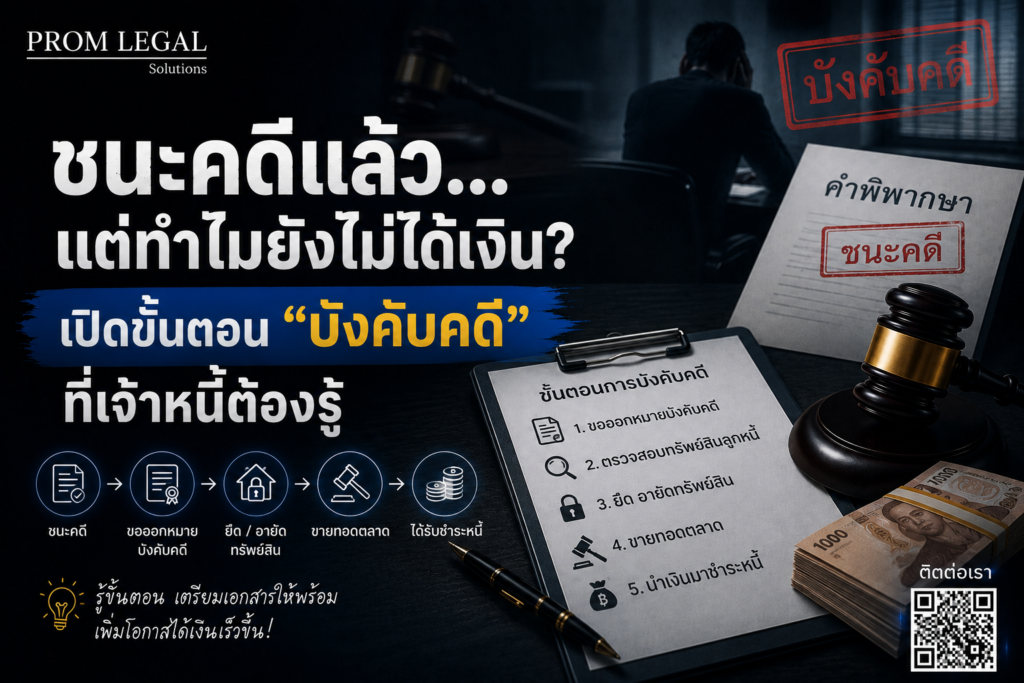
ขั้นตอนการบังคับคดี (ชนะคดีแล้วต้องทำอะไรต่อ)
| ขั้นตอน | สาระสำคัญ |
| 1. ศาลออกคำบังคับ | กำหนดเวลาให้ลูกหนี้ปฏิบัติตามคำพิพากษา (มาตรา 272-273) |
| 2. ขอออกหมายบังคับคดี | เมื่อพ้นกำหนดแล้วลูกหนี้ยังไม่จ่าย เจ้าหนี้ยื่นคำขอให้ศาลออก “หมายบังคับคดี” และตั้งเจ้าพนักงานบังคับคดี (มาตรา 276) |
| 3. สืบหาทรัพย์สิน | เจ้าหนี้มีหน้าที่สืบหาทรัพย์สินของลูกหนี้ เช่น ที่ดิน บ้าน รถ บัญชีเงินฝาก เงินเดือน |
| 4. ยึดทรัพย์ / อายัดสิทธิเรียกร้อง | เจ้าพนักงานบังคับคดียึดทรัพย์ หรืออายัดสิทธิเรียกร้อง (เช่น เงินในบัญชี เงินเดือน) ของลูกหนี้ (มาตรา 296274) |
| 5. ขายทอดตลาด | นำทรัพย์ที่ยึดไว้ออกขายทอดตลาด แล้วนำเงินมาชำระหนี้ให้เจ้าหนี้ |
กรอบเวลาสำคัญ: บังคับคดีได้ภายใน 10 ปี
นี่คือเรื่องที่พลาดไม่ได้เด็ดขาดค่ะ ตาม มาตรา 274 เจ้าหนี้ตามคำพิพากษาต้องร้องขอให้บังคับคดี (ยึดทรัพย์ อายัดสิทธิเรียกร้อง หรือวิธีอื่น) ภายใน 10 ปีนับแต่วันที่ศาลมีคำพิพากษาหรือคำสั่ง
หากปล่อยให้เลย 10 ปีไป สิทธิในการบังคับคดีก็หมดลง ทั้งที่คุณชนะคดีมาแล้ว ดังนั้นการนิ่งรอโดยหวังว่าลูกหนี้จะใจอ่อนมาจ่ายเอง จึงเป็นความเสี่ยงที่อันตรายมาก
ข้อสังเกต: หากคำพิพากษาให้ชำระเป็นงวด รายเดือน หรือรายปี ให้นับ 10 ปีตั้งแต่วันที่หนี้แต่ละงวดอาจบังคับชำระได้ และหากเริ่มยึดหรืออายัดทรัพย์บางส่วนไว้ภายใน 10 ปีแล้ว ก็ดำเนินการต่อจนเสร็จได้แม้จะเลยกำหนด
ไม่ใช่ว่าจะยึดได้ทุกอย่าง: ทรัพย์และเงินที่กฎหมายคุ้มครอง
กฎหมายไม่ได้ให้ยึดทรัพย์ลูกหนี้ได้ทั้งหมด เพราะต้องเหลือไว้ให้ลูกหนี้ดำรงชีพได้ตามสมควร โดย มาตรา 301 และ 302 กำหนดข้อยกเว้นไว้ เช่น
| ประเภท | ขอบเขตที่กฎหมายคุ้มครอง |
| เครื่องใช้จำเป็นในครัวเรือน / ของใช้ส่วนตัว | ยกเว้นการบังคับคดีโดยประมาณรวมกันไม่เกินประเภทละ 20,000 บาท (มาตรา 301) |
| เครื่องมือประกอบอาชีพ | ยกเว้นโดยประมาณรวมกันไม่เกิน 100,000 บาท (มาตรา 301) |
| เงินเดือน/บำนาญข้าราชการ เจ้าหน้าที่รัฐ | ไม่อยู่ในความรับผิดแห่งการบังคับคดี (อายัดไม่ได้) (มาตรา 302 (2)) |
| เงินเดือนลูกจ้างเอกชน | คุ้มครองส่วนที่รวมกันไม่เกินเดือนละ 20,000 บาท ส่วนที่เกินจึงอายัดได้ (มาตรา 302 (3)) |
| บำเหน็จ/ค่าชดเชยของลูกจ้าง | คุ้มครองไม่เกิน 300,000 บาท (มาตรา 302 (4)) |
นอกจากนี้ มาตรา 300284 ยังห้ามยึดหรืออายัดทรัพย์ “เกินกว่าที่พอจะชำระหนี้” พร้อมค่าธรรมเนียม และเมื่อได้เงินพอชำระหนี้แล้ว ก็ห้ามนำทรัพย์ที่เหลือออกขายทอดตลาดอีก
ข้อควรระวัง (เจ็บแต่จบ): หลายคนคิดว่าบังคับคดีคือ “ยึดได้ทุกอย่าง” แต่ความจริงมีกรอบจำกัด ทั้งเรื่องประเภททรัพย์ จำนวนเงินที่อายัดได้ และต้องไม่เกินจำนวนหนี้ การวางแผนสืบทรัพย์ที่ดีจึงสำคัญกว่าการรีบยึดแบบเหวี่ยงแห
สรุป
- คำพิพากษาเป็นเพียงการรับรองสิทธิ การจะได้เงินจริงต้อง “บังคับคดี” ต่อ
- ขั้นตอนหลักคือ คำบังคับ ขอหมายบังคับคดี สืบทรัพย์ ยึดหรืออายัด และขายทอดตลาด
- ต้องร้องขอบังคับคดี ภายใน 10 ปี นับแต่วันมีคำพิพากษา (มาตรา 274) อย่าปล่อยให้ขาดอายุบังคับคดี
- ทรัพย์และเงินบางอย่างได้รับ ความคุ้มครอง ยึดหรืออายัดไม่ได้ (มาตรา 301, 302)
การบังคับคดีมีรายละเอียดและกรอบเวลาที่ซับซ้อน ตั้งแต่การสืบทรัพย์ ยื่นคำขอ ไปจนถึงการขายทอดตลาด Prom Legal Solution ให้บริการครบวงจร ดูแลตั้งแต่ฟ้องคดีจนถึงบังคับคดีให้ได้รับชำระหนี้จริง ปรึกษาเราได้เลยค่ะ ก่อนที่สิทธิของคุณจะหมดเวลา
บทความนี้จัดทำขึ้นเพื่อให้ความรู้ทั่วไปทางกฎหมายเท่านั้น มิใช่ความเห็นทางกฎหมายสำหรับกรณีเฉพาะเรื่อง ผู้อ่านควรปรึกษาทนายความเพื่อรับคำแนะนำที่เหมาะสมกับข้อเท็จจริงของท่าน
#บังคับคดี #ชนะคดี #ยึดทรัพย์ #อายัดทรัพย์ #เจ้าหนี้ตามคำพิพากษา #กฎหมายธุรกิจ #JudgmentEnforcement #PromLegalSolution #LegalTip #SME #Startup
You Won the Case… So Why Haven’t You Been Paid? The Enforcement Process Every Judgment Creditor Should Know
Many people assume that “winning in court = getting paid immediately.” In reality, a judgment is only a “permit” confirming that you have the right. If the debtor stays silent and refuses to pay, the money still won’t land in your pocket.
The step that turns a judgment into actual money is called enforcement of the judgment. Think of it this way: the judgment is the key, but you still have to walk over and unlock the door (enforcement) yourself. Today, Prom Legal Solution will show you what to do after you win, so you actually get paid.
A Judgment Is Not the End, It’s the Beginning
When the court orders the debtor to pay, it issues a writ of execution / compliance order (under Civil Procedure Code Section 272), directing the debtor to comply within a set period.
If the debtor pays on time, the matter is closed. But if the debtor ignores it and refuses to comply, the creditor (legally the “judgment creditor”) then has the right to begin the enforcement process.
The Enforcement Process, Step by Step
| Step | Key Point |
| 1. The court issues a compliance order | Setting a deadline for the debtor to comply with the judgment (Sections 272-273) |
| 2. Apply for a writ of execution | Once the deadline passes without payment, the creditor petitions the court to issue a “writ of execution” and appoint an execution officer (Section 276) |
| 3. Locate the debtor’s assets | The creditor must trace the debtor’s assets, e.g. land, house, car, bank accounts, salary |
| 4. Seizure / garnishment | The execution officer seizes property or garnishes claims (such as bank balances or salary) belonging to the debtor (Section 296274) |
| 5. Public auction | The seized property is sold at public auction, and the proceeds pay the creditor |
The Critical Deadline: Enforce Within 10 Years
This is something you absolutely cannot miss. Under Section 274, the judgment creditor must apply to enforce (seizure, garnishment, or other methods) within 10 years of the date of the judgment or order.
If you let the 10 years lapse, the right to enforce expires, even though you already won. So waiting quietly, hoping the debtor will soften and pay on their own, is a very dangerous risk.
Note: If the judgment orders payment in installments (monthly or yearly), the 10 years run from the date each installment becomes enforceable. And if you have already begun seizing or garnishing some assets within the 10 years, you may continue to completion even past the deadline.
You Can’t Seize Everything: Protected Property and Income
The law does not allow seizing all of a debtor’s property, because the debtor must be left enough to live on. Sections 301 and 302 set out exemptions, for example:
| Category | Protected Scope |
| Essential household items / personal effects | Exempt up to roughly THB 20,000 per category (Section 301) |
| Tools of trade | Exempt up to roughly THB 100,000 in total (Section 301) |
| Salary/pension of government officials and state employees | Not subject to enforcement (cannot be garnished) (Section 302(2)) |
| Private-sector employee salary | Protected up to THB 20,000 per month; only the excess can be garnished (Section 302(3)) |
| Employee gratuity/severance | Protected up to THB 300,000 (Section 302(4)) |
In addition, Section 300284 prohibits seizing or garnishing property beyond what is enough to satisfy the debt plus fees; and once enough money is recovered, the remaining property may not be auctioned.
Caveat: Many assume enforcement means “seize everything,” but there are real limits, on the type of property, the amount that can be garnished, and a cap at the debt amount. Good asset-tracing planning matters far more than rushing to seize indiscriminately.
Key Takeaways
- A judgment only confirms your right; getting paid requires enforcement.
- The main steps are: compliance order, applying for a writ of execution, asset tracing, seizure or garnishment, and public auction.
- You must apply to enforce within 10 years of the judgment (Section 274). Don’t let the enforcement period lapse.
- Certain property and income are protected and cannot be seized or garnished (Sections 301, 302).
Enforcement involves complex detail and strict deadlines, from tracing assets and filing petitions to public auction. Prom Legal Solution offers end-to-end support, from filing the case to enforcing the judgment so you actually get paid. Talk to us before your rights run out of time.
This article is for general legal information only and is not legal advice for any specific case. Please consult a lawyer for advice tailored to your facts.
#บังคับคดี #ชนะคดี #ยึดทรัพย์ #อายัดทรัพย์ #เจ้าหนี้ตามคำพิพากษา #กฎหมายธุรกิจ #JudgmentEnforcement #PromLegalSolution #LegalTip #SME #Startup