
(English Below)
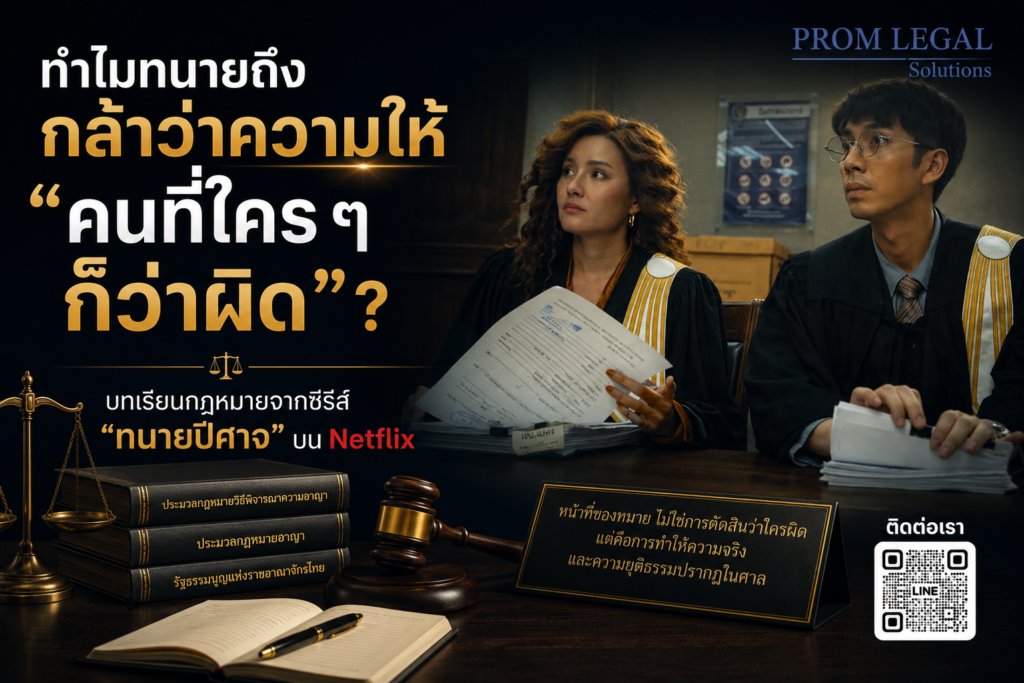
ลองนึกภาพตามนะคะ ในซีรีส์ “ทนายปีศาจ” บน Netflix มีตัวละครทนายที่ยอมรับว่าความให้จำเลยที่ทั้งสังคมตัดสินไปเรียบร้อยแล้วว่า “ผิดแน่นอน” หลายคนดูแล้วหงุดหงิด ตั้งคำถามว่า “ทนายแบบนี้มีจิตสำนึกไหม ทำไมถึงไปช่วยคนผิด”
แต่ในความเป็นจริง นี่คือหัวใจของระบบยุติธรรมที่หลายคนเข้าใจคลาดเคลื่อนค่ะ เพราะสิ่งที่เกิดขึ้นในโลกโซเชียลคือการ “พิพากษา” ใครสักคนตั้งแต่ยังไม่ขึ้นศาล จากพาดหัวข่าว จากคลิปสั้น ๆ หรือจากกระแสดราม่า ขณะที่กฎหมายทำงานตรงกันข้ามโดยสิ้นเชิง คือต้องถือว่าทุกคน บริสุทธิ์ไว้ก่อน จนกว่าจะมีคำพิพากษาถึงที่สุด
วันนี้ Prom Legal Solution จึงขอพาไปทำความเข้าใจว่า ทำไม “ทนายปีศาจ” ในซีรีส์ถึงไม่ได้เป็นปีศาจอย่างที่หลายคนคิด และทำไมหลักการนี้ถึงสำคัญกับตัวคุณเองในวันที่คุณอาจตกเป็นผู้ถูกกล่าวหา
เรื่องที่คนเข้าใจผิดบ่อยที่สุด: “โดนจับ = ผิดแล้ว”
จากประสบการณ์ตรงในการให้คำปรึกษา เราพบว่าความเข้าใจผิดที่อันตรายที่สุดคือการคิดว่า “ในเมื่อถูกตำรวจจับ ถูกแจ้งข้อหา หรือถูกฟ้องแล้ว ก็แปลว่าผิดจริง” ความคิดแบบนี้ทำให้หลายคนยอมรับสารภาพทั้งที่ยังไม่เข้าใจสิทธิของตัวเอง หรือไม่กล้าต่อสู้คดีเพราะคิดว่า “สู้ไปก็แพ้”
ความจริงตามกฎหมายไทยคือ การถูกกล่าวหา การถูกจับ หรือแม้แต่การถูกฟ้องต่อศาล ล้วน ไม่ใช่ เครื่องชี้ว่าผิด สิ่งเหล่านี้เป็นเพียงจุดเริ่มต้นของกระบวนการพิสูจน์เท่านั้น ภาระในการพิสูจน์ว่าจำเลยผิดเป็นของฝ่ายโจทก์ ไม่ใช่หน้าที่ของจำเลยที่จะต้องพิสูจน์ว่าตัวเองบริสุทธิ์
นี่คือหลักที่เรียกว่า ข้อสันนิษฐานว่าบริสุทธิ์ (Presumption of Innocence) ซึ่งบัญญัติไว้ชัดเจนใน รัฐธรรมนูญแห่งราชอาณาจักรไทย พุทธศักราช 2560 มาตรา 29 วรรคสอง ว่า “ในคดีอาญา ให้สันนิษฐานไว้ก่อนว่าผู้ต้องหาหรือจำเลยไม่มีความผิด และก่อนมีคำพิพากษาอันถึงที่สุดแสดงว่าบุคคลใดได้กระทำความผิด จะปฏิบัติต่อบุคคลนั้นเสมือนเป็นผู้กระทำความผิดมิได้”
หลักประกัน 4 อย่างที่กฎหมายมอบให้ “ทุกคน” แม้แต่จำเลยที่ดูเหมือนผิด
สิ่งที่ทนายในซีรีส์ทำ จริง ๆ แล้วคือการปกป้องหลักประกันพื้นฐานเหล่านี้ ไม่ใช่การช่วยให้คนผิดลอยนวลค่ะ
| หลักประกัน | กฎหมายที่รองรับ | ช่วยคุ้มครองคุณอย่างไร |
| 1. สันนิษฐานว่าบริสุทธิ์ไว้ก่อน | รัฐธรรมนูญ พ.ศ. 2560 มาตรา 29 | คุณไม่ใช่ “คนผิด” จนกว่าศาลจะตัดสินถึงที่สุด ใครจะปฏิบัติกับคุณเหมือนนักโทษไม่ได้ |
| 2. สิทธิมีทนายและปรึกษาทนายเป็นการเฉพาะตัว | ป.วิ.อาญา มาตรา 8 | คุณมีสิทธิตั้งทนายแก้ต่างทุกชั้นศาล และคุยกับทนายแบบเป็นส่วนตัว |
| 3. รัฐต้องจัดหาทนายให้ ถ้าคุณไม่มี | ป.วิ.อาญา มาตรา 134/1 | ในคดีที่มีโทษจำคุก ถ้าคุณไม่มีทนายและต้องการ รัฐต้องจัดหาให้ |
| 4. สิทธิไม่ให้การปรักปรำตัวเอง | รัฐธรรมนูญ พ.ศ. 2560 มาตรา 29 | คุณมีสิทธิเงียบ ไม่ต้องพูดในสิ่งที่จะเป็นผลร้ายต่อตัวเอง |
แล้วทนายช่วย “คนผิด” จริงหรือ?
ทนายจำเลยทำหน้าที่อะไรกันแน่?
หน้าที่ของทนายจำเลยไม่ใช่การโกหกศาลว่าลูกความบริสุทธิ์ หรือการบิดเบือนความจริง แต่คือการทำให้แน่ใจว่า กระบวนการพิสูจน์ความผิดเป็นไปอย่างถูกต้องและเป็นธรรม เช่น ตรวจสอบว่าพยานหลักฐานของฝ่ายโจทก์น่าเชื่อถือจริงไหม ได้มาโดยชอบด้วยกฎหมายหรือเปล่า และฝ่ายโจทก์พิสูจน์ได้ถึงระดับ “ปราศจากข้อสงสัยตามสมควร” แล้วหรือยัง หลักนี้สอดคล้องกับ ป.วิ.อาญา มาตรา 227 วรรคสอง ที่กำหนดว่า เมื่อมีความสงสัยตามสมควรว่าจำเลยได้กระทำผิดหรือไม่ ให้ยกประโยชน์แห่งความสงสัยนั้นให้จำเลย
ทำไมเรื่องนี้ถึงยุติธรรม?
เพราะอำนาจรัฐนั้นใหญ่กว่าประชาชนคนเดียวมาก หากปล่อยให้ใครถูกลงโทษได้ง่าย ๆ เพียงเพราะ “ดูเหมือนผิด” หรือ “คนส่วนใหญ่เชื่อว่าผิด” วันหนึ่งคนบริสุทธิ์ก็อาจติดคุกแทนคนผิดตัวจริงได้ ทนายจำเลยจึงเปรียบเหมือน ด่านตรวจสอบสุดท้าย ที่คอยถ่วงดุลไม่ให้กระบวนการยุติธรรมพลาด
จุดนี้เองที่กฎหมายไทยเข้มงวดเรื่องพยานหลักฐาน โดย ป.วิ.อาญา มาตรา 226 กำหนดว่าพยานหลักฐานที่จะใช้ได้ต้องไม่เกิดจากการจูงใจ ให้คำมั่นสัญญา ขู่เข็ญ หลอกลวง หรือได้มาโดยมิชอบ และ มาตรา 226/1 ยังให้อำนาจศาลที่จะไม่รับฟังพยานหลักฐานที่ได้มาโดยมิชอบด้วย หากการนำมาใช้จะกระทบต่อความยุติธรรมมากกว่าผลดี
ข้อควรระวังเพื่อความเป็นธรรม (caveat):
หลักสันนิษฐานว่าบริสุทธิ์ ไม่ได้แปลว่าจำเลยจะรอดทุกคดี หรือทนายเก่งจะทำให้คนผิดพ้นผิดได้เสมอไป หากฝ่ายโจทก์มีพยานหลักฐานหนักแน่นและพิสูจน์ได้ถึงระดับที่กฎหมายกำหนด ศาลก็ลงโทษได้ และในเรื่องพยานที่ได้มาโดยมิชอบตามมาตรา 226/1 ศาลก็ยังมีดุลพินิจที่จะรับฟังได้ในบางกรณี หลักการนี้จึงไม่ใช่ “ช่องโหว่ให้คนผิดหนี” แต่เป็น “หลักประกันไม่ให้คนบริสุทธิ์ถูกลงโทษ” ค่ะ
เมื่อถูกกล่าวหา คุณจะเลือกแบบไหน?
| สถานการณ์ | ❌ ไม่เข้าใจสิทธิ / ไม่มีทนายของตัวเอง | ✅ เข้าใจสิทธิ / มีทนายช่วยตั้งแต่ต้น |
| ตอนถูกสอบปากคำ | ตอบทุกคำถามด้วยความกลัว อาจให้การที่เป็นผลร้ายต่อตัวเอง | ใช้สิทธิปรึกษาทนายก่อน รู้ว่าควรพูดหรือไม่พูดอะไร |
| การประเมินคดี | คิดว่า “สู้ไปก็แพ้” เลยยอมรับสารภาพทั้งที่อาจมีทางสู้ | รู้จุดอ่อนพยานหลักฐานฝ่ายตรงข้าม วางแนวทางต่อสู้ได้ |
| ความรู้สึกระหว่างคดี | โดดเดี่ยว ตื่นตระหนก ตัดสินใจผิดพลาด | มีคนเคียงข้างที่เข้าใจกฎหมาย ลดความเสี่ยงที่จะเสียเปรียบ |
“ทนายปีศาจ” ในซีรีส์ไม่ได้สอนให้เราเชียร์คนผิด แต่กำลังสะท้อนความจริงข้อหนึ่งว่า ในวันที่ทั้งโลกชี้นิ้วใส่ใครสักคน ระบบยุติธรรมยังต้องมีคนยืนข้างหลักการ “บริสุทธิ์ไว้ก่อนจนกว่าจะพิสูจน์ได้” สิ่งที่ดูเหมือน “การช่วยคนผิด” จริง ๆ แล้วคือการปกป้องสิทธิที่วันหนึ่งอาจเป็นสิทธิของตัวคุณเอง
ประเด็นสำคัญที่อยากให้จำคือ การถูกกล่าวหาไม่เท่ากับการเป็นคนผิด ภาระพิสูจน์อยู่ที่ฝ่ายโจทก์ และคุณมีสิทธิตามกฎหมายที่จะมีทนายและต่อสู้คดีอย่างเต็มที่
หากคุณหรือคนใกล้ตัวกำลังถูกกล่าวหา ถูกแจ้งข้อหา หรือไม่แน่ใจในสิทธิของตัวเอง อย่ารอจนสายค่ะ Prom Legal Solution พร้อมดูแลคุณแบบครบวงจร ตั้งแต่ให้คำปรึกษา ประเมินคดี ไปจนถึงการว่าความในชั้นศาล ติดต่อเราได้เลยค่ะ ก่อนที่คุณจะต้องเผชิญกระบวนการเพียงลำพัง
บทความนี้จัดทำขึ้นเพื่อให้ความรู้ทางกฎหมายในเชิงทั่วไปเท่านั้น ไม่ใช่การให้คำปรึกษากฎหมายเฉพาะกรณี การดำเนินการใด ๆ ควรปรึกษาทนายความหรือผู้เชี่ยวชาญเป็นรายกรณีไป
#ทนายปีศาจ #รู้กฎหมายจากซีรีส์ #สิทธิผู้ต้องหา #สันนิษฐานว่าบริสุทธิ์ #PresumptionOfInnocence #กฎหมายอาญา #PromLegalSolution #LegalTip #SME #Startup
Why Would a Lawyer Defend “Someone Everyone Says Is Guilty”? Legal Lessons from the Netflix Series “The evil lawyer” (ทนายปีศาจ)
Picture this. In the Netflix series ทนายปีศาจ, there is a lawyer who agrees to defend a client that society has already condemned as “obviously guilty.” Many viewers feel frustrated and ask, “Does this lawyer have a conscience? Why help a guilty person?”
In reality, this is the very heart of the justice system, and it is something many people misunderstand. What happens on social media is that someone gets “sentenced” before ever reaching a courtroom, based on a headline, a short clip, or a viral controversy. The law works in exactly the opposite way: everyone must be presumed innocent first, until there is a final judgment.
Today, Prom Legal Solution would like to walk you through why the “devil lawyer” in the series is not the devil that many assume, and why this principle matters to you personally on the day you might be the one accused.
The most common misconception: “Arrested = already guilty”
From our direct experience advising clients, we find that the most dangerous misconception is the belief that “if the police arrested me, charged me, or filed a case against me, then I must be guilty.” This mindset leads many people to confess before understanding their rights, or to give up fighting because they assume “I’ll lose anyway.”
The truth under Thai law is that being accused, being arrested, or even being prosecuted in court is not proof of guilt. These are merely the starting points of a process of proof. The burden of proving the defendant guilty rests on the prosecution, not on the defendant to prove their own innocence.
This is the principle known as the Presumption of Innocence, clearly enshrined in Section 29, paragraph two of the Constitution of the Kingdom of Thailand B.E. 2560 (2017), which states that in criminal cases a suspect or defendant shall be presumed innocent, and before a final judgment establishing guilt, that person may not be treated as if they were the offender.
Four safeguards the law grants to “everyone,” even a defendant who looks guilty
What the lawyer in the series does is actually protect these fundamental safeguards, not help a guilty person escape justice.
| Safeguard | Supporting law | How it protects you |
| 1. Presumed innocent first | Constitution B.E. 2560, Section 29 | You are not “guilty” until the court rules with finality. No one may treat you as a convict |
| 2. Right to a lawyer and private consultation | Criminal Procedure Code, Section 8 | You may appoint defense counsel at every court level and speak with your lawyer privately |
| 3. The state must provide a lawyer if you have none | Criminal Procedure Code, Section 134/1 | In cases carrying imprisonment, if you have no lawyer and want one, the state must provide one |
| 4. Right against self-incrimination | Constitution B.E. 2560, Section 29 | You have the right to remain silent and not say anything that would harm your own case |
Does the lawyer really help “the guilty”?
What does a defense lawyer actually do?
A defense lawyer’s job is not to lie to the court that the client is innocent or to distort the truth. It is to ensure that the process of proving guilt is conducted correctly and fairly: checking whether the prosecution’s evidence is truly credible, whether it was lawfully obtained, and whether the prosecution has proven its case to the standard of “beyond a reasonable doubt.” This reflects Section 227, paragraph two of the Criminal Procedure Code, which provides that where there is reasonable doubt as to whether the defendant committed the offense, the benefit of that doubt shall be given to the defendant.
Why is this fair?
Because the power of the state is far greater than that of a single citizen. If a person could be punished easily simply because they “look guilty” or “most people believe they are guilty,” then one day an innocent person could go to prison in place of the real offender. The defense lawyer is therefore like the final checkpoint that keeps the justice process from making a mistake.
This is exactly why Thai law is strict about evidence. Section 226 of the Criminal Procedure Code requires that admissible evidence must not arise from inducement, promises, threats, deception, or other unlawful means. Section 226/1 further empowers the court to exclude evidence obtained unlawfully where admitting it would harm justice more than it helps.
An important caveat for fairness:
The presumption of innocence does not mean every defendant will be acquitted, or that a skilled lawyer can always free a guilty person. If the prosecution has strong evidence and proves guilt to the legal standard, the court can convict. And regarding unlawfully obtained evidence under Section 226/1, the court still has discretion to admit it in certain cases. This principle is not a “loophole for the guilty to escape,” but a “safeguard against punishing the innocent.”
A comparison: when accused, which path would you choose?
| Situation | ❌ Unaware of your rights / no lawyer of your own | ✅ Aware of your rights / a lawyer from the start |
| During interrogation | Answer everything out of fear, possibly giving statements that harm you | Exercise the right to consult a lawyer first, knowing what to say or not say |
| Assessing the case | Think “I’ll lose anyway” and confess even when you might have a defense | Understand the weaknesses in the other side’s evidence and build a defense |
| Feelings during the case | Isolated, panicked, prone to poor decisions | Someone who understands the law beside you, reducing the risk of disadvantage |
The “devil lawyer” in the series is not teaching us to cheer for the guilty. It reflects one truth: on the day the whole world points its finger at someone, the justice system still needs people who stand by the principle of “innocent until proven guilty.” What looks like “helping a guilty person” is in fact protecting a right that may one day be your own.
The key points to remember: being accused is not the same as being guilty, the burden of proof lies with the prosecution, and you have the legal right to counsel and to defend yourself fully.
If you or someone close to you is being accused, has been charged, or is unsure about your rights, do not wait until it is too late. Prom Legal Solution is ready to support you end to end, from initial consultation and case assessment to representation in court. Contact us before you have to face the process alone.
This article is provided for general legal educational purposes only and does not constitute specific legal advice. Any action should be taken after consulting a lawyer or qualified professional on a case-by-case basis.
#DevilsAdvocate #LawFromSeries #RightsOfTheAccused #PresumptionOfInnocence #CriminalLaw #PromLegalSolution #LegalTip #SME #Startup