
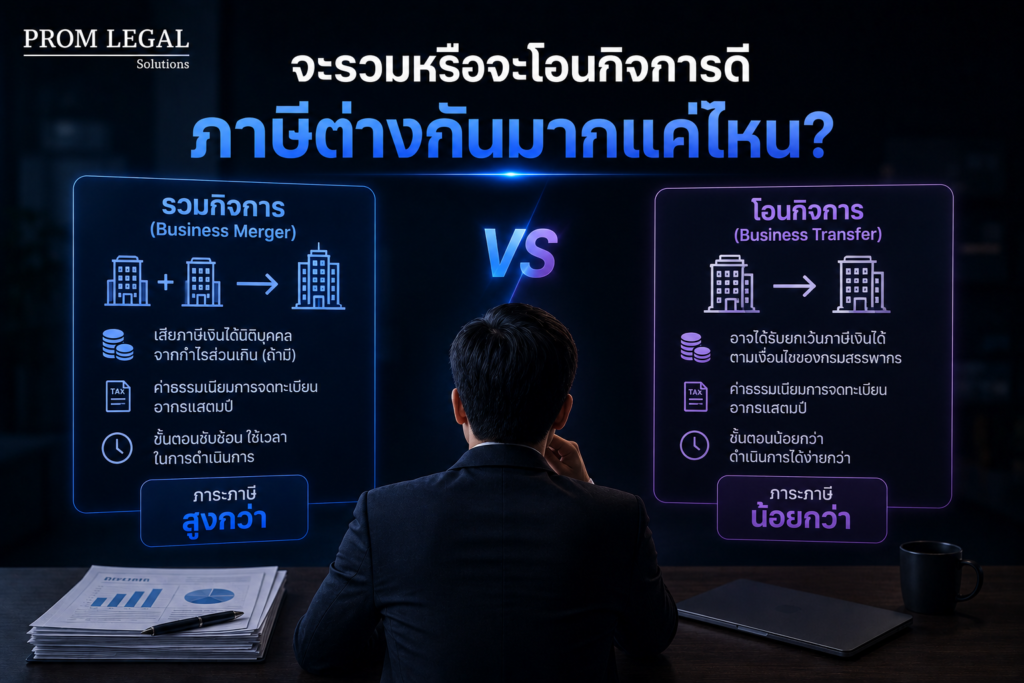
(English Below)
ลองนึกภาพว่าธุรกิจของคุณกำลังเติบโตถึงจุดที่ต้องตัดสินใจครั้งใหญ่ อาจจะรวมสองบริษัทในเครือให้เป็นหนึ่งเดียว หรือตัดบางหน่วยธุรกิจออกไปขายให้พันธมิตร ทุกอย่างดูเหมือนเป็นเรื่องของกลยุทธ์ล้วน ๆ จนกระทั่งสรรพากรส่งจดหมายมาถาม แล้วจึงรู้ว่าวิธีที่เลือกไปนั้นทำให้ต้องเสียภาษีเต็มจำนวนทั้งที่จริง ๆ แล้วมีทางได้รับยกเว้นค่ะ
จากประสบการณ์ตรงในการให้คำปรึกษาดีลปรับโครงสร้างกิจการ เรามักพบว่าเจ้าของธุรกิจให้ความสำคัญกับ “ราคา” และ “เงื่อนไขทางธุรกิจ” มาก แต่ลืมไปว่า วิธี การปรับโครงสร้างที่เลือก คือสิ่งที่กำหนดภาระภาษีทั้งก้อน วันนี้ Prom Legal Solution จึงขอพาไปทำความเข้าใจ 3 วิธีหลักที่กฎหมายไทยให้สิทธิประโยชน์ทางภาษี ว่าต่างกันอย่างไร และเหมาะกับใครค่ะ
วิธีแรก ควบรวมกิจการ (Amalgamation) คืออะไร?
ลองคิดถึงการแต่งงานที่ทั้งสองฝ่ายเปลี่ยนนามสกุลใหม่พร้อมกัน นั่นคือภาพของการควบรวมกิจการ บริษัทตั้งแต่สองแห่งขึ้นไปมา “ควบ” รวมกันจนเกิดเป็นบริษัทใหม่ (New Entity) โดยบริษัทเดิมสิ้นสภาพนิติบุคคลทั้งหมด สิทธิ หน้าที่ และทรัพย์สินทุกอย่างโอนไปยังบริษัทใหม่โดยผลของกฎหมาย
มีจุดที่ควรแยกให้ชัดสักนิด คือ ปัจจุบันกฎหมายไทยรับรองการ “ควบรวม” ไว้ 2 แบบ ได้แก่ แบบที่ควบกันแล้วเกิดเป็นบริษัทใหม่ และบริษัทเดิมหายไปทั้งหมด ซึ่งคือภาพของ Amalgamation ที่เรากำลังพูดถึง กับอีกแบบที่ควบกันแต่มีบริษัทหนึ่งยังอยู่และรับกิจการของอีกฝ่ายเข้ามา ซึ่งในทางภาษีมักถูกมองเป็น “การโอนกิจการทั้งหมด” มากกว่าการควบรวมแท้ ๆ จึงควรระบุให้ชัดเสมอว่าดีลของเราเป็นแบบไหนค่ะ
ในแง่ภาษี การโอนทรัพย์สินทำตามราคาตามบัญชี (Book Value) จึงไม่ถือว่ามีกำไรให้ต้องเสียภาษีเงินได้นิติบุคคล และโดยทั่วไปได้รับยกเว้นภาษีมูลค่าเพิ่ม (VAT) ภาษีธุรกิจเฉพาะ และอากรแสตมป์ตามเงื่อนไขที่กำหนด
แต่มีข้อควรระวังที่หลายคนพลาด นั่นคือ ผลขาดทุนสะสมของบริษัทเดิม โดยหลักแล้วยกไปใช้ในบริษัทใหม่ไม่ได้ ซึ่งอาจเป็นต้นทุนแฝงที่สูงหากบริษัทเดิมมีผลขาดทุนสะสมจำนวนมากค่ะ
วิธีที่สอง โอนกิจการทั้งหมด (EBT) ต่างจากการควบรวมอย่างไร?
ถ้าการควบรวมคือการแต่งงานที่เปลี่ยนนามสกุลทั้งคู่ การโอนกิจการทั้งหมด (Entire Business Transfer) ก็เปรียบเหมือนฝ่ายหนึ่งย้ายเข้าบ้านอีกฝ่ายแล้วปิดบ้านเดิมทิ้ง บริษัทผู้โอนยกทั้งกิจการให้บริษัทผู้รับโอน จากนั้นต้องจดทะเบียนเลิกและชำระบัญชีภายในรอบระยะเวลาบัญชีเดียวกันกับที่โอน
คำถามคือ แล้วได้สิทธิภาษีอะไรบ้าง? เมื่อทำตามเงื่อนไขครบถ้วน กำไรจากการโอนทรัพย์สินจะได้รับยกเว้นภาษีเงินได้นิติบุคคล การโอนกิจการทั้งหมดที่เข้าเงื่อนไขตามกฎหมายยังได้รับยกเว้น VAT และยังได้รับยกเว้นภาษีธุรกิจเฉพาะกับอากรแสตมป์ตามเงื่อนไข
ข้อที่ต้องระวังเป็นพิเศษคือ “กรอบเวลา” ผู้โอนต้องเลิกกิจการให้เสร็จในรอบบัญชีเดียวกัน และต้องแจ้งกรมสรรพากรตามแบบและกำหนดเวลา หากพลาดเงื่อนไขข้อใดข้อหนึ่ง สิทธิยกเว้นภาษีอาจหายไปทั้งหมดค่ะ
วิธีที่สาม โอนกิจการบางส่วน (PBT) เหมาะกับใคร?
บางครั้งเราไม่ได้อยากยุบทั้งบริษัท แค่อยากตัดเฉพาะบางหน่วยธุรกิจออกไป เช่น แยกสายผลิตภัณฑ์หนึ่งไปตั้งเป็นบริษัทใหม่ในเครือ นั่นคือการโอนกิจการบางส่วน (Partial Business Transfer) ซึ่งบริษัทผู้โอนยังคงดำเนินกิจการต่อไป ไม่ต้องเลิกบริษัท
วิธีนี้ก็มีสิทธิได้รับยกเว้นภาษีเงินได้นิติบุคคลจากกำไรในการโอน รวมถึง VAT ภาษีธุรกิจเฉพาะ และอากรแสตมป์ เฉพาะส่วนที่เข้าเงื่อนไข แต่ต้องบอกตามตรงว่าเงื่อนไขของ PBT มักเข้มกว่าสองวิธีแรก โดยทั่วไปกำหนดให้บริษัทผู้โอนและผู้รับโอนต้องเป็นบริษัทในเครือเดียวกัน (Affiliated Companies) โอนตามราคาตามบัญชี และต้องได้รับอนุมัติหรือแจ้งกรมสรรพากรตามหลักเกณฑ์ที่วางไว้
เปรียบเทียบแต่ละวิธี
| ประเด็น | ควบรวมกิจการ (Amalgamation) | โอนกิจการทั้งหมด (EBT) | โอนกิจการบางส่วน (PBT) |
| สถานะบริษัทเดิม | สิ้นสภาพทั้งคู่ เกิดบริษัทใหม่ | ผู้โอนต้องเลิกในรอบบัญชีเดียวกัน | ผู้โอนยังดำเนินกิจการต่อ |
| ภาษีเงินได้นิติบุคคล | ยกเว้น (โอนตามราคาบัญชี) | ยกเว้น ตามเงื่อนไข | ยกเว้น ตามเงื่อนไข |
| ภาษีมูลค่าเพิ่ม (VAT) | ยกเว้น | ยกเว้น | ยกเว้น ตามเงื่อนไข |
| ภาษีธุรกิจเฉพาะ และอากรแสตมป์ | ยกเว้น | ยกเว้น | ยกเว้น ตามเงื่อนไข |
| ใช้ผลขาดทุนสะสมต่อ | โดยหลักทำไม่ได้ | ขึ้นกับเงื่อนไข | ขึ้นกับเงื่อนไข |
| ความเข้มของเงื่อนไข | ปานกลาง | ปานกลางถึงสูง | สูงที่สุด มักต้องเป็นบริษัทในเครือ |
หมายเหตุ ทุกช่องที่ระบุ “ยกเว้น” มีผลเฉพาะเมื่อปฏิบัติตามเงื่อนไขทางกฎหมายและภาษีครบถ้วนเท่านั้น
สรุป
ทั้งสามวิธีล้วนเปิดทางให้ได้รับยกเว้นภาษี แต่สิ่งที่ต่างกันอย่างมีนัยสำคัญคือ สถานะของบริษัทเดิม การใช้ผลขาดทุนสะสมต่อ และความเข้มของเงื่อนไข ซึ่งกระทบทั้งภาระภาษีและการดำเนินธุรกิจในระยะยาว สิทธิประโยชน์เหล่านี้ละเอียดอ่อน เพราะหากทำผิดเงื่อนไขแม้เพียงข้อเดียว สิทธิยกเว้นภาษีอาจหายไปทั้งก้อน การวางโครงสร้างให้ถูกต้องตั้งแต่ต้นจึงสำคัญกว่าการมาแก้ไขภายหลังเสมอค่ะ
หากคุณกำลังวางแผนควบรวม โอน หรือปรับโครงสร้างกิจการ ทีมที่ปรึกษาด้านภาษีและ M&A ของ Prom Legal Solution พร้อมช่วยออกแบบดีลให้ถูกต้องตามกฎหมายและประหยัดภาษีอย่างเหมาะสมกับธุรกิจของคุณ ติดต่อเข้ามาพูดคุยกับเราได้เลยค่ะ
บทความนี้จัดทำขึ้นเพื่อให้ความรู้ทั่วไปทางกฎหมายเท่านั้น มิใช่ความเห็นทางกฎหมายสำหรับกรณีเฉพาะเรื่อง ผู้อ่านควรปรึกษาทนายความเพื่อรับคำแนะนำที่เหมาะสมกับข้อเท็จจริงของท่าน
#PromLegalSolution #กฎหมายธุรกิจ #ทนายความ #ที่ปรึกษากฎหมาย #ภาษีธุรกิจ #ภาษีนิติบุคคล #ควบรวมกิจการ #ปรับโครงสร้างกิจการ #MergersAndAcquisitions #Amalgamation #tax #VAT #ภาษีมูลค่าเพิ่ม #ภาษีธุรกิจเฉพาะ #โอนกิจการทั้งหมด #โอนกิจการบางส่วน
Merge or Transfer Your Business? How Big Is the Tax Difference?
Imagine your business has grown to the point where you face a major decision. Perhaps you want to combine two affiliated companies into one, or carve out a business unit and sell it to a partner. It all looks like pure strategy, until the Revenue Department sends a letter asking questions, and you discover that the route you chose means paying tax in full when, in reality, an exemption was available.
From our direct experience advising on business restructuring deals, we often find that business owners focus heavily on “price” and “commercial terms,” but forget that the method of restructuring you choose is what determines the entire tax burden. Today, Prom Legal Solution will walk you through the three main methods that Thai law grants tax benefits to, how they differ, and who each one suits.
Method 1: What is an Amalgamation?
Think of a marriage where both parties take a new surname at the same time. That is the picture of an amalgamation. Two or more companies “merge” together to form a brand-new company (New Entity), while all the original companies cease to exist as legal entities. All rights, duties, and assets transfer to the new company by operation of law.
There is one point worth distinguishing clearly. Currently, Thai law recognizes two forms of “merger.” One is where companies merge and a new company is created while all the original companies disappear, which is the picture of the Amalgamation we are discussing here. The other is where companies merge but one company survives and absorbs the business of the other, which for tax purposes is usually treated as an “entire business transfer” rather than a true amalgamation. You should therefore always specify clearly which type your deal is.
On the tax side, assets are transferred at book value, so it is not treated as generating a profit subject to corporate income tax, and it is generally exempt from value added tax (VAT), specific business tax, and stamp duty under the prescribed conditions.
But there is a point of caution that many people miss: the accumulated losses of the original companies, as a general rule, cannot be carried forward and used in the new company. This can be a hidden cost that runs high if the original companies have large accumulated losses.
Method 2: How Does an Entire Business Transfer (EBT) Differ from an Amalgamation?
If an amalgamation is a marriage where both parties change their surname, an Entire Business Transfer is like one party moving into the other’s house and closing down their old home. The transferring company hands over its entire business to the receiving company, then must register its dissolution and complete liquidation within the same accounting period as the transfer.
The question is, what tax benefits do you get? When all conditions are met, the profit from transferring the assets is exempt from corporate income tax. An entire business transfer is not treated as a “sale,” so it falls outside the scope of tax. An entire business transfer that meets the legal conditions is also exempt from VAT, and is exempt from specific business tax and stamp duty under the conditions.
The point that requires particular care is the “timeframe.” The transferor must complete the dissolution within the same accounting period, and must notify the Revenue Department using the prescribed forms and deadlines. If you miss any one of the conditions, the tax exemption may be lost entirely.
Method 3: Who Is a Partial Business Transfer (PBT) Suited For?
Sometimes you do not want to wind up the whole company. You only want to carve out a particular business unit, for example separating one product line into a new affiliated company. That is a Partial Business Transfer, where the transferring company continues to operate and does not have to dissolve.
This method can also qualify for exemption from corporate income tax on the transfer profit, as well as VAT, specific business tax, and stamp duty, but only for the portions that meet the conditions. We should tell you honestly, though, that the conditions for a PBT are usually stricter than the first two methods. Generally, the transferor and transferee are required to be affiliated companies, the transfer must be made at book value, and approval from or notification to the Revenue Department is required under the prescribed criteria.
Comparing Each Method
| Issue | Amalgamation | Entire Business Transfer (EBT) | Partial Business Transfer (PBT) |
| Status of original company | Both cease to exist; a new company is formed | Transferor must dissolve in the same accounting period | Transferor continues to operate |
| Corporate income tax | Exempt (transfer at book value) | Exempt, subject to conditions | Exempt, subject to conditions |
| Value added tax (VAT) | Exempt | Exempt | Exempt, subject to conditions |
| Specific business tax and stamp duty | Exempt | Exempt | Exempt, subject to conditions |
| Carry forward accumulated losses | Generally not possible | Depends on conditions | Depends on conditions |
| Strictness of conditions | Moderate | Moderate to high | Highest; usually requires affiliated companies |
Note: Every cell marked “Exempt” applies only when all legal and tax conditions are fully complied with.
Conclusion
All three methods open the door to tax exemption, but what differs significantly is the status of the original company, the ability to carry forward accumulated losses, and the strictness of the conditions, all of which affect both the tax burden and long-term business operations. These benefits are delicate, because if you breach even a single condition, the tax exemption may vanish entirely. Structuring things correctly from the outset is therefore always more important than fixing them later.
If you are planning to merge, transfer, or restructure your business, the tax and M&A advisory team at Prom Legal Solution is ready to help design your deal so that it is legally correct and saves tax appropriately for your business. Contact us to talk with our team.
This article is provided for general legal educational purposes only and does not constitute legal advice for any specific matter. Readers should consult a lawyer for advice suited to their own facts.
#PromLegalSolution #กฎหมายธุรกิจ #ทนายความ #ที่ปรึกษากฎหมาย #ภาษีธุรกิจ #ภาษีนิติบุคคล #ควบรวมกิจการ #ปรับโครงสร้างกิจการ #MergersAndAcquisitions #Amalgamation #tax #VAT #ภาษีมูลค่าเพิ่ม #ภาษีธุรกิจเฉพาะ #โอนกิจการทั้งหมด #โอนกิจการบางส่วน