(English Below)
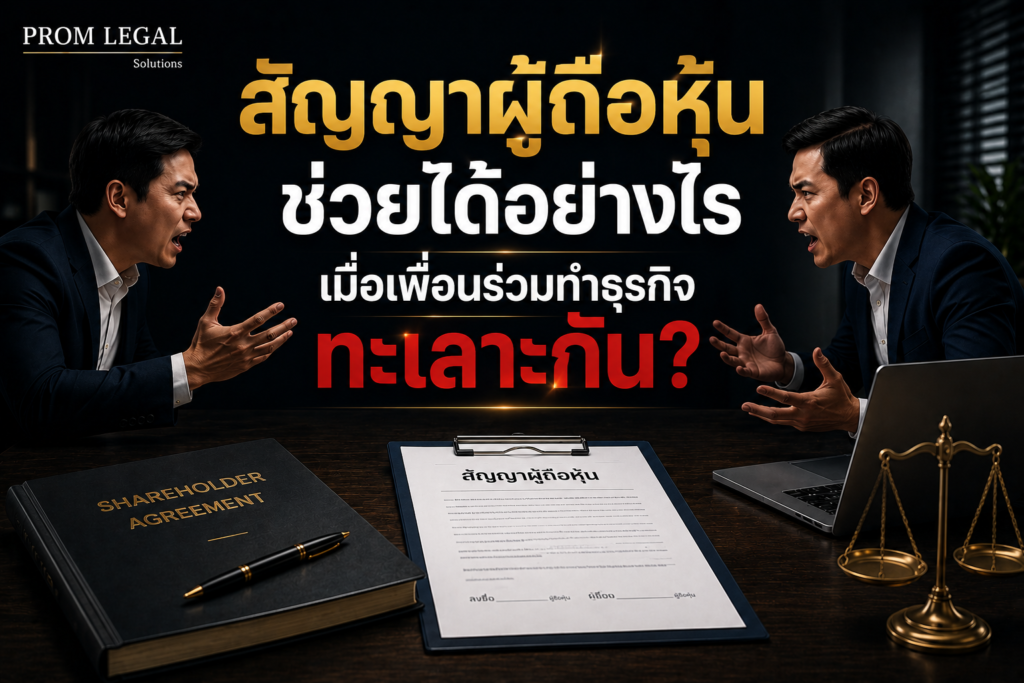
ไม่ว่าจะเป็นการทำธุรกิจกับเพื่อนสนิท เพื่อนบ้าน หรือแม้แต่คนในครอบครัว ทุกอย่างมักเริ่มต้นด้วยความไว้ใจและความตั้งใจดีเสมอ แต่ความจริงที่ปฏิเสธไม่ได้ก็คือ เมื่อมีเงินและผลประโยชน์เข้ามาเกี่ยวข้อง ความขัดแย้งจึงเป็นสิ่งที่หลีกเลี่ยงได้ยากยิ่ง เปรียบเสมือนการแต่งงาน — แน่นอนว่าไม่มีใครเดินเข้าพิธีแต่งงานโดยคิดว่าจะหย่า แต่ถึงกระนั้น คู่แต่งงานส่วนมากก็ยังเซ็นสัญญาก่อนสมรสเพื่อคุ้มครองกันและกัน
ในทำนองเดียวกัน สัญญาผู้ถือหุ้น (Shareholders’ Agreement หรือ SHA) ก็ทำหน้าที่เช่นเดียวกับสัญญาก่อนสมรสทุกประการ พูดอีกอย่างก็คือ SHA ไม่ใช่เอกสารที่แสดงว่าคู่สัญญาไม่ไว้ใจกัน หากแต่เป็นแผนที่บอกว่าเมื่อเกิดความขัดแย้งขึ้น ทั้งสองฝ่ายจะจัดการกับความขัดแย้งนั้นอย่างไรโดยไม่ต้องทำลายบริษัทและมิตรภาพทิ้งไป วันนี้ Prom Legal Solution จึงขอพาไปทำความเข้าใจกันว่า SHA ช่วยได้อย่างไรบ้างเมื่อหุ้นส่วนเกิดทะเลาะกันค่ะ
ทะเลาะกันเรื่องอะไรบ่อยที่สุด?
จากประสบการณ์ตรงในการให้คำปรึกษากฎหมายมาอย่างยาวนาน เป็นที่น่าสังเกตว่าความขัดแย้งระหว่างผู้ถือหุ้นมักเกิดจากสาเหตุที่ซ้ำ ๆ กันอยู่เสมอ ไม่ว่าจะเป็นการแบ่งปันกำไรที่ทำให้ฝ่ายหนึ่งรู้สึกว่าไม่ยุติธรรม ฝ่ายหนึ่งทำงานหนักกว่าแต่ได้ผลตอบแทนเท่ากัน การตัดสินใจสำคัญที่ฝ่ายหนึ่งไม่เห็นด้วย แต่อีกฝ่ายหนึ่งกลับมีเสียงโหวตมากกว่า ฝ่ายหนึ่งอยากขยายกิจการ อีกฝ่ายหนึ่งอยากถอยตัวออก หรือหุ้นส่วนฝ่ายหนึ่งแอบไปทำสิ่งที่ขัดต่อประโยชน์ของบริษัท เช่น ไปทำธุรกิจแข่งเองโดยไม่แจ้ง (ซึ่งหากผู้ถือหุ้นผู้นั้นเป็นกรรมการด้วยยังถือเป็นการฝ่าฝืนหน้าที่ตามประมวลกฎหมายแพ่งและพาณิชย์อีกด้วย)
ที่สำคัญคือ สิ่งเหล่านี้ทุกข้อล้วนสามารถกำหนดทางออกไว้ล่วงหน้าใน SHA ได้ทั้งนั้น น่าเสียดายที่หลายบริษัทเพิ่งจะเริ่มคิดถึงเรื่องนี้ตอนที่มีปัญหาเกิดขึ้นแล้ว ซึ่งว่ากันตามตรงว่า มักจะสายเกินไปเสียแล้ว
6 กลไกใน SHA ที่ช่วยป้องกันและแก้ไขข้อพิพาท
| กลไก | ใช้เมื่อไหร่? | ช่วยได้อย่างไร? | |
| 1 | Deadlock Provision (ข้อกำหนดทางตัน) | เมื่อโหวตแล้วไม่มีใครชนะ ตัดสินไม่ได้ | กำหนดขั้นตอนชัดว่าต้องทำอะไรต่อเมื่อเกิด Deadlock เช่น ส่งเรื่องขึ้นไปยังกรรมการระดับสูง / ไกล่เกลี่ยโดยคนกลาง (Mediation) / ส่งอนุญาโตตุลาการ หรือเปิดกลไก Buy-out |
| 2 | Mediation Clause (ข้อตกลงระงับข้อพิพาทด้วยการไกล่เกลี่ย) | เมื่อเริ่มมีความขัดแย้งแต่ยังไม่ถึงขั้นฟ้องคดี | เป็นกลไกให้ทั้งสองฝ่ายนั่งคุยกับคนกลางก่อน ประหยัดเวลาและเงิน และรักษาความสัมพันธ์ได้ดีกว่าการฟ้องคดี |
| 3 | Arbitration Clause (ข้อตกลงระงับข้อพิพาทด้วยอนุญาโตตุลาการ) | เมื่อไกล่เกลี่ยไม่สำเร็จ ต้องการคำตัดสินผูกพัน | ส่งข้อพิพาทให้อนุญาโตตุลาการตัดสินแทนศาล เร็วกว่า เป็นความลับกว่า และสามารถเลือกผู้เชี่ยวชาญเฉพาะด้านได้ |
| 4 | Buy-Sell Clause (Shotgun Clause) | เมื่อทำงานร่วมกันต่อไม่ได้อีกแล้ว | ฝ่ายหนึ่งเสนอราคาซื้อหุ้น อีกฝ่ายหนึ่งเลือกได้สองทาง คือ (1) ขายหุ้นตนเองในราคาที่ฝ่ายแรกเสนอ หรือ (2) ซื้อหุ้นของฝ่ายแรกในราคาเดียวกันแทน ทำให้ทั้งสองฝ่ายถูกบังคับให้ตั้งราคาที่ยุติธรรมตั้งแต่แรก |
| 5 | Call Option (สิทธิเรียกซื้อหุ้นคืน) | เมื่อผู้ถือหุ้นทำผิดสัญญาร้ายแรง | ให้ฝ่ายที่ไม่ผิดสัญญามีสิทธิเรียกซื้อหุ้นคืนจากฝ่ายที่ผิดสัญญาในราคาและตามสูตรที่กำหนดไว้ล่วงหน้าใน SHA โดยฝ่ายผิดสัญญามีหน้าที่ต้องโอนหุ้นตามสัญญา (ทั้งนี้ ราคาที่กำหนดต้องไม่ขัดต่อความสงบเรียบร้อยและศีลธรรมอันดี และศาลอาจปรับลดได้หากมีลักษณะเป็นเบี้ยปรับที่สูงเกินส่วน) |
| 6 | Tag-Along / Drag-Along (สิทธิขายตาม/บังคับขายตาม) | เมื่อมีการขายหุ้นให้บุคคลภายนอก | Tag-Along: เมื่อผู้ถือหุ้นรายใหญ่ขายหุ้นให้คนนอก ผู้ถือหุ้นรายเล็กมีสิทธิขายหุ้นของตนเองพ่วงไปด้วยในราคาและเงื่อนไขเดียวกันกับที่ผู้ถือหุ้นรายใหญ่ได้รับ / Drag-Along: ผู้ถือหุ้นรายใหญ่สามารถบังคับให้ผู้ถือหุ้นรายเล็กขายหุ้นพ่วงไปพร้อมกัน ช่วยให้รายใหญ่ปิดดีลขายทั้งบริษัทได้โดยรายเล็กขัดขวางไม่ได้ และคุ้มครองผู้ซื้อที่ต้องการหุ้นครบ 100% |
Shotgun Clause เป็นกลไกที่โหด แต่ยุติธรรมเมื่ออยู่ถูกที่ถูกเวลา
ในการทำธุรกิจร่วมกัน เมื่อถึงจุดที่หุ้นส่วนมองหน้ากันไม่ติดและไม่สามารถทำงานร่วมกันได้อีกต่อไป การตกลงแยกทางมักเป็นเรื่องปวดหัว โดยเฉพาะปัญหาเรื่องการตีราคาหุ้น แต่ใน SHA มีกลไกหนึ่งที่น่าสนใจมาก นั่นก็คือ Buy-Sell Clause หรือที่เรียกกันว่า Shotgun Clause
คำถามคือ กลไกนี้ทำงานอย่างไร? กติกานี้ถูกออกแบบมาให้เด็ดขาด โดยเมื่อถึงเวลาต้องแยกทางกัน ฝ่ายเสนอราคาสามารถยื่นข้อเสนอขอซื้อหุ้นของอีกฝ่ายหนึ่งในราคาที่ตนเองเป็นคนกำหนด ส่วนฝ่ายรับข้อเสนอนั้น เมื่อได้รับข้อเสนอแล้ว จะไม่มีสิทธิต่อรองราคา แต่จะมีทางเลือกเหลือเพียง 2 ทางเท่านั้น คือ (1) ยอมขายหุ้นของตนเองให้ฝ่ายแรกในราคาที่ได้รับการเสนอมา หรือ (2) พลิกเกมขอซื้อหุ้นของฝ่ายแรกกลับมา ในราคาเดียวกันทุกบาททุกสตางค์ที่ได้รับการเสนอมานั้น
คำถามที่ตามมาคือ ทำไมถึงยุติธรรม? คำตอบนั้นเรียบง่าย เพราะกลไกนี้บังคับให้ฝ่ายเสนอราคาต้องคิดให้ดีว่าราคานั้นยุติธรรมจริงหรือไม่ ลองคิดดูว่า
- ถ้าฝ่ายเสนอราคากดราคาต่ำเกินไป เพราะหวังจะฮุบหุ้นเพื่อนในราคาถูก อีกฝ่ายก็สามารถสวนกลับโดยการเลือกซื้อหุ้นของฝ่ายเสนอราคาในราคาต่ำนั้นแทนได้
- แต่ถ้าฝ่ายเสนอราคาเลือกปั่นราคาสูงเกินไป อีกฝ่ายก็พร้อมจะชิ่งหนี เลือกขายหุ้นทิ้ง แล้วปล่อยให้ฝ่ายเสนอราคาต้องเป็นฝ่ายแบกรับซื้อหุ้นไปในราคาแพงเกินจริงแทน
กล่าวได้ว่า ท้ายที่สุดแล้ว ผลลัพธ์ของ Shotgun Clause คือการบีบให้ทั้งสองฝ่ายต้องประเมินมูลค่าบริษัทตามความเป็นจริงอย่างซื่อสัตย์ไปโดยปริยาย ถือเป็นกลไกทางกฎหมายที่ช่วยหาทางออกให้ความขัดแย้งแบบเจ็บแต่จบ
ข้อจำกัดสำคัญของกลไกนี้ คือ มีแนวโน้มเอียงฝ่ายที่มีเงินสดหรือแหล่งทุนมากกว่า เพราะอาจตั้งราคาต่ำกว่ามูลค่าที่แท้จริงได้ โดยรู้ว่าอีกฝ่ายไม่มีเงินพอซื้อกลับ ด้วยเหตุนี้ SHA สำหรับผู้ถือหุ้นรายเล็กจึงมักขอผสมกลไกนี้กับกลไกอื่น (เช่น สิทธิหาราคาโดยผู้ประเมินอิสระ หรือระยะเวลาจัดหาเงิน) เพื่อป้องกันไม่ให้ฝ่ายใดฝ่ายหนึ่งเสียเปรียบอย่างไม่เป็นธรรม
สรุปได้ว่า Shotgun Clause จะยุติธรรมได้จริง ก็ต่อเมื่อทั้งสองฝ่ายมีอำนาจต่อรองและกำลังทุนใกล้เคียงกัน
ทำไมอนุญาโตตุลาการดีกว่าการฟ้องศาล?
ต้องยอมรับว่าข้อพิพาทระหว่างผู้ถือหุ้นนั้นมักปะปนไปด้วยเรื่องทางธุรกิจที่ละเอียดอ่อนและเป็นความลับทางการค้าเกี่ยวข้องอยู่เสมอ หากเลือกฟ้องคดีต่อศาล สิ่งที่จะตามมาอย่างหลีกเลี่ยงไม่ได้คือ ทุกอย่างจะกลายเป็นเรื่องสาธารณะ ทั้งยังใช้เวลาหลายปี และค่าใช้จ่ายสูงลิบ ในทางตรงกันข้าม อนุญาโตตุลาการ (ตาม พ.ร.บ. อนุญาโตตุลาการ พ.ศ. 2545) เป็นกระบวนการที่เป็นความลับ รวดเร็วกว่า และคู่กรณีสามารถเลือกผู้เชี่ยวชาญเฉพาะด้านที่เข้าใจเรื่องธุรกิจมาเป็นอนุญาโตตุลาการได้
ยิ่งไปกว่านั้น คำชี้ขาดของอนุญาโตตุลาการมีผลผูกพันคู่พิพาท และหากฝ่ายแพ้ไม่ปฏิบัติตามโดยสมัครใจ ฝ่ายชนะสามารถยื่นคำร้องต่อศาลที่มีเขตอำนาจเพื่อขอให้บังคับตามคำชี้ขาดได้ และที่น่าสนใจยิ่งกว่าคือ เนื่องจากประเทศไทยเป็นภาคีอนุสัญญานิวยอร์ก ค.ศ. 1958 คำชี้ขาดที่ทำในประเทศไทยจึงสามารถนำไปบังคับในประเทศภาคีอื่นกว่า 160 ประเทศได้โดยหลัก (และในทางกลับกัน) ทั้งนี้ การบังคับจริงยังขึ้นอยู่กับเงื่อนไขและข้อสงวนตามอนุสัญญา รวมถึงกฎหมายภายในของประเทศปลายทางด้วย นอกจากนี้ SHA ควรกำหนดรายละเอียดสำคัญให้ชัดเจน เช่น สถานที่อนุญาโตตุลาการ (Seat) สถาบันที่ใช้ ภาษา และกฎที่ใช้บังคับ เพื่อให้บังคับได้จริง ซึ่งนับว่าสำคัญอย่างยิ่งสำหรับธุรกิจที่มีผู้ถือหุ้นต่างชาติ
เปรียบเทียบกรณีที่มี SHA vs ไม่มี SHA เมื่อเกิดข้อพิพาท
| สถานการณ์ | ❌ ไม่มี SHA | ✅ มี SHA ที่ดี |
| โหวตแล้วตัดสินไม่ได้ (เช่น เสียงเสมอกัน หรือเรื่องที่ต้องมติเอกฉันท์) | บริษัทชะงัก ตัดสินใจไม่ได้ ธุรกิจหยุดชะงัก | มี Deadlock Provision กำหนดทางออกไว้ล่วงหน้า |
| คนหนึ่งไม่ทำงาน แต่ยังถือหุ้นอยู่ | ไม่มีทางบังคับใด ๆ นอกจากฟ้องคดีแพ่งซึ่งใช้เวลานาน | Call Option ให้สิทธิซื้อหุ้นคืนได้หากผิดข้อตกลงเรื่องผู้ถือหุ้นที่ต้องทำงาน (Active Shareholder) |
| ต้องการออกจากการเป็นหุ้นส่วน | ไม่มีกลไกตีราคา ต่อรองกันยาว ปิดดีลไม่ได้ | Buy-Sell Clause (Shotgun) ช่วยบีบให้ตั้งราคายุติธรรมเมื่อกำลังทุนใกล้เคียงกัน |
| มีคนนอกจะซื้อหุ้นทั้งบริษัท | ผู้ถือหุ้นรายเล็กอาจโดนทิ้งไว้ข้างหลัง ได้ราคาไม่ยุติธรรม | Tag-Along ให้ผู้ถือหุ้นรายเล็กขายพ่วงในราคาและเงื่อนไขเดียวกับที่รายใหญ่ได้รับ |
| เกิดข้อพิพาทที่แก้ไม่ได้ | ต้องฟ้องศาล ใช้เวลาหลายปี ค่าใช้จ่ายสูง ทำลายธุรกิจ | Mediation หรือ Arbitration แก้ไขได้เร็วกว่าและเป็นความลับ |
สรุป SHA คือแผนฉุกเฉินที่ออกแบบไว้ตั้งแต่ยังไม่จำเป็นต้องใช้
- แน่นอนว่าความขัดแย้งระหว่างหุ้นส่วนไม่ใช่เรื่องผิดปกติแต่อย่างใด หากแต่เป็นเรื่องที่ต้องเตรียมรับมือไว้ล่วงหน้า
- สิ่งที่ต้องเข้าใจคือ SHA ที่ดีไม่ได้แค่ระบุสิทธิเพียงอย่างเดียว แต่จำเป็นต้องมีกลไกแก้ Deadlock, Exit และ Dispute Resolution อย่างครบถ้วนด้วย
- Shotgun Clause ช่วยบีบให้ตั้งราคายุติธรรม เมื่อทั้งสองฝ่ายมีกำลังทุนใกล้เคียงกัน
- Mediation และ Arbitration เร็วและเป็นความลับกว่าศาล
หัวใจสำคัญคือ การร่างข้อตกลงกันตอนที่ยังคุยกันรู้เรื่อง เพราะการทำสัญญาในวันที่ยังนั่งโต๊ะเดียวกันได้ ย่อมง่ายกว่าไปหาทางแก้ปัญหาในวันที่มองหน้ากันไม่ติดแล้วด้วยเหตุนี้เอง Prom Legal Solution จึงให้บริการร่าง SHA แบบครบวงจร ครอบคลุมตั้งแต่การออกแบบโครงสร้างสิทธิตามบทบาทของแต่ละผู้ถือหุ้น กลไกป้องกันความขัดแย้ง ไปจนถึงข้อกำหนด Exit Strategy และ Dispute Resolution ที่นำไปใช้ได้จริง ดังนั้น ถ้าคุณกำลังจะร่วมทำธุรกิจกับใคร หรือมี SHA ที่ยังไม่ครบถ้วน อย่ารอช้า ติดต่อเราได้เลยค่ะ ก่อนที่จะต้องใช้มันจริง ๆ
หมายเหตุ: บทความนี้เป็นข้อมูลทั่วไปเพื่อการศึกษาเท่านั้น ไม่ถือเป็นคำปรึกษากฎหมายสำหรับกรณีเฉพาะ ผู้อ่านควรปรึกษาที่ปรึกษากฎหมายเพื่อพิจารณาข้อเท็จจริงและกฎหมายที่เกี่ยวข้องกับกรณีของตน
#SHA #สัญญาผู้ถือหุ้น #หุ้นส่วนทะเลาะ #Deadlock #ShotgunClause #TagAlong #DragAlong #CallOption #อนุญาโตตุลาการ #Arbitration #กฎหมายธุรกิจ #PromLegalSolution #ที่ปรึกษากฎหมาย #LegalTip #SME #Startup
How a Shareholders’ Agreement (SHA) Can Save Your Business When Partners Fight
Whether you are doing business with a close friend, a neighbor, or even a family member, every venture begins with trust and good intentions. However, the undeniable truth is that when money and vested interests are involved, conflict is almost inevitable. It’s akin to marriage—no one walks down the aisle expecting to divorce, yet many couples sign prenuptial agreements to protect one another.
Similarly, a Shareholders’ Agreement (SHA) functions exactly like a corporate prenup. In other words, an SHA is not a document indicating a lack of trust; rather, it is a roadmap dictating how both parties will handle conflicts without destroying the company and their friendship in the process. Today, Prom Legal Solution will help you understand exactly how an SHA can be your ultimate safety net when business partners clash.
What Do Partners Fight About the Most?
Based on our extensive experience in providing legal counsel, conflicts between shareholders usually stem from repetitive causes: profit distributions that feel unfair; one party working harder but receiving equal returns; major decisions where one disagrees but the other holds the majority vote; one partner wanting to expand while the other wants to exit; or a partner secretly acting against the company’s interests, such as running a competing business without disclosure (which, if they are also a director, is a breach of fiduciary duty under the Civil and Commercial Code).
Crucially, the solutions to every single one of these issues can be predetermined in an SHA. Unfortunately, many companies only start thinking about this when the problem has already exploded—which, frankly speaking, is often too late.
6 Key Mechanisms in an SHA to Prevent and Resolve Disputes
| Mechanism | When to use it? | How does it help? |
| 1. Deadlock Provision | When a vote ends in a tie and no decision can be reached. | Defines clear next steps for deadlocks, such as escalating to senior management, mediation, arbitration, or triggering a Buy-out mechanism. |
| 2. Mediation Clause | When a conflict begins but hasn’t escalated to litigation. | Forces both parties to sit down with a neutral mediator first. It saves time and money, and preserves the relationship far better than a lawsuit. |
| 3. Arbitration Clause | When mediation fails and a binding decision is required. | Submits the dispute to an arbitration tribunal instead of a court. It is faster, confidential, and allows you to select industry-specific experts. |
| 4. Buy-Sell Clause (Shotgun Clause) | When partners can absolutely no longer work together. | One party proposes a share price. The other party has two choices: (1) sell their shares at that price, or (2) buy the first party’s shares at that exact same price. It forces a fair valuation from the start. |
| 5. Call Option | When a shareholder commits a severe breach of contract. | Grants the non-breaching party the right to buy back shares from the breaching party at a pre-agreed price/formula. The breaching party is obligated to transfer the shares. (Note: The price must not contravene public order, and courts may reduce it if deemed an excessive penalty). |
| 6. Tag-Along / Drag-Along | When shares are being sold to a third party. | Tag-Along: If a majority shareholder sells to an outsider, minority shareholders have the right to join the sale under the same price and conditions.
Drag-Along: The majority shareholder can force the minority to sell their shares alongside them, ensuring a clean 100% sale of the company to a buyer without minority interference. |
The Shotgun Clause: Brutal but Fair (At the Right Time)
When business partners can no longer look each other in the eye, agreeing to separate is a massive headache—especially when it comes to valuing the shares. This is where a fascinating mechanism comes into play: the Buy-Sell Clause, famously known as the “Shotgun Clause.”
How does it work? This rule is designed for absolute finality. When it’s time to part ways, the proposing party offers to buy the other’s shares at a price they dictate. The receiving party has no right to negotiate. They are left with only two choices:
- Agree to sell their shares to the proposer at that price.
- Flip the script and buy the proposer’s shares at that exact same price.
Why is it fair? The answer is simple: it forces the proposing party to think very carefully about whether their price is genuinely fair. Think about it:
- If the proposer lowballs the price, hoping to snatch up their partner’s shares cheaply, the other partner will simply strike back by choosing to buy the proposer’s shares at that low price.
- If the proposer artificially inflates the price, the other partner will happily walk away, selling their shares and leaving the proposer forced to buy them at a massive premium.
Ultimately, the Shotgun Clause forces both parties to evaluate the company honestly. It is a legal mechanism that provides an “it hurts, but it’s over” exit strategy.
The Caveat: This mechanism naturally favors the party with more cash or access to capital. A wealthy partner might set a lowball price, knowing the other cannot afford to buy them out. Therefore, SHAs for minority shareholders often blend this with other mechanisms (like independent valuations or extended funding periods) to prevent unfair disadvantages. In short, the Shotgun Clause is truly fair only when both parties have relatively equal bargaining power and financial strength.
Why is Arbitration Better Than Going to Court?
Shareholder disputes are invariably entangled with sensitive business matters and trade secrets. If you take the case to court, everything inevitably becomes public record, takes years to resolve, and incurs exorbitant costs. Conversely, Arbitration (under the Arbitration Act B.E. 2545) is highly confidential, much faster, and allows the disputing parties to select arbitrators who are genuine business experts.
Furthermore, an arbitral award is legally binding. If the losing party refuses to comply voluntarily, the winning party can petition a competent court to enforce the award. Even more interestingly, because Thailand is a party to the 1958 New York Convention, arbitral awards made in Thailand can generally be enforced in over 160 member countries (and vice versa). Note: Actual enforcement depends on conditions, reservations under the Convention, and the destination country’s domestic laws. An SHA should clearly stipulate critical details—such as the seat of arbitration, the institution, language, and governing rules—to ensure enforceability. This is absolutely vital for businesses with foreign shareholders.
Comparison: Dispute Resolution With vs. Without an SHA
| Scenario | ❌ Without an SHA | ✅ With a Good SHA |
| A deadlocked vote (e.g., tied votes or lack of unanimous consent) | The company freezes. Decisions cannot be made, and business halts. | Deadlock Provision provides a predetermined way out. |
| A partner stops working but still holds shares | No mechanism to force them out, aside from a lengthy civil lawsuit. | Call Option allows for the buy-back of their shares for breaching the “Active Shareholder” agreement. |
| A partner wants to exit the business | No valuation mechanism. Endless negotiations; deals fall through. | Buy-Sell Clause (Shotgun) forces a fair price when financial power is equal. |
| An outsider wants to buy the entire company | Minority shareholders might be left behind with unfair pricing. | Tag-Along allows minority shareholders to tag along on the same price and conditions as the majority. |
| An unsolvable dispute arises | Forced into a lengthy, expensive, and public court battle that destroys the business. | Mediation or Arbitration resolves the issue faster and keeps it strictly confidential. |
Conclusion: An SHA is an Emergency Plan Designed When You Don’t Need It Yet
Partner conflicts are not abnormal; they are simply realities that must be prepared for.
- A good SHA doesn’t just outline rights; it must comprehensively include Deadlock, Exit, and Dispute Resolution mechanisms.
- The Shotgun Clause forces fair pricing when both parties have similar financial backing.
- Mediation and Arbitration are faster and more confidential than litigation.
The core takeaway is this: Draft your agreements while you can still talk to each other. Signing a contract when you can still sit at the same table is infinitely easier than trying to solve a problem when you can no longer look each other in the eye.
This is why Prom Legal Solution provides comprehensive, end-to-end SHA drafting services. We cover everything from structuring rights based on shareholder roles and conflict prevention mechanisms to actionable Exit Strategies and Dispute Resolution clauses. If you are about to enter a business venture, or if your current SHA feels incomplete, do not wait. Contact us today—before you actually need it.
Disclaimer: This article provides general educational information only and does not constitute specific legal advice. Readers should consult a legal advisor to evaluate the facts and applicable laws regarding their specific situation.
#SHA #ShareholdersAgreement #PartnerDispute #Deadlock #ShotgunClause #TagAlong #DragAlong #CallOption #Arbitration #BusinessLaw #PromLegalSolution #LegalConsultant #LegalTip #SME #Startup