(English Below)
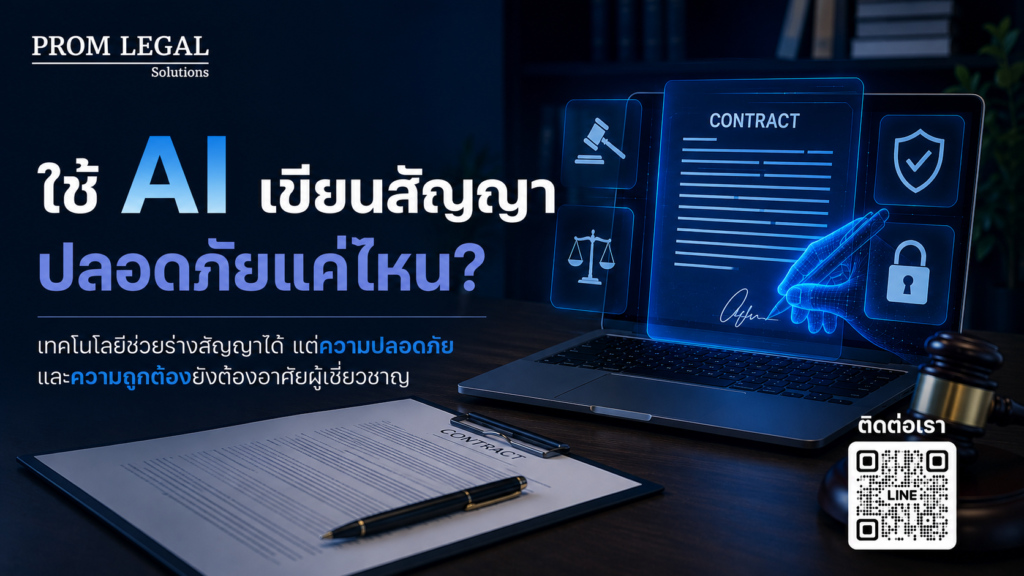
“พิมพ์ใน ChatGPT แป๊บเดียวได้สัญญาเลย ไม่ต้องจ้างทนายแพงๆ แล้ว” ประโยคนี้เริ่มได้ยินบ่อยขึ้นเรื่อยๆในแวดวงผู้ประกอบการ และก็ไม่ใช่เรื่องแปลก เพราะ AI ในปัจจุบัน สามารถสร้างเอกสารที่ดูเป็นมืออาชีพได้อย่างรวดเร็วและน่าประทับใจ แล้วสัญญาที่ AI เขียนให้นั้น ใช้ได้จริงตามกฎหมายไทยหรือเปล่า
วันนี้พวกเรา Prom Legal Solution จะพาคุณมาดูมุมมองจากนักกฎหมายว่า AI เขียนสัญญาได้ดีแค่ไหน มีความเสี่ยงอะไรบ้างที่คุณต้องรู้ และในสถานการณ์ไหนที่ควรใช้ AI กับสถานการณ์ไหนที่ต้องพึ่งทนายความจริงๆ ในรูปแบบสรุปอ่านง่าย เข้าใจได้ทันทีค่ะ
ตามประมวลกฎหมายแพ่งและพาณิชย์ว่าด้วยนิติกรรมและสัญญา สัญญาที่มีผลสมบูรณ์ทางกฎหมายต้องประกอบด้วยองค์ประกอบสำคัญ 4 ประการ ได้แก่
-
คำเสนอและคำสนอง – การแสดงเจตนาที่ตรงกันของคู่สัญญา
-
วัตถุประสงค์ชอบด้วยกฎหมาย – จะต้องไม่ขัดต่อกฎหมายหรือความสงบเรียบร้อยและศีลธรรม (ม. 150)
-
ความสามารถของคู่สัญญา – คู่สัญญาต้องบรรลุนิติภาวะหรือได้รับความยินยอมโดยชอบ และมีความสามารถในการทำนิติกรรม (ม. 19, ม. 21 ประกอบกับ ม. 153)
-
แบบของสัญญา – สัญญาบางประเภท กฎหมายบังคับให้ต้องทำเป็นหนังสือหรือจดทะเบียน มิฉะนั้นตกเป็นโมฆะ (ม. 152 ประกอบกับมาตราเฉพาะ เช่น ม. 456 ว่าด้วยซื้อขายอสังหาริมทรัพย์)
AI สามารถช่วยสร้างโครงสร้างและข้อความได้ดี แต่การตรวจสอบว่าสัญญาครบองค์ประกอบทั้ง 4 นี้ในบริบทของธุรกิจคุณอย่างถูกต้องนั้น ยังคงต้องอาศัยวิจารณญาณของนักกฎหมายที่มีประสบการณ์จริง แล้วมีความเสี่ยงใดบ้าง หากคุณตัดสินใจใช้ AI ในการร่างสัญญา
-
ขัดกฎหมายโดยไม่รู้ตัว
AI มักดึง template จากระบบ Common Law (สหรัฐ/อังกฤษ) ซึ่งอาจมีข้อกำหนดที่โมฆะหรือใช้ไม่ได้ตาม ป.พ.พ. ระบบ Civil Law ของไทย เช่น เงื่อนไขการโอนสิทธิ์ที่แตกต่างกันโดยสิ้นเชิง
-
การอ้างกฎหมาย หรือมาตราผิด
AI อาจอ้างอิงมาตรากฎหมายที่ไม่มีอยู่จริง หรือตีความผิด โดยผู้ใช้ที่ไม่ใช่นักกฎหมายอาจไม่ทันสังเกต และนำสัญญานั้นไปใช้โดยเข้าใจว่าถูกต้อง
-
ข้อมูลกฎหมายที่ไม่อัพเดท
กฎหมายไทยมีการแก้ไขและออกกฎหมายใหม่ตลอดเวลา เช่น พ.ร.บ. คุ้มครองข้อมูลส่วนบุคคล (PDPA), กฎหมายแรงงาน, กฎหมายภาษี AI อาจไม่มีข้อมูลที่เป็นปัจจุบันพอ และมีการอ้างกฎหมายที่ไม่อัพเดท
-
ไม่มีผู้รับผิดชอบ
หากสัญญา AI มีปัญหาและทำให้เกิดความเสียหาย คุณไม่มีสิทธิ์เรียกร้องจาก AI ได้ ต่างจากทนายที่มีความรับผิดตามกฎหมายวิชาชีพและประมวลจรรยาบรรณทนายความ
AI vs ทนายความ: เปรียบเทียบแบบตรงไปตรงมา
ประเด็น |
AI เขียนสัญญา |
ทนายความ |
ความรู้กฎหมายไทย |
รู้กฎหมายทั่วไป แต่อาจพลาดข้อกำหนดเฉพาะของไทย |
เชี่ยวชาญกฎหมายไทยโดยตรง รู้แนวคำพิพากษา |
บริบทเฉพาะธุรกิจ |
ใช้ข้อมูลที่ป้อนเท่านั้น อาจขาดบริบททางธุรกิจและรายละเอียดสำคัญ |
สัมภาษณ์ วิเคราะห์ และครอบคลุมบริบทครบ |
ความเป็นปัจจุบัน |
ข้อมูลมีวันหมดอายุ กฎหมายใหม่อาจไม่อยู่ใน dataset |
อัพเดทกฎหมายและแนวปฏิบัติตลอดเวลา |
Hallucination |
อาจมีการอ้างมาตราผิด หรือสร้างกฎหมายที่ไม่มีจริง |
สามารถตรวจสอบจากแหล่งปฐมภูมิได้ |
ความรับผิดทางวิชาชีพ |
ผู้ใช้ต้องรับความเสี่ยงเอง |
มีความรับผิดและสามารถร้องเรียนได้ |
ต้นทุน |
ต่ำ เหมาะสำหรับ draft เบื้องต้น |
สูงกว่า แต่คุ้มค่าเมื่อเทียบกับความเสี่ยง |
แล้วใช้ AI เมื่อไหร่ได้บ้าง?
พวกเราในฐานะนักกฎหมายไม่ได้บอกว่า AI ไม่มีประโยชน์ เพราะมีสถานการณ์ที่ AI ช่วยได้จริง ยกตัวอย่างเช่น การร่าง draft เบื้องต้นเพื่อนำมาให้ทนายตรวจสอบและปรับแก้ ซึ่งช่วยประหยัดเวลาและต้นทุน ช่วยตรวจสอบว่าควรมีข้อกำหนดใดบ้างในสัญญาของคุณ แปลหรืออธิบายสัญญาภาษาต่างประเทศเบื้องต้นก่อนส่งให้ทนายวิเคราะห์เชิงลึกได้
อย่างไรก็ตาม ควรให้ทนายตรวจสอบเสมอ สำหรับสัญญาที่มูลค่าสูงหรือผูกพันระยะยาว เกี่ยวกับอสังหาริมทรัพย์ ทรัพย์สินทางปัญญา หรือหุ้น ต้องปฏิบัติตามกฎหมายเฉพาะ เช่น แรงงาน PDPA หรือใบอนุญาตธุรกิจ หรือมีคู่สัญญาต่างประเทศหรือต้องบังคับใช้ข้ามพรมแดน เพื่อให้ครอบคลุมถึงความเสี่ยงต่างๆที่อาจเกิดขึ้น
พวกเรา Prom Legal Solution พร้อมดูแลทุกปัญหาทางกฎหมายให้คุณด้วยบริการแบบ One-Stop Service ไม่ว่าจะเป็นการร่างสัญญาใหม่ทั้งฉบับ การตรวจสอบ (Review) สัญญาที่ร่างไว้แล้ว รวมถึงสัญญาที่ใช้ AI ช่วยร่าง หรือการให้คำปรึกษาด้านสัญญาธุรกิจ อย่าปล่อยให้ความเชื่อมั่นในเทคโนโลยีมาแทนที่ความรอบคอบทางกฎหมาย โฟกัสกับสิ่งที่ต้องทำตรงหน้า แล้วปล่อยให้เรื่องกฎหมายเป็นหน้าที่ของเรา หากคุณมีข้อสงสัยประการใด สามารถติดต่อเพื่อขอคำปรึกษาได้เลยค่ะ
#AIกฎหมาย #เขียนสัญญา #สัญญาธุรกิจ #ChatGPT #กฎหมายไทย #ทนายความ #ที่ปรึกษากฎหมาย #PromLegalSolution #ร่างสัญญา #ตรวจสัญญา #AILaw #LegalTech
How Safe is it to Use AI to Draft Contracts?
“Just type it into ChatGPT; you’ll get a contract in seconds without paying for expensive lawyers.” This phrase is increasingly echoed among entrepreneurs, and it is no surprise. Today’s AI can generate remarkably professional-looking documents in a flash. But the critical question remains: Are these AI-generated contracts actually legally enforceable under Thai law?
Today, we at Prom Legal Solution will explore this from a legal professional’s perspective. We will break down how well AI can write contracts, the hidden risks you must know, and distinguish between scenarios where AI is a useful tool versus when you absolutely need a real lawyer. We have summarized this into an easy-to-read, immediately applicable guide.
The 4 Essential Elements of a Valid Contract
Under the Thai Civil and Commercial Code (CCC) regarding juristic acts and contracts, a legally valid contract must comprise four essential elements:
-
Offer and Acceptance: The mutual manifestation of intention between the contracting parties.
-
Lawful Object: The purpose of the contract must not be contrary to the law, public order, or good morals (Section 150).
-
Capacity of the Parties: The parties must be of legal age (or have obtained proper consent) and possess the legal capacity to perform juristic acts (Sections 19, 21, in conjunction with Section 153).
-
Form of the Contract: For certain types of contracts, the law mandates they must be made in writing or registered; otherwise, they are void (Section 152 in conjunction with specific sections, e.g., Section 456 regarding the sale of immovable property).
While AI is excellent at generating structures and text, verifying that a contract accurately fulfills all four of these elements within the specific context of your business still requires the judgment of an experienced legal professional.
What are the risks of relying solely on AI to draft your contracts?
-
Unknowingly Violating the Law: AI often pulls templates based on Common Law systems (e.g., US or UK law). These templates may contain clauses that are completely void or unenforceable under Thailand’s Civil Law system (CCC), such as fundamentally different conditions for the assignment of rights.
-
Citing Incorrect Laws or Sections: AI might experience “hallucinations,” referencing non-existent legal sections or misinterpreting them. Non-lawyer users may not notice these errors and proceed to use the contract, falsely believing it is legally sound.
-
Outdated Legal Information: Thai laws are constantly amended and introduced, such as the Personal Data Protection Act (PDPA), labor laws, and tax regulations. AI might lack the most current data, leading to the application of outdated legal standards.
-
Zero Accountability: If an AI-drafted contract has a loophole that causes you financial damage, you cannot sue or hold the AI accountable. This is in stark contrast to hiring a lawyer, who bears professional liability and is bound by the strict Code of Conduct for Lawyers.
AI vs. Lawyer: A Straightforward Comparison
| Feature | AI Contract Drafting | Professional Lawyer |
| Legal Knowledge | Knows general law but often misses specific Thai legal nuances and requirements. | Specialized directly in Thai law and fully aware of Supreme Court precedents. |
| Business Context | Relies solely on user prompts; may lack deep business context and crucial details. | Conducts interviews, analyzes the business, and covers the complete context. |
| Up-to-date Data | Data has a cutoff date; newly enacted laws might not be in its dataset. | Constantly updated on current laws, regulations, and legal practices. |
| Hallucination Risk | May cite incorrect sections or invent non-existent laws. | Verifies all legal references against primary sources. |
| Professional Liability | The user bears 100% of the risk. | Bears professional liability and is subject to legal accountability. |
| Cost | Low; ideal for generating a basic initial draft. | Higher, but provides immense value and security when weighed against potential legal risks. |
When is it appropriate to use AI?
We, as lawyers, are not saying AI is useless. There are indeed situations where AI is highly beneficial. For example, you can use AI to generate an initial draft to hand over to a lawyer for review and refinement (saving time and costs), to brainstorm what clauses should be included in your agreement, or to provide a basic translation or summary of a foreign-language contract before sending it for in-depth legal analysis.
However, you should always have a lawyer review the contract if: it involves high monetary value or long-term commitments; pertains to real estate, intellectual property, or company shares; requires strict compliance with specific laws like Labor, PDPA, or business licensing; or involves foreign counterparties and cross-border enforcement. This ensures all potential risks are comprehensively mitigated.
We at Prom Legal Solution are ready to handle all your legal challenges with our One-Stop Service—whether it is drafting a brand-new contract from scratch, reviewing an existing agreement (including AI-generated ones), or providing comprehensive business contract consultation. Do not let faith in technology replace legal prudence. Focus on the tasks in front of you, and leave the legal matters to us.
If you have any questions or require consultation, please contact us today.
#LegalAI #ContractDrafting #BusinessContracts #ChatGPT #ThaiLaw #Lawyer #LegalConsultant #PromLegalSolution #ContractReview #AILaw #LegalTech