
(English Below)
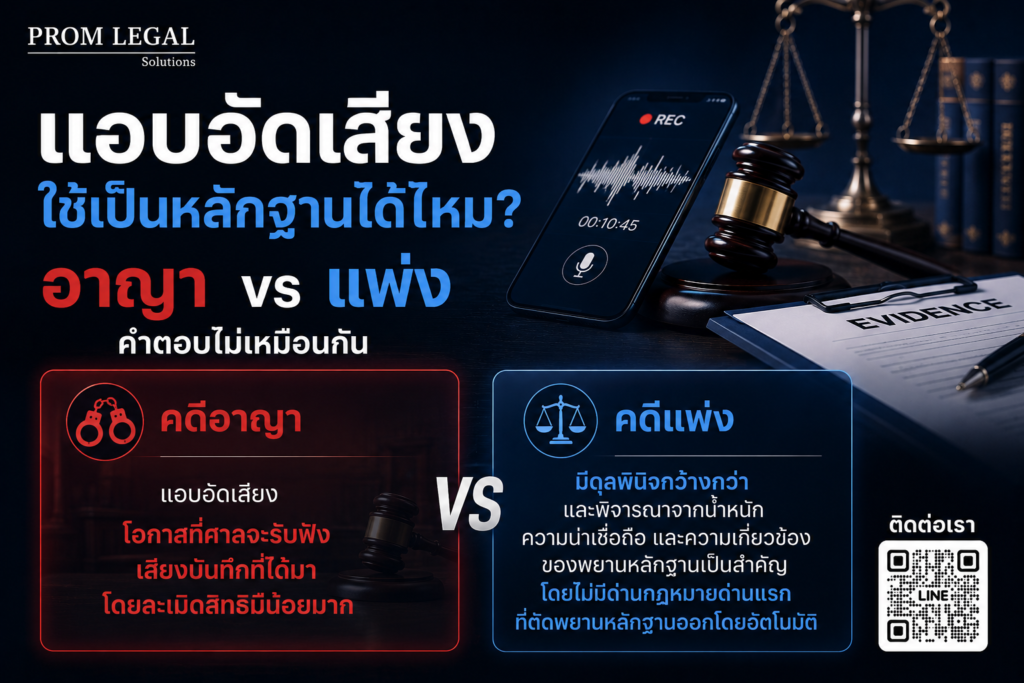
“อัดเสียงไว้แล้ว ใช้เป็นหลักฐานได้เลยใช่ไหม?” ไม่ใช่เสมอไปค่ะ นี่คือความเข้าใจผิดที่อาจทำให้หลักฐานดีๆ ถูกศาลตัดทิ้งจนไม่เหลือประโยชน์ ความจริงคือ แม้คุณจะมีไฟล์เสียงอยู่ในมือ แต่ศาลจะรับฟังหรือไม่ขึ้นอยู่กับว่า “คดีประเภทไหน” และ “ได้เสียงมาอย่างไร” และสองปัจจัยนี้ให้คำตอบที่แตกต่างกันอย่างมีนัยสำคัญ
วันนี้พวกเรา Prom Legal Solution จะพาคุณมาทำความเข้าใจว่า ระหว่างคดีอาญาและคดีแพ่ง ศาลมองเรื่องเสียงบันทึกที่ได้มาโดยไม่บอกคู่สนทนาแตกต่างกันอย่างไร พร้อมอ้างอิงจากฎีกาจริง 2 แนว ในรูปแบบสรุปอ่านง่าย เข้าใจได้ทันทีค่ะ
กรณีคดีอาญา
ป.วิ.อ. มาตรา 226 วางหลักไว้ชัดเจนว่า พยานหลักฐานที่เกิดจาก “การจูงใจ คำมั่นสัญญา ขู่เข็ญ หลอกลวง หรือโดยมิชอบประการอื่น” ต้องห้ามมิให้รับฟัง กฎหมายอาญามีความเข้มงวดเป็นพิเศษเพราะต้องการปกป้องสิทธิเสรีภาพของผู้ถูกกล่าวหา ซึ่งอาจสูญเสียอิสรภาพจากคดี ดังนั้น หากการบันทึกเสียงละเมิดสิทธิส่วนบุคคลอย่างชัดแจ้ง ศาลอาญามักปฏิเสธที่จะรับฟัง
อย่างไรก็ตาม มาตรา 226/1 เปิดช่องยกเว้นไว้ว่า ศาลอาจรับฟังหลักฐานที่ได้มาโดยมิชอบได้ ถ้าประโยชน์ต่อการอำนวยความยุติธรรมมากกว่าผลเสียอันเกิดจากผลกระทบต่อมาตรฐานของระบบงานยุติธรรมทางอาญาหรือสิทธิพื้นฐานของประชาชน โดยศาลต้องพิจารณาองค์ประกอบ 4 ข้อ คือ คุณค่าในเชิงพิสูจน์ / ความร้ายแรงของความผิด / ลักษณะการละเมิด / และโทษผู้กระทำมิชอบ ซึ่งในทางปฏิบัติ หากเป็นคดีที่ไม่ร้ายแรง ยอมความได้ และหาหลักฐานชอบด้วยกฎหมายได้ โอกาสที่ศาลจะรับฟังเสียงบันทึกที่ได้มาโดยละเมิดสิทธิมีน้อยมาก
อ้างอิงจาก คำพิพากษาฎีกาที่ 8575/2563 บุคคลที่สาม (น.) แอบบันทึกเสียงการประชุมโดยจำเลยไม่ทราบ โจทก์นำมาอ้างในคดีหมิ่นประมาท ศาลฎีกาวินิจฉัยว่า เป็นการกระทบสิทธิเสรีภาพส่วนบุคคลอย่าง
ชัดแจ้งตาม ป.วิ.อ. มาตรา 226 และเมื่อพิจารณาตาม ม.226/1 แล้ว คดีหมิ่นประมาทไม่ร้ายแรง ยังหาหลักฐานโดยวิธีสุจริตได้ การรับฟังเป็นผลเสียมากกว่าผลดี ศาลจึงไม่รับฟัง
กรณีคดีแพ่ง
อยู่ภายใต้ ป.วิ.พ. ซึ่งไม่มีบทบัญญัติห้ามรับฟังพยานหลักฐานที่ได้มาโดยมิชอบอย่างชัดเจนเหมือน
ป.วิ.อ. มาตรา 226 ดังนั้น ศาลแพ่งจึงมีดุลพินิจกว้างกว่า และพิจารณาจากน้ำหนัก ความน่าเชื่อถือ และความเกี่ยวข้องของพยานหลักฐานเป็นสำคัญ โดยไม่มีด่านกฎหมายด่านแรกที่ตัดพยานหลักฐานออกโดยอัตโนมัติ
โดยเฉพาะอย่างยิ่ง หากผู้บันทึกเสียงเป็น “คู่สนทนา” ฝ่ายหนึ่งในการสนทนานั้นเอง ศาลถือว่าผู้นั้นมีสิทธิ์เบิกความอ้างถึงการสนทนาได้อยู่แล้วตามปกติ การบันทึกเสียงจึงไม่ถือว่าเป็นการกระทำโดยมิชอบในระดับเดียวกับการส่งบุคคลที่สามไปแอบบันทึก
อ้างอิงจาก คำพิพากษาฎีกาที่ 4674/2543 จำเลยในคดีกู้ยืมเงินบันทึกเสียงการสนทนาระหว่างตนเองกับโจทก์ (คู่สนทนา) โดยที่โจทก์ไม่ทราบ แล้วนำมาอ้างเป็นหลักฐานการชำระหนี้ ศาลฎีกาวินิจฉัยว่า เมื่อจำเลยเป็นคู่สนทนาฝ่ายหนึ่ง จำเลยย่อมมีสิทธิ์เบิกความอ้างถึงการสนทนานั้นได้อยู่แล้ว จึงไม่ถือว่าเป็นการกระทำโดยมิชอบ ศาลจึงรับฟังได้
บันทึกได้ ไม่ได้หมายความว่าจะใช้ได้เสมอ จะต้องพิจารณาถึงวิธีที่ได้มา ประเภทคดี ความร้ายแรงของคดีด้วย
พวกเรา Prom Legal Solution พร้อมดูแลทุกปัญหาทางกฎหมายให้คุณด้วยบริการแบบ One-Stop Service ไม่ว่าจะเป็นการให้คำปรึกษาเรื่องพยานหลักฐาน การวางแผนรวบรวมหลักฐานอย่างถูกต้องก่อนดำเนินคดี หรือการดำเนินคดีทั้งแพ่งและอาญา อย่าปล่อยให้หลักฐานดีๆ ถูกตัดทิ้งเพราะวิธีการที่ไม่ถูกต้อง โฟกัสกับสิ่งที่ต้องทำตรงหน้า แล้วปล่อยให้เรื่องกฎหมายเป็นหน้าที่ของเรา หากคุณมีข้อสงสัยประการใด สามารถติดต่อเพื่อขอคำปรึกษาได้เลยค่ะ
#แอบอัดเสียง #พยานหลักฐาน #ฎีกา #กฎหมายไทย #คดีอาญา #คดีแพ่ง #ป.วิ.อ.226 #ที่ปรึกษากฎหมาย #PromLegalSolution #หลักฐานในคดี #สิทธิส่วนบุคคล #LegalTip
Can a Secret Recording Be Used as Evidence? Criminal vs. Civil — The Answer Is Not the Same
“I recorded it — so I can use it as evidence, right?” Not necessarily. This is one of the most common misconceptions that causes perfectly good evidence to be thrown out in court. The truth is: even if you have an audio file in hand, whether the court will admit it depends on two critical factors — the type of case and how the recording was obtained. And those two factors can produce very different answers.
Today, we at Prom Legal Solution explain how Thai courts treat secretly recorded audio differently in criminal versus civil proceedings — with reference to two landmark Supreme Court rulings — in a clear, easy-to-read format you can understand and apply right away.
Criminal Cases
In criminal proceedings, Section 226 of the Criminal Procedure Code (CPC) explicitly provides that evidence arising from “inducement, promise, threat, deception, or any other unlawful means” is inadmissible. Criminal law applies stricter standards to protect the rights of the accused — who faces the potential loss of liberty. If a recording was obtained in clear violation of personal rights, criminal courts will generally refuse to admit it.
However, Section 226/1 creates an exception: courts may admit unlawfully obtained evidence if doing so would benefit the administration of justice more than the harm caused. The court must weigh four factors: probative value, gravity of the offence, nature of the violation, and whether the wrongdoer has been punished. In practice, for offences that are not serious, are compoundable, and where lawful evidence was obtainable, the chances of a secretly recorded audio being admitted in a criminal case are low.
Dika 8575/2563 A third party (N.) secretly recorded a meeting without the defendants’ knowledge. The plaintiffs sought to use it in a defamation case. The Supreme Court held that the recording clearly violated the defendants’ personal liberty under CPC § 226. Applying the § 226/1 balancing test, the defamation charge was not serious, other lawful evidence was obtainable, and admitting the recording would cause more harm than benefit — excluded.
Civil Cases
Civil proceedings are governed by the Civil Procedure Code (CPC Civil), which contains no explicit equivalent to CPC § 226 prohibiting unlawfully obtained evidence. Civil courts therefore have considerably broader discretion and focus on the weight, reliability, and relevance of evidence — without an automatic first-stage exclusion rule.
In particular, where the person who made the recording was a party to the conversation themselves, the court takes the view that the recorder already had the right to testify about what was said. Recording it does not rise to the same level of wrongdoing as sending a third party to covertly record.
Dika 4674/2543
In a loan repayment dispute, the defendant recorded a conversation between themselves and the plaintiff (as a party to the conversation) without the plaintiff’s knowledge, and adduced it as evidence of repayment. The Supreme Court held that since the defendant was a party to the conversation, the defendant already had the right to testify about it — the recording was not unlawfully obtained and was admissible.
| Recording ≠ Always Admissible | How + What Type + How Serious = The Decisive Combination |
We at Prom Legal Solution are ready to handle all your legal challenges with our One-Stop Service from advising on evidence admissibility and planning how to gather evidence lawfully, to managing civil and criminal proceedings on your behalf. Do not let good evidence be thrown out because of the wrong method. Focus on the tasks in front of you, and leave the legal matters to us. If you have any questions or require consultation, please contact us today.
#SecretRecording #EvidenceLaw #CriminalVsCivil #ThaiSupremeCourt #Dika #CPC226 #PromLegalSolution #LegalConsultant #ThaiLaw #EvidenceAdmissibility #LegalTip