(English Below)
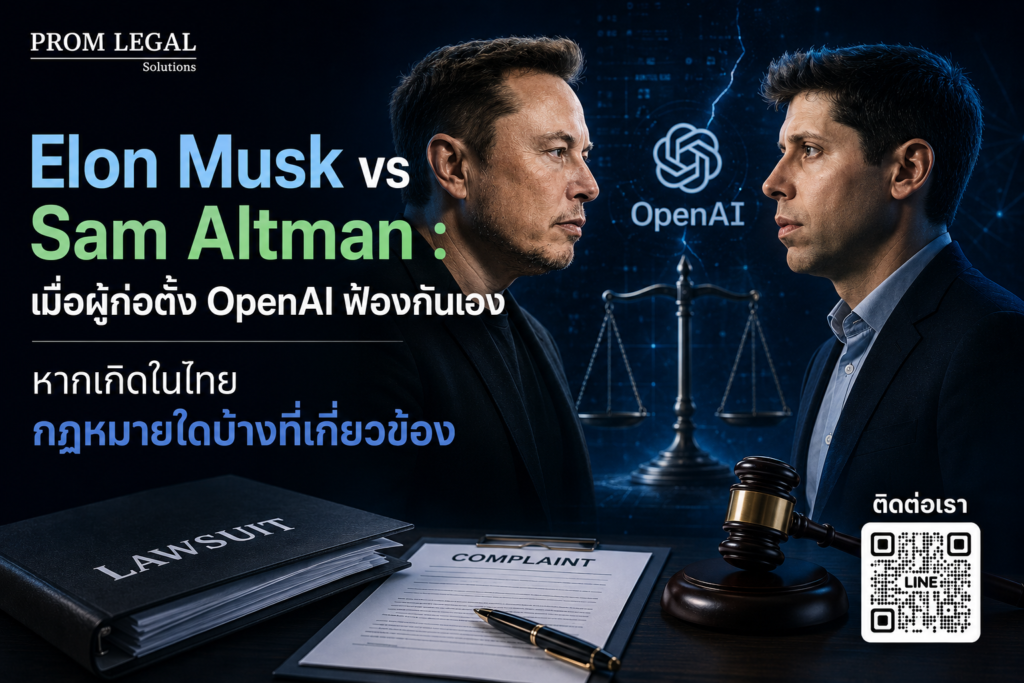
ลองจินตนาการว่า คุณร่วมกันก่อตั้งองค์กรขึ้นมาด้วยความฝันว่าจะเปลี่ยนโลกบริจาคเงินหลักพันล้านบาทเพื่อรักษา “พันธกิจเพื่อมวลมนุษยชาติ” แต่วันหนึ่ง คุณกลับพบว่าองค์กรนั้นแอบเปลี่ยนทิศทาง ดูดเม็ดเงินจากยักษ์ใหญ่เอกชน และกลายเป็นธุรกิจแสวงหากำไรเต็มรูปแบบ นั่นคือสิ่งที่ Elon Musk กล่าวหา Sam Altman และ OpenAI ในคดีที่สั่นสะเทือนวงการเทคโนโลยีทั่วโลก
วันนี้พวกเรา Prom Legal Solution จะพาคุณมาทำความเข้าใจว่าเกิดอะไรขึ้นในคดีนี้ และหากเหตุการณ์ลักษณะเดียวกันนี้เกิดขึ้นในประเทศไทย กฎหมายไทยจะมองปัญหาเหล่านี้อย่างไร ในรูปแบบสรุปอ่านง่าย เข้าใจได้ทันทีค่ะ
OpenAI ก่อตั้งขึ้นในปี พ.ศ. 2558 (ค.ศ. 2015) ในฐานะองค์กรไม่แสวงหากำไร (Nonprofit) โดยมี Elon Musk และ Sam Altman เป็นหนึ่งในผู้ก่อตั้ง ด้วยวิสัยทัศน์ร่วมกันว่าจะพัฒนาปัญญาประดิษฐ์ (AI) เพื่อประโยชน์ของมนุษยชาติโดยรวม ไม่ใช่เพื่อผลกำไรเชิงพาณิชย์ Musk บริจาคเงินไปมากกว่า 44 ล้านดอลลาร์สหรัฐ ก่อนจะลาออกจากบอร์ดบริหารในปี พ.ศ. 2561
จุดเปลี่ยนเกิดขึ้นเมื่อ OpenAI เริ่มเปลี่ยนโครงสร้างเป็น “บริษัทกำไรจำกัด (Capped-Profit)” ในปี พ.ศ. 2562 และในเวลาต่อมา Microsoft ได้เข้ามาลงทุนกว่า 1 หมื่นล้านดอลลาร์ OpenAI จึงพัฒนาผลิตภัณฑ์เชิงพาณิชย์อย่าง GPT-4 และ ChatGPT จนกลายเป็นกิจการที่มีมูลค่าระดับโลก
ในเดือนกุมภาพันธ์ พ.ศ. 2567 Musk ยื่นฟ้อง Sam Altman, Greg Brockman และ OpenAI ต่อศาลรัฐแคลิฟอร์เนีย โดยมีข้อหาหลักดังนี้
- ผิดสัญญาก่อตั้ง (Breach of Contract)
- ละเมิดหน้าที่ความสัมพันธ์ที่ต้องไว้วางใจได้ (Breach of Fiduciary Duty) กรรมการใช้อำนาจเพื่อประโยชน์ส่วนตัวและนักลงทุน แทนที่จะปกป้องผลประโยชน์ขององค์กร
- ได้รับประโยชน์โดยมิชอบ (Unjust Enrichment) บุคคลในองค์กรแสวงหาผลประโยชน์จากทรัพยากรที่ได้รับบริจาคมาเพื่อสาธารณประโยชน์
หากเป็นคดีในไทย กฎหมายใดบ้างที่เกี่ยวข้อง?
- ปัญหาโครงสร้างองค์กร: มูลนิธิ vs. บริษัท
ภายใต้ประมวลกฎหมายแพ่งและพาณิชย์ (ป.พ.พ.) มาตรา 110–136 “มูลนิธิ” คือองค์กรที่จัดตั้งขึ้นเพื่อวัตถุประสงค์สาธารณประโยชน์โดยเฉพาะ การเปลี่ยนแปลงวัตถุประสงค์ของมูลนิธิไม่ใช่เรื่องที่ผู้บริหารทำได้ตามอำเภอใจ แต่ต้องได้รับความเห็นชอบจากนายทะเบียนและดำเนินการตามขั้นตอนที่กฎหมายกำหนดอย่างเคร่งครัด หากกรรมการมูลนิธิเปลี่ยนทิศทางองค์กรไปเพื่อแสวงหากำไรโดยไม่ผ่านกระบวนการนี้ ย่อมถือเป็นการกระทำที่ขัดต่อกฎหมาย และอาจถูกเพิกถอนการจดทะเบียนได้
2. หน้าที่ความสัมพันธ์ที่ต้องไว้วางใจได้ของกรรมการ (Fiduciary Duty)
ป.พ.พ. มาตรา 1168 กำหนดว่ากรรมการบริษัทต้องใช้ความเอื้อเฟื้อสอดส่องอย่างบุคคลค้าขายผู้ประกอบด้วยความระมัดระวังและซื่อสัตย์สุจริตต่อองค์กร โดยต้องคำนึงถึงผลประโยชน์ขององค์กรและผู้มีส่วนได้เสียที่ถูกต้องเป็นหลัก ไม่ใช่ผลประโยชน์ส่วนตัวหรือผลประโยชน์ของผู้ลงทุนรายใดรายหนึ่ง หากกรรมการกระทำการใดที่ก่อให้เกิดความเสียหายต่อองค์กรหรือบุคคลที่เกี่ยวข้อง กรรมการย่อมต้องรับผิดชอบชดใช้ค่าเสียหาย ซึ่งมาตรา 1169 ให้สิทธิแก่ผู้ถือหุ้นฟ้องเรียกร้องแทนบริษัทได้ หากบริษัทไม่ดำเนินคดีเอง
3. การผิดสัญญาและสัญญาก่อตั้งองค์กร
ในบริบทของไทย “สัญญาก่อตั้งองค์กร” อาจปรากฏในรูปแบบของหนังสือบริคณห์สนธิ ข้อบังคับนิติบุคคล หรือข้อตกลงระหว่างผู้ก่อตั้ง ซึ่งผูกพันฝ่ายที่เกี่ยวข้องตาม ป.พ.พ. มาตรา 213–222 ว่าด้วยผลแห่งหนี้และการไม่ชำระหนี้ หากผู้บริหารละเมิดพันธกิจดังกล่าว ผู้เสียหายมีสิทธิ์ฟ้องเรียกค่าเสียหายหรือขอให้ศาลบังคับให้ปฏิบัติตามสัญญาได้ ซึ่งตรงกับแนวทางที่ Musk ใช้ฟ้องร้องในสหรัฐอเมริกา
4. ผลประโยชน์ทับซ้อนและการได้รับประโยชน์โดยมิชอบ
กฎหมายกำกับดูแลกิจการไทย ทั้งในส่วนของ ป.พ.พ. และพระราชบัญญัติบริษัทมหาชนจำกัด พ.ศ. 2535 กำหนดให้กรรมการต้องเปิดเผยความขัดแย้งทางผลประโยชน์ และห้ามเข้าร่วมตัดสินใจในเรื่องที่ตนมีส่วนได้เสีย หากพิสูจน์ได้ว่ากรรมการนำทรัพย์สินหรือโอกาสทางธุรกิจขององค์กรมาใช้ประโยชน์ส่วนตัว อาจถูกฟ้องเรียกคืนผลประโยชน์ที่ได้รับไปโดยไม่ชอบได้ตามหลักลาภมิควรได้ในมาตรา 406–419 ของ ป.พ.พ.
5. สิทธิของผู้ก่อตั้งและผู้บริจาค
ประเด็นที่น่าสนใจในบริบทไทยคือ ผู้บริจาคเงินให้มูลนิธิมีสิทธิ์เรียกร้องอะไรหรือไม่ เมื่อมูลนิธิเบี่ยงเบนไปจากวัตถุประสงค์ที่ผู้บริจาคตั้งใจ? โดยทั่วไป การบริจาคทรัพย์ให้มูลนิธิถือเป็นการโอนกรรมสิทธิ์โดยเด็ดขาด อย่างไรก็ตาม หากสัญญาการบริจาคระบุเงื่อนไขผูกพันไว้ชัดเจน ผู้บริจาคอาจมีสิทธิ์เรียกร้องตามสัญญาหรือขอให้องค์กรดำเนินการให้ตรงตามวัตถุประสงค์เดิมได้ ซึ่งเป็นแนวทางที่ Musk พยายามอ้างสิทธิ์ในคดีนี้เช่นกัน
คดี Musk vs. Altman สอนบทเรียนสำคัญที่ใช้ได้ข้ามพรมแดนว่า ไม่ว่าจะก่อตั้งองค์กรในรูปแบบใด สิ่งที่เขียนไว้ในเอกสารก่อตั้ง ข้อบังคับ หรือสัญญาระหว่างผู้ก่อตั้ง คือสิ่งที่ผูกพันทางกฎหมายอย่างจริงจัง การเปลี่ยนแปลงโครงสร้างหรือวัตถุประสงค์องค์กรโดยพลการ แม้จะมีเจตนาดีหรืออ้างว่าเพื่อความอยู่รอดของกิจการ ก็ไม่ใช่ข้ออ้างที่กฎหมายยอมรับโดยอัตโนมัติ โดยเฉพาะอย่างยิ่งหากมีผู้มีส่วนได้เสียที่ได้รับความเสียหายจากการเปลี่ยนแปลงนั้น
พวกเรา Prom Legal Solution มีความเชี่ยวชาญเฉพาะด้านการร่างและตรวจสอบเอกสารก่อตั้งองค์กร ข้อบังคับนิติบุคคล และข้อตกลงระหว่างผู้ก่อตั้ง รวมถึงให้คำปรึกษาเรื่องหน้าที่ความรับผิดชอบของกรรมการ (Fiduciary Duty) และการวางโครงสร้างธรรมาภิบาลเพื่อป้องกันข้อพิพาทแบบ Musk vs. Altman อย่าปล่อยให้ความไม่รู้กฎหมายทำให้คุณเสียเปรียบ โฟกัสกับสิ่งที่ต้องทำตรงหน้า แล้วปล่อยให้เรื่องกฎหมายเป็นหน้าที่ของเรา หากคุณมีข้อสงสัยประการใด สามารถติดต่อเพื่อขอคำปรึกษาได้เลยค่ะ
#ElonMusk #SamAltman #OpenAI #กฎหมายธุรกิจไทย #มูลนิธิ #กรรมการบริษัท #ผิดสัญญา #FiduciaryDuty #AILaw #PromLegalSolution #ที่ปรึกษากฎหมาย
Elon Musk vs Sam Altman: When OpenAI’s Co-Founders Clash — How Would Thai Law View This Case?
Imagine co-founding an organization with a shared dream of changing the world, donating millions to uphold a “mission for all of humanity,” only to discover that the organization has quietly shifted direction — attracting massive private investment and transforming into a fully commercial, profit-driven enterprise. That is precisely what Elon Musk alleged against Sam Altman and OpenAI in a lawsuit that sent shockwaves through the global technology industry.
Today, we at Prom Legal Solution will walk you through what happened in this case — and analyze how Thai law would approach these same issues if a similar situation were to arise in Thailand. As always, we’ve summarized everything in a clear, easy-to-read format that you can understand and apply right away.
What Happened in the Case?
OpenAI was founded in 2015 as a nonprofit organization with Elon Musk and Sam Altman among its co-founders. Their shared vision was to develop artificial intelligence (AI) for the benefit of humanity as a whole — not for commercial profit. Musk donated over USD 44 million to the cause before resigning from the board in 2018.
The turning point came when OpenAI restructured into a “capped-profit” company in 2019, followed by a USD 10 billion investment from Microsoft. OpenAI subsequently developed commercial products such as GPT-4 and ChatGPT, rapidly becoming one of the most valuable technology entities in the world.
In February 2024, Musk filed a lawsuit against Sam Altman, Greg Brockman, and OpenAI in a California court, raising the following core allegations:
- Breach of Contract — abandoning the founding mission to develop AI for the benefit of humanity.
- Breach of Fiduciary Duty — directors exercising authority for personal gain and in favor of investors rather than protecting the interests of the organization.
- Unjust Enrichment — individuals within the organization profiting from resources that had been donated for the public good.
Which Thai Laws Would Apply to a Similar Case?
- Organizational Structure: Foundation vs. Company
Under Sections 110–136 of the Thai Civil and Commercial Code (CCC), a “Foundation” (มูลนิธิ) is an organization established exclusively for charitable or public benefit purposes. Any change to a foundation’s stated purposes cannot be made at the discretion of its management alone — it requires formal approval from the Registrar and must strictly follow the procedures prescribed by law. If the foundation’s directors change the organization’s direction toward profit-making without following these procedures, such actions are deemed unlawful and may result in the revocation of the foundation’s registration.
- Fiduciary Duty of Directors
Section 1168 of the CCC requires company directors to conduct the company’s business with the diligence of a careful business person and with good faith toward the organization, prioritizing the interests of the organization and its legitimate stakeholders — not personal interests or those of individual investors. Where a director’s actions cause damage to the organization or related parties, the director is liable for compensation, and Section 1169 entitles shareholders to bring an action on the company’s behalf if the company itself fails to do so.
- Breach of Contract and Founding Agreements
In the Thai context, a “founding agreement” may take the form of a Memorandum of Association, articles of incorporation, or co-founder agreements — all of which are binding on the parties involved under Sections 213–222 of the CCC governing the consequences of non-performance of obligations. If management violates such a mission-based commitment, the aggrieved party may sue for damages or apply to court for specific performance. This mirrors the legal approach that Musk pursued in the United States.
- Conflict of Interest and Unjust Enrichment
Thai corporate governance law — both under the CCC and the Public Limited Companies Act B.E. 2535 — requires directors to disclose conflicts of interest and to refrain from participating in decisions where they hold a personal stake. If it can be proven that a director appropriated the organization’s assets or business opportunities for personal benefit, a claim to recover those unjustly obtained benefits may be brought under the doctrine of unjust enrichment set out in Sections 406–419 of the CCC.
- Rights of Founders and Donors
A particularly interesting question in the Thai context is whether a donor has any legal claim when a foundation deviates from the purpose for which they originally donated. In general, a donation to a foundation constitutes an absolute transfer of ownership. However, if the donation agreement contained specific binding conditions, the donor may have contractual rights to demand that the organization adhere to the original stated purpose — which is precisely the argument Musk sought to advance in this litigation.
Key Lessons for Thai Entrepreneurs and Business Owners
The Musk vs. Altman case delivers a universal lesson that transcends borders: regardless of how an organization is structured, the terms written in founding documents, articles, or co-founder agreements carry real legal weight. Unilaterally changing an organization’s structure or purpose — even with good intentions or under the banner of business survival — is not an excuse that the law automatically accepts, particularly where there are parties who have suffered harm as a result of that change.
At Prom Legal Solution, we specialize in drafting and reviewing founding documents, articles of association, and co-founder agreements, as well as advising on directors’ fiduciary duties and governance structures designed to prevent disputes like Musk vs. Altman from day one. Whether you are establishing a new organization, restructuring an existing one, or have questions about the rights and duties of founders, directors, or donors, please contact us for consultation.
#ElonMusk #SamAltman #OpenAI #ThaiBusinessLaw #FiduciaryDuty #FoundationLaw #BreachOfContract #AILaw #CorporateGovernance #PromLegalSolution #LegalConsultant #BusinessLawyer