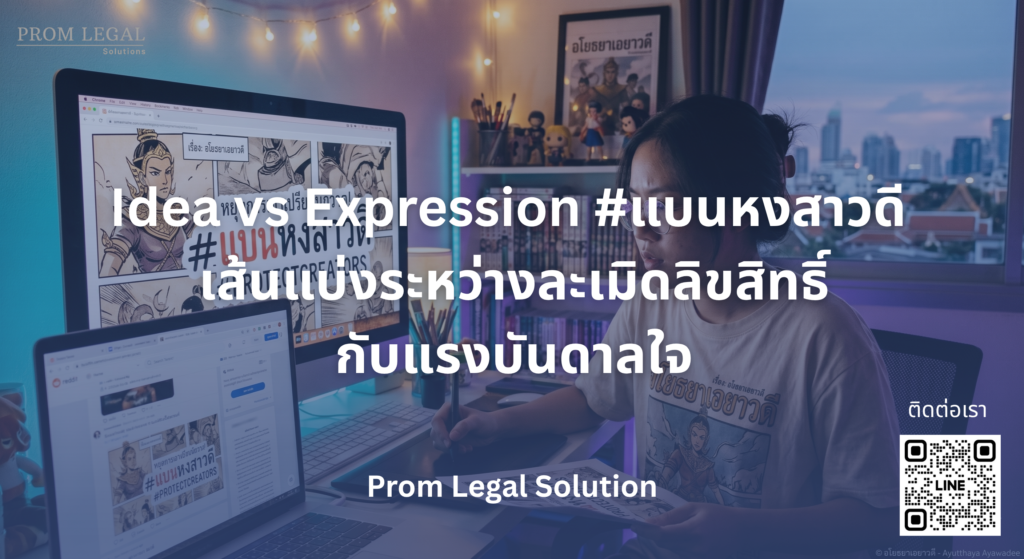
จากกระแสดราม่า #แบนหงสาวดี ที่ติดเทรนด์ร้อนแรงในโซเชียล ต่อข้อกล่าวหาเรื่องซีรีส์ “หงสาวดี” ว่ามีการลอกเลียนแบบหรือดัดแปลงเนื้อหาจากผลงานการ์ตูนเรื่อง “อโยธยาเอยาวดี” ท่ามกลางเสียงถกเถียงที่ดังขึ้นเรื่อย ๆ ช่อง ONE 31 ก็ได้ออกแถลงการณ์ยืนยันว่าไม่มีเจตนาละเมิดหรือเอาเปรียบงานทรัพย์สินทางปัญญาของใคร อย่างไรก็ตาม กรณีดังกล่าวได้จุดประกายให้เกิดการหยิบยกประเด็นทางกฎหมายที่มีนัยสำคัญและมีความละเอียดอ่อนขึ้นมาพิจารณาใหม่อีกครั้ง นั่นก็คือ เส้นแบ่งระหว่าง “แรงบันดาลใจ” กับ “การละเมิดลิขสิทธิ์” อยู่ตรงไหนกันแน่?
วันนี้พวกเรา Prom Legal Solution จะพามาลงลึกถึงข้อกฎหมายทรัพย์สินทางปัญญาจากกระแส
ดราม่า #แบนหงสาวดี ให้ผู้ผลิตคอนเทนต์เข้าใจเส้นแบ่งที่ละเอียดอ่อนว่า แท้จริงแล้วเส้นแบ่งระหว่าง “แรงบันดาลใจ” กับ “การละเมิดลิขสิทธิ์” นั้นอยู่ที่ตรงไหน เพื่อให้เห็นภาพรวมและเข้าใจกระบวนการพิเคราะห์ทางกฎหมายอย่างชัดเจนค่ะ
หลักทั่วไปของกฎหมายลิขสิทธิ์
ตามมาตรา 6 แห่งพระราชบัญญัติลิขสิทธิ์ พ.ศ. 2537 กำหนดให้ความคุ้มครองแก่งานสร้างสรรค์ในหลากหลายประเภท ไม่ว่าจะเป็นงานวรรณกรรม นาฏกรรม ศิลปกรรม ดนตรีกรรม โสตทัศนวัสดุ ภาพยนตร์ หรือสิ่งบันทึกเสียง โดยไม่คำนึงว่างานนั้นจะแสดงออกในรูปแบบใด อย่างไรก็ดี กฎหมายได้วางหลักสำคัญไว้ว่า ความคุ้มครองดังกล่าวครอบคลุมเฉพาะ “การแสดงออกทางความคิด” (Expression) เท่านั้น กล่าวคือ ความคิดจะต้องถูกถ่ายทอดออกมาเป็นผลงานที่เป็นรูปธรรม ไม่ว่าจะในรูปของตัวอักษร ภาพ เสียง หรือรูปแบบอื่นใดที่สามารถรับรู้ได้ ในทางกลับกัน “ความคิด” (Idea) หรือแรงบันดาลใจ รวมถึงแนวคิด หลักการ วิธีการ หรือทฤษฎีต่าง ๆ ยังคงไม่อยู่ในขอบเขตการคุ้มครองของกฎหมาย และถือเป็นสาธารณสมบัติที่บุคคลทั่วไปสามารถนำไปใช้ ตีความ หรือพัฒนาต่อยอดได้โดยชอบด้วยกฎหมาย
ยกตัวอย่างเช่น “พระนเรศวรกับพระมหาอุปราชาอาจมีความผูกพันกันมาตั้งแต่เด็ก” คำกล่าวข้างต้นเป็นเพียงแค่แนวความคิดที่ถูกตีความและขัดเกลา ตามเหตุการณ์ประวัติศาสตร์ โดยทุกคนสามารถนำไปพัฒนาต่อยอดได้โดยชอบด้วยกฎหมาย (Idea) เพราะสิ่งที่กฎหมายคุ้มครองคือ การเขียนเล่าเรื่องนั้นออกมาเป็นตัวอักษร ภาพ หรือบทประพันธ์ ที่มีลักษณะเฉพาะตัวและเกิดจากความคิดริเริ่มของผู้สร้างจนออกเป็นรูปธรรม (Expression)
ดังนั้น แม้ผลงานสองชิ้นจะมีแนวคิดหรือแก่นเรื่องคล้ายคลึงกัน ก็ไม่อาจถือเป็นการละเมิดลิขสิทธิ์ได้โดยอัตโนมัติ เว้นแต่ความคล้ายคลึงนั้นจะปรากฏอยู่ในระดับของ “การแสดงออกทางความคิด” ที่มีลักษณะเฉพาะตัวและเป็นผลจากความริเริ่มสร้างสรรค์ของผู้สร้างเดิมทับซ้อนกันกับผลงานใหม่
อะไรคือ “การละเมิดลิขสิทธิ์” ที่แท้จริง
การละเมิดลิขสิทธิ์ตามกฎหมายจะเกิดขึ้นเมื่อมีการทำซ้ำ ดัดแปลง หรือเผยแพร่ผลงานอันมีลิขสิทธิ์โดยไม่ได้รับอนุญาตจากเจ้าของสิทธิ์ (ตามมาตรา 15 แห่งพระราชบัญญัติลิขสิทธิ์ พ.ศ. 2537) โดยเฉพาะในกรณีของ “การดัดแปลง” ซึ่งเป็นประเด็นที่มีความซับซ้อนและมักก่อให้เกิดข้อถกเถียง
ในการพิจารณา ศาลไทยมักพิเคราะห์ว่า ผลงานทั้งสองมี “ความคล้ายคลึงในสาระสำคัญ” หรือไม่ โดยมิได้พิจารณาเพียงความเหมือนในรายละเอียดเล็กน้อย แต่จะดูในภาพรวมว่า มีการนำ “องค์ประกอบสำคัญ” ของผลงานเดิมมาใช้ในลักษณะที่กระทบต่อสิทธิของผู้สร้างหรือไม่ ซึ่งสอดคล้องกับแนวคิดที่ในกฎหมายต่างประเทศเรียกว่า “substantial similarity” เป็นเกณฑ์ กล่าวคือ มิได้พิจารณาเพียงความเหมือนในรายละเอียดเล็กน้อย แต่จะพิจารณาในภาพรวมว่า ผลงานหนึ่งได้ถ่ายทอดหรือดึงเอา “องค์ประกอบซึ่งเป็นสาระสำคัญ” ของอีกผลงานหนึ่งมาใช้ในลักษณะที่กระทบต่อสิทธิของผู้สร้างเดิมหรือไม่ อ้างอิงจากคำพิพากษาศาลฎีกาที่ 4968/2556
ด้วยเหตุนี้ การวินิจฉัยว่าการกระทำใดเป็นการละเมิดลิขสิทธิ์หรือไม่ จึงต้องพิจารณาเป็นรายกรณี โดยคำนึงถึงลักษณะและขอบเขตของสิ่งที่ถูกนำมาใช้เป็นสำคัญ
แรงบันดาลใจ ≠ ดัดแปลง แต่พึงระวัง “รายละเอียดเฉพาะตัว”
การสร้างสรรค์ผลงานโดยได้รับแรงบันดาลใจจากผลงานอื่นถือเป็นเรื่องปกติ และไม่เป็นความผิดตามกฎหมาย เนื่องจากไม่มีผลงานใดเกิดขึ้นโดยปราศจากอิทธิพลจากสิ่งรอบตัว อย่างไรก็ดี เส้นแบ่งสำคัญอยู่ที่การไม่คัดลอก “รายละเอียดเฉพาะตัว” ซึ่งถือเป็นการแสดงออกที่ได้รับความคุ้มครองตามกฎหมาย
รายละเอียดเฉพาะตัวดังกล่าว อาจรวมถึงตัวละครที่มีเอกลักษณ์เฉพาะ เช่น วลีเด็ดของตัวละคร (อาทิ “ถึงม้วยดินสิ้นฟ้ามหาสมุทร” วลีประจำตัวพระอภัยมณีในบทประพันธ์ของสุนทรภู่) ภูมิหลังของตัวละคร (อาทิ พระอภัยมณีซึ่งเป็นเจ้าชายที่ถูกส่งไปเรียนวิชาเป่าปี่แทนวิชาการรบตามประเพณี จนต้องพลัดพรากจากบ้านเมือง) เป็นต้น โครงสร้างเรื่องที่มีลักษณะจำเพาะ การดำเนินเรื่องที่เป็นแบบแผนเฉพาะ หรือบทสนทนาที่มีลักษณะโดดเด่นเฉพาะตัว เป็นต้น หากมีการนำองค์ประกอบเหล่านี้ไปใช้โดยไม่ได้รับอนุญาต อาจเข้าข่ายเป็นการดัดแปลงผลงานอันมีลิขสิทธิ์ตามกฎหมายไทยได้
ดังนั้น การตอบคำถามว่า นี่คือการละเมิดลิขสิทธิ์หรือไม่ ในความเป็นจริงไม่อาจตอบได้ด้วยการมองผิวเผินหรือมีลักษณะตายตัวที่ชัดเจน จำต้องพิเคราะห์เป็นรายกรณีไป ความคิด แรงบันดาลใจ เรื่องเล่า การนำเรื่องราวดังกล่าวมาทำหรือดัดแปลงตามแนวคิดของตนเอง สามารถกระทำได้ ตราบเท่าที่อยู่ในรูปแบบของ “ความคิด” เพราะสิ่งที่กฎหมายคุ้มครองคือ “การแสดงออกทางความคิด”ซึ่งหมายถึงงานที่ปรากฏออกมาอย่างเป็นประจักษ์ในรูปแบบใดรูปแบบหนึ่ง และต้องเกิดจากการริเริ่มสร้างสรรค์ของผู้สร้างอย่างเป็นรูปธรรม
กรณีดังกล่าว แสดงให้เห็นถึงความซับซ้อนและละเอียดอ่อนของกฎหมายลิขสิทธิ์ โดยเฉพาะอย่างยิ่งในเรื่อง “ขอบเขตที่แน่ชัดของแรงบันดาลใจ” ที่สามารถนำไปพัฒนาต่อยอดได้ตามกฎหมาย กับ “การดัดแปลง” หรือการคัดลอกรายละเอียดเฉพาะตัวอันเข้าข่ายละเมิดสิทธิของผู้อื่น ในยุคที่อุตสาหกรรมคอนเทนต์และธุรกิจสร้างสรรค์แข่งขันกันอย่างดุเดือด การผลิตผลงานไม่เพียงแต่ต้องอาศัยความโดดเด่นทางความคิด แต่ยังต้องดำเนินไปบนความรัดกุมทางกฎหมาย เพื่อปกป้องสิทธิของคุณและป้องกันความเสี่ยงจากข้อพิพาทที่อาจส่งผลกระทบต่อทั้งภาพลักษณ์และมูลค่าทางธุรกิจในระยะยาว พวกเรา Prom Legal Solution พร้อมเป็นพาร์ทเนอร์ทางความคิดและกฎหมาย ให้คำปรึกษาในเรื่องลิขสิทธิ์ผลงานของคุณ เพื่อให้ธุรกิจของคุณก้าวนำหน้าคู่แข่งอย่างมั่นคงและถูกต้อง ติดต่อเราเพื่อรับคำปรึกษาได้เลยค่ะ
#PromLegalSolution #ที่ปรึกษากฎหมาย #สำนักงานกฎหมาย #แบนหงสาวดี #อโยธยาเอยาวดี #ดราม่าลิขสิทธิ์ #กฎหมายลิขสิทธิ์ #ทรัพย์สินทางปัญญา #IdeaVsExpression ฃ
Idea vs. Expression #BanHongsawadee: The Fine Line Between Copyright Infringement and Inspiration
Amidst the heated #BanHongsawadee (#แบนหงสาวดี) drama trending on social media, allegations have surfaced claiming that the series “Hongsawadee” plagiarized or adapted content from the comic “Ayothaya Aeyawadee.” As the public debate grew louder, ONE 31 Channel issued a statement confirming they had no intention to infringe upon or exploit anyone’s intellectual property. However, this controversy has reignited a crucial and highly sensitive legal debate: Where exactly is the line between “inspiration” and “copyright infringement”?
Today, we at Prom Legal Solution will dive deep into intellectual property law using the #BanHongsawadee drama as a case study. We aim to help content creators understand this delicate boundary and provide a clear overview of the legal analytical process.
General Principles of Copyright Law: The Idea/Expression Dichotomy Under Section 6 of the Copyright Act B.E. 2537 (1994), protection is granted to various categories of creative works, whether literary, dramatic, artistic, musical, audiovisual, cinematographic, or sound recordings, regardless of the mode or form of expression.
However, the law establishes a fundamental principle: this protection extends exclusively to the “Expression” of ideas. This means the idea must be tangibly communicated—whether through text, images, sounds, or other perceivable forms. Conversely, the “Idea” or inspiration itself—including concepts, principles, methods, or theories—remains outside the scope of legal protection. These are considered public domain, which anyone can legally use, interpret, or further develop.
For instance, the premise that “King Naresuan and the Crown Prince of Taungoo might have shared a childhood bond” is merely an idea interpreted and refined from historical events. Anyone can legally take this premise and develop it because it remains an “Idea.” What the law protects is the specific storytelling—the text, illustrations, or scripts—that possesses a unique character and materializes from the creator’s original initiative (the “Expression”).
Therefore, even if two works share a similar concept or core theme, it cannot automatically be deemed copyright infringement unless the similarity manifests at the level of “Expression,” overlapping with the unique and original execution of the first creator.
What Constitutes Genuine “Copyright Infringement”? Legal copyright infringement occurs when a copyrighted work is reproduced, adapted, or communicated to the public without the rightsholder’s permission (under Section 15 of the Copyright Act B.E. 2537). The issue of “adaptation” is particularly complex and often sparks debate.
In judicial reviews, Thai courts typically examine whether the two works share a “Substantial Similarity.” The court does not merely look at minor, superficial resemblances. Instead, it assesses the overall picture to determine if the “essential elements” of the original work have been appropriated in a way that infringes upon the creator’s rights. According to Supreme Court Judgment No. 4968/2556, the core consideration is whether one work has extracted or reproduced the substantive elements of another work to the detriment of the original creator. Thus, determining whether an act constitutes copyright infringement must be analyzed meticulously on a case-by-case basis, heavily weighing the nature and scope of the utilized elements.
Inspiration ≠ Adaptation: Beware of “Unique Details” Creating a work inspired by another is entirely normal and not a legal offense; no creation exists without influence from its surroundings. However, the critical dividing line lies in not copying “unique details,” which are protected expressions under the law.
These unique details may include highly distinctive characters, specific catchphrases (such as the iconic poetic lines of Phra Aphai Mani by Sunthorn Phu), a character’s specific backstory (e.g., a prince sent to study pipe-playing instead of warfare, leading to his exile), distinct narrative structures, unique plotting formulas, or highly stylized dialogue. If these specific elements are utilized without permission, it may cross the line into unauthorized adaptation under Thai copyright law.
Navigating the Nuances Therefore, answering whether a specific case is copyright infringement cannot be done superficially or with rigid, one-size-fits-all criteria. It requires a meticulous, case-by-case analysis. Ideas, inspirations, and historical narratives can be adapted according to one’s own vision, as long as they remain in the realm of “Idea.” The law strictly protects the “Expression”—the tangible manifestation of original creativity.
This controversy highlights the intricate and delicate nature of copyright law, particularly in defining the exact boundaries between legally permissible inspiration and infringing adaptation. In an era where the content industry and creative businesses are fiercely competitive, producing a work requires not only creative brilliance but also strict legal diligence to protect your rights and mitigate risks from disputes that could severely impact your brand image and long-term business value.
We at Prom Legal Solution are ready to be your strategic and legal partner. We provide comprehensive consultation on intellectual property to ensure your creative business stays securely and legally ahead of the competition.
Contact us for a consultation today.
#PromLegalSolution #LegalConsultant #LawFirm #BanHongsawadee #CopyrightDrama #CopyrightLaw #IntellectualProperty #IdeaVsExpression