(English Below)
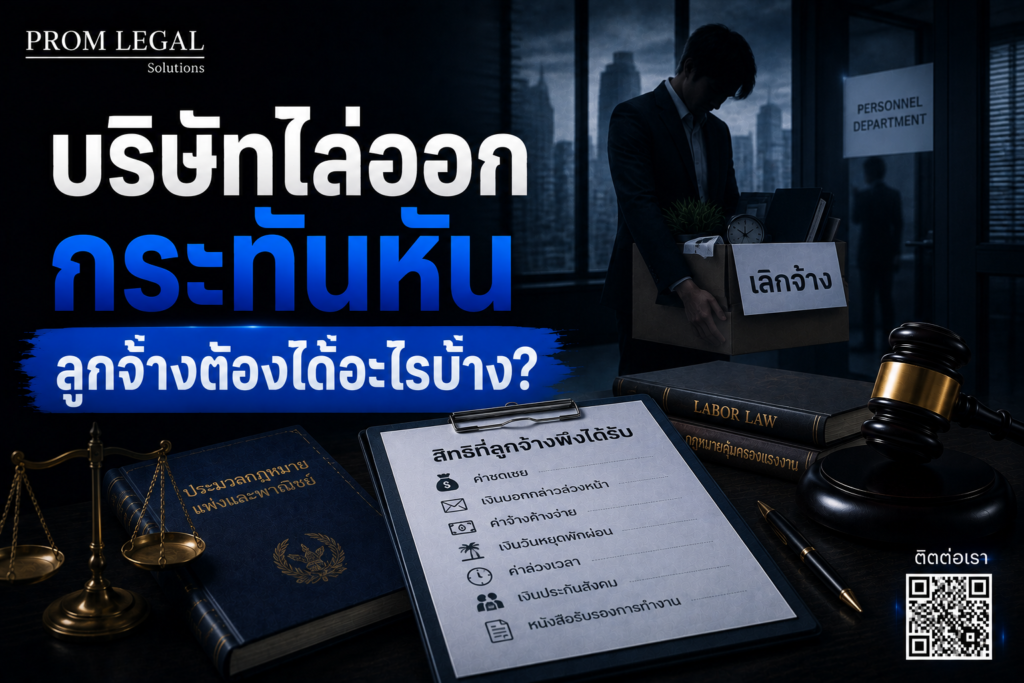
“วันนี้เป็นวันสุดท้ายของคุณนะ เก็บของกลับบ้านได้เลย” คำพูดที่ตกใส่ลูกจ้างแบบไม่ทันตั้งตัว ทั้งที่เพิ่งทำงานอยู่ดี ๆ เมื่อวานนี้เอง หลายคนตกใจจนลืมไปว่า การถูกเลิกจ้างกระทันหันแบบนี้ กฎหมายคุ้มครองลูกจ้างไว้หลายชั้น และมีเงินหลายก้อนที่ลูกจ้างมีสิทธิได้รับ
เปรียบง่าย ๆ กฎหมายแรงงานก็เหมือน “ตาข่ายนิรภัย” ที่รองรับลูกจ้างเมื่อถูกผลักตกจากงานโดยไม่ใช่ความผิดของตน วันนี้ Prom Legal Solution ขอพาลูกจ้างทุกท่านไปดูให้ครบว่า ถูกไล่ออกกระทันหันแล้ว ต้องได้อะไรบ้าง และควรทำอย่างไรค่ะ
เงินก้อนที่ 1: สินจ้างแทนการบอกกล่าวล่วงหน้า (หัวใจของคำว่า “กระทันหัน”)
คำว่า “กระทันหัน” คือหัวใจของเรื่องนี้ ตาม พ.ร.บ.คุ้มครองแรงงาน พ.ศ. 2541 มาตรา 17 สัญญาจ้างที่ไม่มีกำหนดเวลา นายจ้างต้องบอกเลิกจ้างเป็นหนังสือล่วงหน้าอย่างน้อยหนึ่งงวดการจ่ายค่าจ้าง แต่ไม่จำเป็นต้องบอกกล่าวล่วงหน้าเกิน 3 เดือน (มาตรา 17 วรรคสอง)
หากนายจ้างให้ออกทันทีโดยไม่บอกล่วงหน้า ต้องจ่าย สินจ้างแทนการบอกกล่าวล่วงหน้า เท่ากับค่าจ้างที่ลูกจ้างควรได้จนถึงวันที่การเลิกจ้างมีผล และต้องจ่ายในวันที่ให้ออกจากงาน (มาตรา 17/1)
เงินก้อนที่ 2: ค่าชดเชยตามอายุงาน
นี่คือเงินหลักที่ลูกจ้างซึ่งทำงานครบ 120 วันขึ้นไปและไม่ได้ทำผิดร้ายแรงมีสิทธิได้รับ ตาม มาตรา 118
| อายุงาน | ค่าชดเชย (อัตราค่าจ้างสุดท้าย) |
| ครบ 120 วัน แต่ไม่ครบ 1 ปี | 30 วัน |
| ครบ 1 ปี แต่ไม่ครบ 3 ปี | 90 วัน |
| ครบ 3 ปี แต่ไม่ครบ 6 ปี | 180 วัน |
| ครบ 6 ปี แต่ไม่ครบ 10 ปี | 240 วัน |
| ครบ 10 ปี แต่ไม่ครบ 20 ปี | 300 วัน |
| ครบ 20 ปีขึ้นไป | 400 วัน |
เงินก้อนที่ 3: ค่าจ้างวันหยุดพักผ่อนประจำปีที่ยังไม่ได้ใช้
ตาม มาตรา 67 เมื่อนายจ้างเลิกจ้างโดยไม่ใช่กรณีลูกจ้างทำผิดร้ายแรง นายจ้างต้องจ่ายค่าจ้างสำหรับ วันหยุดพักผ่อนประจำปี ตามส่วนที่ลูกจ้างมีสิทธิในปีที่เลิกจ้าง รวมถึงวันหยุดสะสมที่ยังไม่ได้ใช้ด้วย
เงินก้อนที่ 4: ค่าเสียหายจากการเลิกจ้างไม่เป็นธรรม
หากลูกจ้างเห็นว่าถูกเลิกจ้างโดย “ไม่มีเหตุอันสมควร” สามารถฟ้องต่อศาลแรงงานได้ ตาม พ.ร.บ.จัดตั้งศาลแรงงานฯ พ.ศ. 2522 มาตรา 49 ศาลอาจสั่งให้รับกลับเข้าทำงาน หรือหากทำงานร่วมกันต่อไม่ได้ ให้นายจ้างจ่าย ค่าเสียหาย โดยพิจารณาจากอายุลูกจ้าง ระยะเวลาทำงาน ความเดือดร้อน มูลเหตุการเลิกจ้าง และค่าชดเชยที่ได้รับ
ต้องได้เมื่อไหร่ และถ้าไม่จ่ายทำอย่างไร
ตาม มาตรา 70 นายจ้างต้องจ่ายค่าจ้างและเงินที่ลูกจ้างมีสิทธิได้รับทั้งหมด ภายใน 3 วัน นับแต่วันเลิกจ้าง และหากผิดนัดไม่จ่ายค่าชดเชยหรือเงินตามสิทธิ นายจ้างต้องเสียดอกเบี้ยให้ลูกจ้างในระหว่างเวลาผิดนัดร้อยละ 15 ต่อปี (มาตรา 9) หากนายจ้างไม่จ่าย ลูกจ้างมีทางเลือกคือ
- ยื่นคำร้องต่อ พนักงานตรวจแรงงาน (สำนักงานสวัสดิการและคุ้มครองแรงงาน) เพื่อให้มีคำสั่งให้นายจ้างจ่าย หรือ
- ฟ้องคดีต่อศาลแรงงาน ซึ่งลูกจ้างฟ้องได้เองโดยไม่เสียค่าธรรมเนียมศาล
นอกจากนี้ ลูกจ้างที่อยู่ในระบบประกันสังคมยังมีสิทธิขอรับ ประโยชน์ทดแทนกรณีว่างงาน จากสำนักงานประกันสังคมได้อีกทางหนึ่ง โดยต้องขึ้นทะเบียนผู้ว่างงานผ่านเว็บไซต์กรมการจัดหางานภายใน 30 วันนับแต่วันออกจากงาน เพื่อไม่ให้เสียสิทธิการรับเงินทดแทน
ข้อควรระวัง (เจ็บแต่จบ): อย่ารีบเซ็นเอกสารใด ๆ ที่นายจ้างยื่นให้ในวันถูกไล่ออก โดยเฉพาะหนังสือที่มีข้อความว่า “ลาออกโดยสมัครใจ” เพราะหากเซ็นว่าลาออกเอง อาจเสียสิทธิได้รับค่าชดเชยและสิทธิว่างงานทันที ควรอ่านให้ละเอียดหรือปรึกษาทนายก่อนลงลายมือชื่อ
สรุป
- ถูกไล่ออกกระทันหันโดยไม่บอกล่วงหน้า ได้ สินจ้างแทนการบอกกล่าวล่วงหน้า (มาตรา 17, 17/1)
- ทำงานครบ 120 วันขึ้นไปและไม่ได้ทำผิดร้ายแรง ได้ ค่าชดเชย ตามอายุงาน (มาตรา 118)
- ได้ ค่าจ้างวันหยุดพักผ่อนประจำปี ที่ยังไม่ได้ใช้ (มาตรา 67)
- หากเลิกจ้างไม่เป็นธรรม อาจได้ ค่าเสียหาย เพิ่ม (มาตรา 49)
- นายจ้างต้องจ่ายภายใน 3 วัน (มาตรา 70) ไม่จ่ายให้ร้องพนักงานตรวจแรงงานหรือฟ้องศาลแรงงาน
- อย่าเซ็น “ใบลาออก” ถ้าความจริงคือถูกเลิกจ้าง
การถูกเลิกจ้างกระทันหันเป็นเรื่องที่ลูกจ้างมีสิทธิได้รับการเยียวยาตามกฎหมาย Prom Legal Solution ให้บริการครบวงจร ทั้งให้คำปรึกษาการเรียกร้องสิทธิ ยื่นคำร้องต่อพนักงานตรวจแรงงาน ไปจนถึงฟ้องคดีในศาลแรงงาน ปรึกษาเราได้เลยค่ะ อย่าปล่อยให้สิทธิของคุณหายไป
บทความนี้จัดทำขึ้นเพื่อให้ความรู้ทั่วไปทางกฎหมายเท่านั้น มิใช่ความเห็นทางกฎหมายสำหรับกรณีเฉพาะเรื่อง ผู้อ่านควรปรึกษาทนายความเพื่อรับคำแนะนำที่เหมาะสมกับข้อเท็จจริงของท่าน
#เลิกจ้างกระทันหัน #ค่าชดเชย #สิทธิลูกจ้าง #เลิกจ้างไม่เป็นธรรม #กฎหมายแรงงาน #ตกงาน #LabourLaw #PromLegalSolution #LegalTip #SME #Startup
Suddenly Fired by Your Company: What Is the Employee Entitled To?
“Today is your last day, pack up and go home.” A line that hits an employee out of nowhere, when just yesterday everything seemed fine. Many are so shocked they forget that the law protects employees on several levels against sudden dismissal, and that there are several sums the employee is entitled to.
Think of labour law as a safety net that catches an employee pushed off the job through no fault of their own. Today, Prom Legal Solution walks employees through everything you should receive when fired suddenly, and what to do next.
Payment 1: Pay in Lieu of Notice (the Heart of “Sudden”)
The word “sudden” is the heart of this. Under Labour Protection Act B.E. 2541 (1998) Section 17, for an open-ended contract, the employer must give written notice of termination at least one pay period in advance, but the notice need not be more than three months in advance (Section 17 paragraph two).
If the employer lets you go immediately without notice, it must pay wages in lieu of notice equal to what you would have earned until the termination takes effect, payable on the day you are let go (Section 17/1).
Payment 2: Severance Pay by Length of Service
This is the main entitlement for an employee who has worked 120 days or more and has not committed serious misconduct, under Section 118.
| Length of Service | Severance (at last wage rate) |
| 120 days but less than 1 year | 30 days |
| 1 year but less than 3 years | 90 days |
| 3 years but less than 6 years | 180 days |
| 6 years but less than 10 years | 240 days |
| 10 years but less than 20 years | 300 days |
| 20 years or more | 400 days |
Payment 3: Pay for Unused Annual Leave
Under Section 67, when the employer dismisses an employee other than for serious misconduct, it must pay wages for the annual leave the employee was entitled to in the year of dismissal on a pro-rata basis, plus any accrued unused leave.
Payment 4: Damages for Unfair Dismissal
If the employee considers the dismissal to be “without reasonable cause,” they may sue at the Labour Court. Under Labour Court Act B.E. 2522 (1979) Section 49, the court may order reinstatement, or, if the parties can no longer work together, order the employer to pay damages, weighing the employee’s age, length of service, hardship, the reason for dismissal, and the severance received.
When Must You Be Paid, and What If They Don’t?
Under Section 70, the employer must pay all wages and sums the employee is entitled to within 3 days of dismissal. If the employer defaults on severance or other statutory payments, it must also pay interest at 15% per year for the period of default (Section 9). If the employer does not pay, the employee can:
- file a complaint with a labour inspector (Office of Labour Welfare and Protection) for an order to pay, or
- sue at the Labour Court, which the employee can do without paying court fees.
In addition, an employee in the social security system may claim unemployment benefits from the Social Security Office, and must register as unemployed via the Department of Employment website within 30 days of leaving the job to preserve full benefits.
Caveat: Do not rush to sign anything the employer hands you on the day you are fired, especially a document stating “voluntary resignation.” If you sign that you resigned, you may immediately lose your right to severance and unemployment benefits. Read carefully or consult a lawyer before signing.
Key Takeaways
- Fired suddenly without notice: you get pay in lieu of notice (Sections 17, 17/1).
- Worked 120 days or more without serious misconduct: you get severance by length of service (Section 118).
- You get pay for unused annual leave (Section 67).
- If the dismissal is unfair, you may get additional damages (Section 49).
- The employer must pay within 3 days (Section 70); if not, complain to a labour inspector or sue at the Labour Court.
- Do not sign a “resignation letter” if you were in fact dismissed.
Sudden dismissal is something the law gives employees remedies for. Prom Legal Solution offers end-to-end support, from advising on your claims and filing with a labour inspector to litigating at the Labour Court. Talk to us; don’t let your rights slip away.
This article is for general legal information only and is not legal advice for any specific case. Please consult a lawyer for advice tailored to your facts.
#เลิกจ้างกระทันหัน #ค่าชดเชย #สิทธิลูกจ้าง #เลิกจ้างไม่เป็นธรรม #กฎหมายแรงงาน #ตกงาน #LabourLaw #PromLegalSolution #LegalTip #SME #Startup