(English Below)
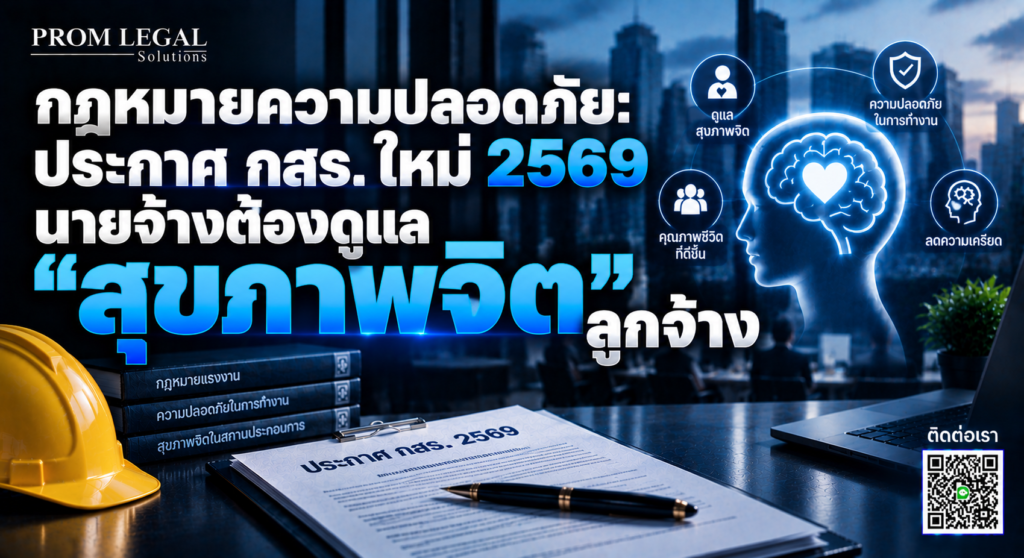
เดิมทีเวลาพูดถึง “ความปลอดภัยในการทำงาน” เรามักนึกถึงหมวกนิรภัย ถุงมือ หรือการป้องกันอุบัติเหตุทางร่างกาย แต่ความจริงกฎหมายกำหนดมาตั้งแต่ปี 2554 แล้วว่านายจ้างต้องดูแลไม่ให้ลูกจ้างได้รับอันตรายต่อ “จิตใจ” ด้วย และประกาศใหม่ปี 2569 ยังคงย้ำหน้าที่นี้ไว้ในข้อความที่นายจ้างต้องติดประกาศ
เปรียบง่าย ๆ ความปลอดภัยไม่ได้หมายถึงแค่ “แผลที่มองเห็น” แต่รวมถึง “แผลที่มองไม่เห็น” อย่างความเครียดและสภาพจิตใจในที่ทำงาน วันนี้ Prom Legal Solution ขอสรุปสิ่งที่เปลี่ยนไปในประกาศฉบับใหม่และสิ่งที่นายจ้างต้องเตรียมให้ฟังค่ะ
กฎหมายฉบับนี้คืออะไร มีผลเมื่อไหร่
กรมสวัสดิการและคุ้มครองแรงงาน (กสร.) ได้ออกประกาศฉบับใหม่ เรื่อง “ข้อความแสดงสิทธิและหน้าที่ของนายจ้างและลูกจ้าง สัญลักษณ์เตือนอันตราย และเครื่องหมายเกี่ยวกับความปลอดภัย อาชีวอนามัย และสภาพแวดล้อมในการทำงาน” เพื่อยกเลิกและแทนที่ประกาศเดิมที่ใช้มาตั้งแต่ปี 2554
ประกาศฉบับนี้ออกภายใต้ มาตรา 17 แห่งพระราชบัญญัติความปลอดภัย อาชีวอนามัย และสภาพแวดล้อมในการทำงาน พ.ศ. 2554 ประกาศในราชกิจจานุเบกษาเมื่อวันที่ 1 พฤษภาคม 2569 และ มีผลบังคับใช้แล้วตั้งแต่วันที่ 1 กรกฎาคม 2569 ถือเป็นการปรับปรุงประกาศฉบับเดิมที่ใช้มากว่า 10 ปี
สาระสำคัญ 5 เรื่องที่นายจ้างต้องรู้
| ประเด็น | สาระสำคัญ |
| 1. ย้ำหน้าที่ดูแลสุขภาพจิต | นายจ้างต้องดูแลไม่ให้ลูกจ้างได้รับอันตรายต่อ “ชีวิต ร่างกาย จิตใจ และสุขภาพอนามัย” จัดสถานที่ทำงานให้ปลอดภัยและถูกสุขลักษณะ แก้ไขข้อบกพร่องหรือการชำรุดเสียหายที่อาจทำให้ลูกจ้างได้รับอันตราย (ข้อ 3(3) ที่เพิ่มใหม่) และจัดคู่มือพร้อมฝึกอบรมทุกครั้งที่ลูกจ้างเริ่มงาน เปลี่ยนตำแหน่ง หรือใช้เครื่องจักรใหม่ (หน้าที่เหล่านี้มีอยู่แล้วตาม พ.ร.บ.ฯ มาตรา 6 และมาตรา 16 ประกาศใหม่ย้ำให้ชัดขึ้น) |
| 2. สิทธิลูกจ้างปฏิเสธงานเสี่ยงอันตราย | ลูกจ้างมีสิทธิปฏิเสธหรือหลีกเลี่ยงงานที่เชื่อได้ว่ามีอันตรายร้ายแรงต่อชีวิตหรือสุขภาพ หากนายจ้างยังไม่จัดมาตรการป้องกันเพียงพอ โดยไม่ต้องรอให้เกิดอุบัติเหตุก่อน ซึ่งประกาศใหม่กำหนดให้สิทธินี้อยู่ในข้อความที่นายจ้างต้องติดประกาศด้วย (สอดคล้องอนุสัญญา ILO ฉบับที่ 155) |
| 3. มาตรฐานป้ายและสัญลักษณ์เตือนอันตราย | ต้องติดสัญลักษณ์และป้ายความปลอดภัยตามมาตรฐานที่รับรอง เช่น มอก. หรือมาตรฐานสากลที่เทียบเท่า (ISO, EN, AS/NZS, ANSI, JIS, NIOSH, OSHA, KSA ฯลฯ) |
| 4. ติดประกาศสิทธิและหน้าที่ตามถ้อยคำที่กำหนด | ต้องติดประกาศแสดงสิทธิและหน้าที่ตามถ้อยคำที่ กสร. กำหนดอย่างเป็นทางการ ซึ่งประกาศใหม่ปรับปรุงและเพิ่มรายการข้อความจากฉบับเดิม (จาก 13 ข้อเป็น 15 ข้อ) นายจ้างจึงต้องเปลี่ยนป้ายประกาศเดิมเป็นฉบับใหม่ |
| 5. ค่าใช้จ่ายความปลอดภัยเป็นภาระนายจ้าง | ค่าอุปกรณ์นิรภัยส่วนบุคคล (PPE) และการฝึกอบรมที่จำเป็น เป็นภาระของนายจ้างทั้งหมด จึงไม่ควรเรียกเก็บหรือหักจากค่าจ้างลูกจ้าง (ตามข้อ 3(8) ของประกาศและมาตรา 7 ของ พ.ร.บ.ฯ ซึ่งเป็นหลักการเดิม) |
ฝ่าฝืนมีโทษอย่างไร
นายจ้างที่ไม่ติดประกาศหรือสัญลักษณ์ตามมาตรา 17 มีโทษตามมาตรา 58 คือ จำคุกไม่เกิน 3 เดือน หรือปรับไม่เกิน 100,000 บาท หรือทั้งจำทั้งปรับ ส่วนการฝ่าฝืนมาตรฐานความปลอดภัยตามกฎกระทรวงที่ออกตามมาตรา 8 มีโทษหนักกว่า คือ จำคุกไม่เกิน 1 ปี หรือปรับไม่เกิน 400,000 บาท หรือทั้งจำทั้งปรับ (มาตรา 53)
เช็กลิสต์ที่นายจ้างควรทำ
- ทบทวนนโยบายและเอกสารความปลอดภัย คู่มือ และบันทึกการฝึกอบรมให้สอดคล้องข้อกำหนดใหม่
- อัปเดตป้ายและสัญลักษณ์เตือนอันตรายให้ตรงมาตรฐานสากล
- ติดประกาศสิทธิและหน้าที่ตามถ้อยคำที่ กสร. กำหนด ในจุดที่ลูกจ้างเห็นชัด
- วางแนวทางดูแลสุขภาพจิต เช่น ช่องทางร้องเรียน การประเมินความเครียด และการจัดสภาพแวดล้อมที่เหมาะสม
- ยกเลิกการเก็บหรือหักเงินลูกจ้างสำหรับ PPE และวางงบประมาณล่วงหน้า
- จัดเก็บเอกสารหลักฐานการฝึกอบรม การติดตั้งป้าย และการประเมินความเสี่ยง เพื่อพร้อมรับการตรวจ
ข้อควรระวัง (เจ็บแต่จบ): หน้าที่ดูแล “สุขภาพจิต” มีอยู่ในกฎหมายมานานแล้ว แต่หลายองค์กรยังไม่มีระบบรองรับ อย่ามองว่าเป็นแค่ถ้อยคำสวยหรู เพราะหากละเลยจนลูกจ้างได้รับความเสียหาย นอกจากเสี่ยงโทษตาม พ.ร.บ.ความปลอดภัยฯ แล้ว ยังอาจถูกเรียกร้องในทางแพ่งและคดีแรงงานได้อีกด้วย การวางระบบให้ถูกต้องตั้งแต่ต้นจึงคุ้มกว่าตามแก้ทีหลัง
สรุป
- ประกาศ กสร. ฉบับปรับปรุง 2569 ออกภายใต้ พ.ร.บ.ความปลอดภัยฯ พ.ศ. 2554 มาตรา 17 มีผลแล้วตั้งแต่ 1 ก.ค. 2569
- ประกาศใหม่ย้ำว่านายจ้างต้องดูแลไม่ให้ลูกจ้างได้รับอันตรายต่อจิตใจ ไม่ใช่แค่อันตรายทางร่างกาย
- เพิ่มสิทธิลูกจ้างปฏิเสธงานเสี่ยงไว้ในข้อความที่ต้องติดประกาศ กำหนดมาตรฐานป้ายสากล ปรับปรุงถ้อยคำประกาศสิทธิและหน้าที่ และย้ำว่าค่า PPE เป็นภาระนายจ้าง
- ไม่ติดประกาศหรือสัญลักษณ์ตามที่กำหนด มีโทษจำคุกไม่เกิน 3 เดือน หรือปรับไม่เกิน 100,000 บาท หรือทั้งจำทั้งปรับ
การปรับองค์กรให้สอดคล้องกฎหมายใหม่ต้องอาศัยทั้งการทบทวนนโยบายและการวางระบบเอกสารที่รัดกุม Prom Legal Solution ให้คำปรึกษาครบวงจร ทั้งการตรวจสอบการปฏิบัติตามกฎหมายความปลอดภัยและกฎหมายแรงงาน การวางนโยบายดูแลสุขภาพจิตในที่ทำงาน ไปจนถึงการรับมือข้อพิพาทและการตรวจจากพนักงานตรวจแรงงาน ปรึกษาเราได้เลยค่ะ
บทความนี้จัดทำขึ้นเพื่อให้ความรู้ทั่วไปทางกฎหมายเท่านั้น มิใช่ความเห็นทางกฎหมายสำหรับกรณีเฉพาะเรื่อง ผู้อ่านควรตรวจสอบตัวบทประกาศฉบับเต็มและปรึกษาทนายความก่อนดำเนินการใด ๆ
#PromLegalSolution #กฎหมายความปลอดภัย #อาชีวอนามัย #สุขภาพจิตในที่ทำงาน #กฎหมายแรงงาน #นายจ้าง #จป #OccupationalSafety #LegalTip #SME #Startup
The New 2026 Occupational Safety Notification Reaffirms: Employers Must Care for Employees’ “Mental Health”
When we used to talk about “workplace safety,” we usually pictured hard hats, gloves, or preventing physical accidents. In fact, the law has required employers since 2011 to protect employees from harm to their “mind” as well, and the new 2026 notification restates this duty in the statement employers must post.
Put simply, safety is not only about “visible wounds” but also “invisible wounds” such as stress and mental condition at work. Today, Prom Legal Solution summarizes what has changed under the new notification and what employers should prepare.
What Is This Law and When Does It Take Effect?
The Department of Labour Protection and Welfare (DLPW) issued a new notification on “Statements of the Rights and Duties of Employers and Employees, Hazard Warning Symbols, and Signs Concerning Occupational Safety, Health and Environment,” replacing the former notification in force since 2554 (2011).
This notification was issued under Section 17 of the Occupational Safety, Health and Environment Act B.E. 2554 (2011), published in the Royal Gazette on 1 May 2569 (2026), and has been in effect since 1 July 2569 (2026). It updates a notification that had been in force for more than a decade.
Five Key Points Employers Must Know
| Issue | Key Point |
| 1. Mental-health duty reinforced | Employers must protect employees from harm to their “life, body, mind, and health,” provide a safe and hygienic workplace, remedy defects or damage that could harm employees (a new item 3(3)), and provide a manual and training whenever an employee starts work, changes position, or uses new machinery (these duties already exist under Sections 6 and 16 of the Act; the new notification states them more clearly) |
| 2. Employees’ right to refuse dangerous work | Employees may refuse or avoid work reasonably believed to pose a serious danger to life or health if the employer has not yet provided adequate protection, without waiting for an accident; the new notification adds this right to the statements employers must post (consistent with ILO Convention No. 155) |
| 3. Standards for warning symbols and safety signs | Signs and symbols must meet recognized standards such as TIS or equivalent international standards (ISO, EN, AS/NZS, ANSI, JIS, NIOSH, OSHA, KSA, etc.) |
| 4. Posting rights and duties in the prescribed wording | Employers must post the statement of rights and duties in the official wording set by the DLPW. The new notification revises and expands the list of required statements (from 13 to 15 items), so existing posters must be replaced |
| 5. Safety costs are the employer’s burden | The cost of personal protective equipment (PPE) and necessary training is entirely the employer’s, so it should not be charged to or deducted from employees’ wages (per item 3(8) of the notification and Section 7 of the Act, an existing principle) |
What Are the Penalties for Violation?
An employer that fails to post the required signs or statements under Section 17 faces penalties under Section 58: imprisonment of up to 3 months, a fine of up to THB 100,000, or both. Violating safety standards in ministerial regulations issued under Section 8 carries heavier penalties: imprisonment of up to 1 year, a fine of up to THB 400,000, or both (Section 53).
Employer Checklist
- Review safety policies and documents, manuals, and training records for compliance with the new requirements.
- Update warning symbols and safety signs to recognized international standards.
- Post the statement of rights and duties in the DLPW’s prescribed wording where employees can clearly see it.
- Set up a mental-health approach, such as a complaint channel, stress assessment, and a suitable environment.
- Stop charging or deducting from employees for PPE, and budget in advance.
- Keep evidence of training, sign installation, and risk assessment, ready for inspection.
Caveat: The duty to care for “mental health” has long been in the law, yet many organizations still have no system for it. Do not treat it as mere flowery wording, because neglecting it until an employee is harmed risks not only penalties under the Safety Act but also civil and labour-court claims. Setting up the system correctly from the start beats fixing it later.
Key Takeaways
- The updated 2026 DLPW notification, issued under Section 17 of the Occupational Safety Act B.E. 2554 (2011), has been in effect since 1 July 2026.
- The new notification reinforces that employers must protect employees from mental harm, not just physical harm.
- It adds employees’ right to refuse dangerous work to the posted statement, sets international sign standards, updates the prescribed wording of the rights-and-duties notice, and reaffirms that PPE costs are the employer’s burden.
- Failing to post the required signs or statements risks imprisonment of up to 3 months, a fine of up to THB 100,000, or both.
Aligning your organization with the new law requires both policy review and solid documentation. Prom Legal Solution offers end-to-end advice, from auditing compliance with safety and labour laws and setting up a workplace mental-health policy to handling disputes and labour inspections. Talk to us.
This article is for general legal information only and is not legal advice for any specific case. Readers should check the full text of the notification and consult a lawyer before taking any action.
#PromLegalSolution #กฎหมายความปลอดภัย #อาชีวอนามัย #สุขภาพจิตในที่ทำงาน #กฎหมายแรงงาน #นายจ้าง #จป #OccupationalSafety #LegalTip #SME #Startup